


Network Considers New Direction for Late-Night Slot
CBS Plans Next Chapter for The Late Show
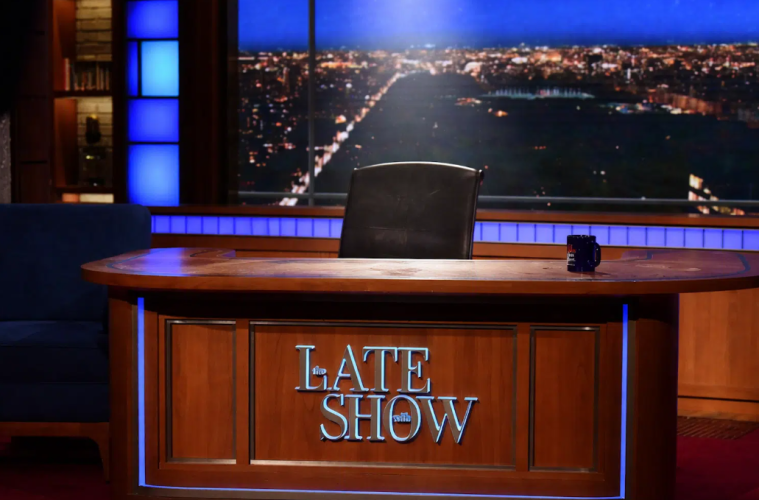
March 27, 2026 – CBS is reportedly exploring new strategies for its late-night lineup as Stephen Colbert prepares to step away from The Late Show. The potential transition marks a significant moment for the network, as Colbert has been a defining presence in the slot for years.
With his exit approaching, CBS is now faced with the challenge of reimagining one of its most recognizable programs in an increasingly competitive late-night landscape.

Image Credit: Scott Kowalchyk/CBS
The Impact of Stephen Colbert’s Tenure
Since taking over The Late Show, Stephen Colbert has played a key role in shaping the modern identity of late-night television. His blend of political commentary, humor, and celebrity interviews helped the show stand out during a time of significant change in the industry.
Colbert’s influence extended beyond ratings, contributing to the cultural relevance of late-night programming. His departure signals the end of an era and raises questions about what comes next for both the show and the format itself.
Replacing such a prominent figure will be no small task.
Why CBS Is Rethinking the Format
Rather than simply replacing Colbert with another host, CBS is reportedly considering a broader reimagining of the time slot. This could involve changes to the format, tone, or even the type of programming offered.
The move reflects shifting viewer habits, with audiences increasingly turning to streaming platforms and digital content over traditional television. Late-night shows, once a staple of nightly viewing, now compete with a wide range of entertainment options.
Adapting to these changes may require a more innovative approach than a traditional host swap.

Image Credit: Scott Kowalchyk/CBS
The Changing Landscape of Late-Night TV
The late-night television landscape has evolved significantly in recent years. Shows that once relied on live audiences and scheduled broadcasts now face competition from on-demand content, social media clips, and streaming platforms.
Younger audiences, in particular, are less likely to engage with traditional late-night formats, preferring shorter, more accessible content online.
This shift has prompted networks to rethink how late-night programming fits into their overall strategy.
Potential Directions for the Time Slot
While CBS has not confirmed specific plans, several possibilities are being discussed. The network could introduce a new host with a fresh perspective, potentially targeting a different demographic.
Alternatively, CBS might experiment with a completely new format, moving away from the traditional talk show structure. This could include panel discussions, hybrid entertainment formats, or even scripted programming.
Each option carries its own risks and opportunities, making the decision a critical one for the network.

Image Credit: Scott Kowalchyk/CBS
Industry Reaction and Speculation
The news of Colbert’s potential exit and CBS’s exploratory approach has sparked speculation across the entertainment industry. Analysts and fans alike are debating what direction the network might take and who could potentially fill the slot.
Some see this as an opportunity for innovation, while others worry about the loss of a familiar format.
The conversation reflects broader uncertainty about the future of late-night television as a whole.
The Legacy of ‘The Late Show’
The Late Show has a long and storied history, dating back to its original host, David Letterman. Over the years, it has been a platform for cultural commentary, entertainment, and memorable moments.
Maintaining that legacy while adapting to modern expectations will be a key challenge for CBS.
The show’s history adds weight to any decision about its future, as it remains a significant part of television culture.

Image Credit: Scott Kowalchyk/CBS
What This Means for CBS Moving Forward
For CBS, the transition represents both a challenge and an opportunity. The network has the chance to redefine its late-night identity, potentially setting a new standard for the format.
At the same time, it must navigate audience expectations and industry pressures.
How CBS approaches this moment could influence not only its own programming but also the broader direction of late-night television.
Final Thoughts
As Stephen Colbert’s exit from The Late Show approaches, CBS finds itself at a crossroads. The network’s decision to explore new paths for the time slot reflects a recognition that the late-night landscape is changing rapidly.
Whether through a new host, a revamped format, or an entirely different approach, the next chapter of The Late Show will play a crucial role in shaping the future of late-night television. The outcome will be closely watched by both industry insiders and audiences alike.
FAQs
Q1: Is Stephen Colbert leaving The Late Show?
Reports suggest he is preparing to exit, though full details are still emerging.
Q2: What is CBS planning for the time slot?
The network is exploring new formats and potential changes rather than a direct replacement.
Q3: Why is late-night TV changing?
Audience habits are shifting toward streaming and digital content.
Q4: Who could replace Colbert?
No official successor has been announced.
Q5: What is the significance of The Late Show?
It is one of the most iconic programs in late-night television history.
Published by HOLR Magazine