



Marty Supreme delivers a gripping performance from Timothée Chalamet, as Josh Safdie crafts a tense, raw, and uncompromising character-driven film.
A Performance That Commands Attention
January 23, 2026 — In Marty Supreme, Timothée Chalamet delivers one of the most electric performances of his career, anchoring Josh Safdie’s latest film with intensity, unpredictability, and raw emotional force. From the opening moments, it’s clear this isn’t a performance designed for comfort—Chalamet fully commits to the chaos, pulling viewers into a world that feels volatile, uncomfortable, and undeniably compelling.
Safdie, known for his nerve-fraying storytelling, leans hard into discomfort here, and Chalamet meets that energy head-on. The result is a film that doesn’t ask to be liked—it demands to be felt.

Image Credit: A24
Inside the World of Marty Supreme
Marty Supreme follows a deeply flawed protagonist navigating ambition, ego, and self-destruction within a pressure-cooker environment. The narrative unfolds with Safdie’s signature urgency, blurring the line between control and collapse. Scenes often feel on the verge of spiraling out of control, a deliberate choice that mirrors the inner turmoil of its central character.
Rather than offering neat resolutions, the film thrives on tension. Dialogue overlaps, pacing accelerates without warning, and the camera stays uncomfortably close—placing the audience inside Marty’s unraveling psyche. It’s an approach that won’t appeal to everyone, but it’s undeniably effective.
Timothée Chalamet at His Most Fearless
Chalamet’s portrayal is abrasive, magnetic, and deeply unsettling. He sheds any lingering traces of polish, embracing a performance built on volatility and emotional exposure. There’s a physicality to his work here—sharp movements, restless energy, and a constant sense of unpredictability—that elevates the character beyond trope.
What makes the performance stand out is its refusal to soften Marty’s edges. Chalamet doesn’t seek sympathy; instead, he allows the character’s flaws to exist fully, trusting the audience to sit with the discomfort. It’s a bold choice, and one that pays off.
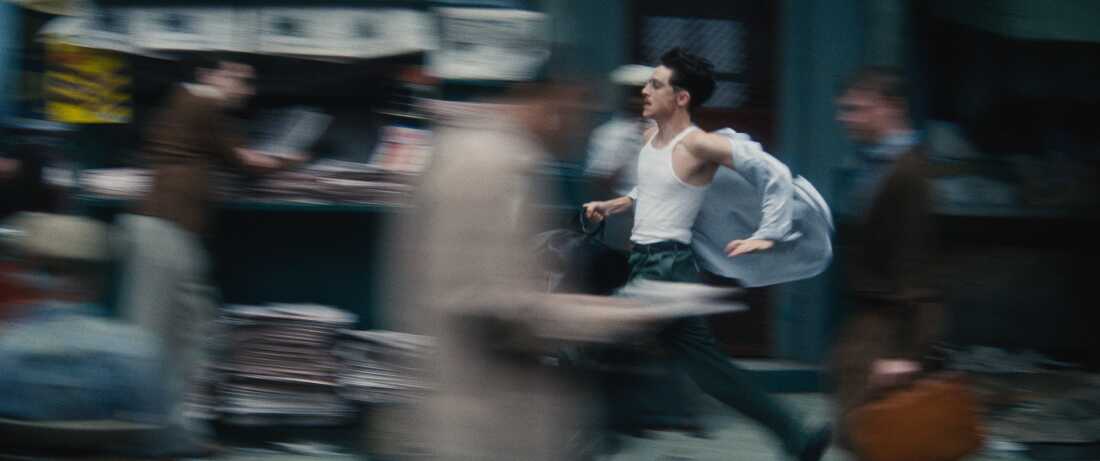
Image Credit: A24
Josh Safdie’s Relentless Direction
Safdie’s direction is as intense as ever, favoring immediacy over elegance. The film’s visual language—handheld camerawork, tight framing, and frenetic editing—creates an atmosphere that feels both immersive and claustrophobic. Every scene pulses with anxiety, reinforcing the sense that something could explode at any moment.
Safdie’s strength lies in his refusal to explain or moralize. He presents behavior as it is, not as it should be, allowing viewers to draw their own conclusions. That trust in the audience is a defining feature of Marty Supreme.
Not for Everyone—and Proud of It
This is not a conventional crowd-pleaser. The film’s abrasive tone and unrelenting tension may alienate viewers expecting a more traditional character arc. However, for audiences drawn to challenging cinema, Marty Supreme offers a gripping experience that lingers long after the credits roll.
Critics have already begun to single out the film as one of the year’s most daring performances, with Chalamet’s work frequently cited as awards-worthy. Whether or not it resonates universally, it’s difficult to deny its impact.
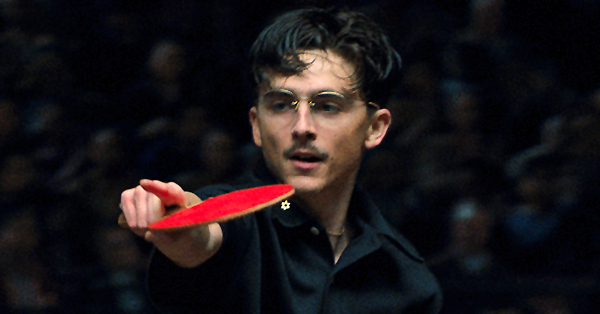
Image Credit: A24
Final Verdict
Marty Supreme is messy, exhausting, and utterly captivating. Anchored by a fearless performance from Timothée Chalamet and driven by Josh Safdie’s uncompromising vision, the film succeeds precisely because it refuses to play it safe.
This is Chalamet at his most daring—and Safdie at his most unapologetic.
Published by HOLR Magazine