


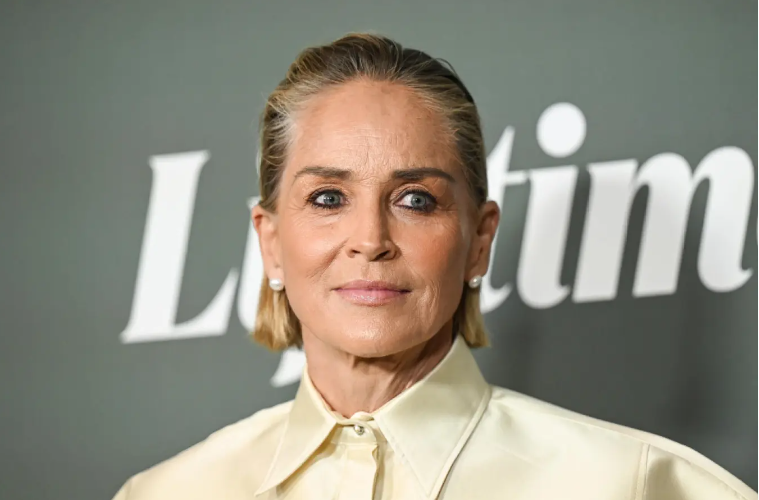
Veteran actress calls for nuance and restraint on screen
Sharon Stone Speaks Out on Industry Trends
April 04, 2026 – Sharon Stone is once again sparking conversation in Hollywood, this time by calling out the current state of sex scenes in film and television. The actress expressed frustration with what she described as increasingly “blatant” and “harsh” portrayals, adding that modern depictions often leave nothing to the imagination.
Stone revealed that she frequently fast-forwards through such scenes, stating plainly, “I don’t want to see it.” Her remarks have reignited a broader discussion about how intimacy is portrayed on screen and whether the industry has shifted too far toward explicitness.

Image Credit: Getty Images
A Perspective Shaped by Experience
Stone’s perspective carries particular weight given her long-standing career, including roles that have themselves been part of conversations around on-screen intimacy. Having experienced different eras of filmmaking, she brings a historical lens to the discussion.
Her comments suggest that earlier approaches often relied more on suggestion and storytelling, allowing audiences to engage their imagination rather than presenting everything directly. This contrast highlights how cinematic language has evolved over time.
From Suggestion to Explicitness
One of the central points in Stone’s critique is the shift from subtlety to overt depiction. In earlier decades, filmmakers often used lighting, framing, and editing to imply intimacy without showing every detail.
Today, she argues, many productions opt for more explicit portrayals, which can feel excessive or unnecessary. This change reflects broader cultural shifts, as well as the influence of streaming platforms that operate with fewer content restrictions than traditional broadcast television.

Image Credit: Getty Images
Audience Fatigue and Changing Preferences
Stone’s comments also point to a growing sense of fatigue among some viewers. While explicit content may initially attract attention, overuse can diminish its impact and even alienate audiences who prefer a more nuanced approach.
Her decision to skip such scenes suggests that not all viewers are aligned with the current trend. This raises questions about whether the industry is accurately reflecting audience preferences or simply following a perceived demand.
The Role of Storytelling in Intimacy
At the heart of the debate is the role that intimate scenes play in storytelling. Ideally, such moments should serve a narrative purpose—revealing character, advancing the plot, or deepening emotional connections.
Stone’s critique implies that, in some cases, this purpose is being overshadowed by a focus on visual intensity. When scenes feel disconnected from the story, they risk becoming distractions rather than meaningful elements.
Industry Shifts and Creative Freedom
The evolution of on-screen intimacy is closely tied to broader changes in the entertainment industry. Streaming platforms have expanded creative freedom, allowing filmmakers to explore themes and content that might previously have been restricted.
While this freedom has opened new possibilities, it has also led to debates about where to draw the line. Stone’s comments reflect a call for balance—embracing creative expression while maintaining a sense of restraint and purpose.

Image Credit: Getty Images
Divided Reactions Across Hollywood
As with many industry critiques, reactions to Stone’s remarks have been mixed. Some agree with her assessment, arguing that subtlety often leads to more impactful storytelling. Others defend the current approach, viewing it as a reflection of evolving norms and audience expectations.
This divide highlights the complexity of the issue, as there is no single standard for how intimacy should be portrayed on screen.
The Role of Intimacy Coordinators
In recent years, the introduction of intimacy coordinators has transformed how such scenes are produced. These professionals ensure that actors feel safe and respected, while also helping to choreograph scenes in a way that aligns with the director’s vision.
While this development has improved working conditions, it does not necessarily address the creative questions raised by Stone—namely, how much should be shown and why.

Image Credit: Charles Sykes/Bravo via Getty
A Broader Cultural Conversation
Stone’s comments are part of a larger cultural conversation about media consumption and the boundaries of representation. As audiences become more vocal about their preferences, the industry is being challenged to adapt.
The discussion extends beyond film and television, touching on broader questions about taste, storytelling, and the role of imagination in art.
Final Thoughts
Sharon Stone’s critique of modern sex scenes highlights a tension between explicitness and subtlety in contemporary storytelling. By advocating for a more restrained approach, she invites the industry to reconsider how intimacy is portrayed and what purpose it serves.
As the conversation continues, the challenge will be finding a balance that respects both creative freedom and audience engagement. In a rapidly evolving media landscape, perspectives like Stone’s serve as an important reminder that sometimes, less can be more.
FAQs
Q1: What did Sharon Stone say about modern sex scenes?
She described them as “blatant” and “harsh,” saying they leave nothing to the imagination.
Q2: Why does she fast-forward through such scenes?
She finds them excessive and prefers a more subtle approach to storytelling.
Q3: What is her main criticism?
That many scenes lack nuance and do not always serve a meaningful narrative purpose.
Q4: How has the industry changed?
Streaming platforms have allowed for more explicit content compared to earlier eras.
Q5: What is the broader impact of her comments?
They have sparked renewed debate about how intimacy should be portrayed in film and television.
Published by HOLR Magazine