


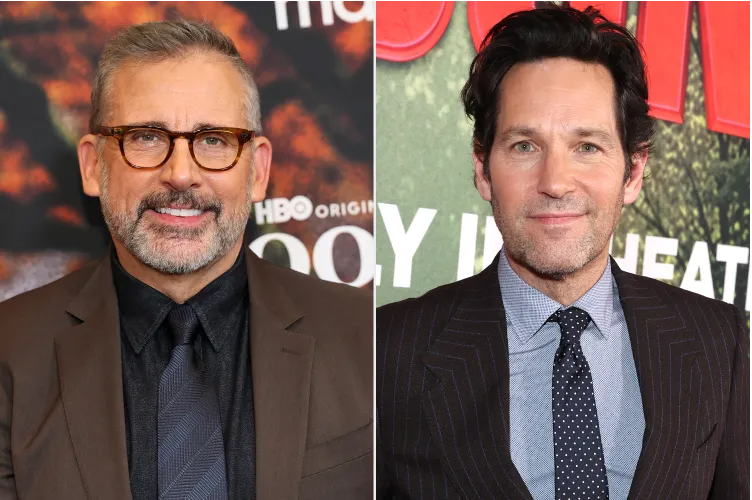
Actor Reflects on Unlikely Start of Hit Series
Steve Carell Nearly Didn’t Audition for The Office
March 26, 2026 – Steve Carell is opening up about the surprising and uncertain beginnings of The Office, revealing that he was actually discouraged from auditioning for the role that would define his career.
In a recent reflection, Carell shared that fellow actor Paul Rudd advised him to skip the audition altogether. At the time, the project carried significant uncertainty, and few could have predicted that it would become one of the most beloved sitcoms in television history.
The revelation offers a rare behind-the-scenes look at how close the series came to taking a completely different path.
:max_bytes(150000):strip_icc():focal(1005x206:1007x208):format(webp)/the-office-behind-the-scenes-facts-steve-carell-main-031925-4f63d1903db045a4b541b66e9de73f7e.jpg)
Image Credit: Chris Haston/NBC/NBCU Photo Bank
Paul Rudd’s Warning and Industry Uncertainty
According to Carell, Paul Rudd told him “don’t audition,” a piece of advice that reflected the general skepticism surrounding the show at the time. The Office was being developed as an American adaptation of a British series, and there was no guarantee that it would resonate with U.S. audiences.
In the early 2000s, adapting British comedies for American television was a risky endeavor. Many such attempts struggled to capture the original’s tone while appealing to a different cultural audience.
Rudd’s warning wasn’t necessarily a dismissal of Carell’s talent—it was a realistic assessment of how uncertain the opportunity seemed. The idea that the show might fail before it even began was very real.
The Lowest-Testing Pilot in NBC History
Perhaps the most shocking detail from Carell’s reflection is that the pilot episode of The Office was reportedly the lowest-testing pilot in the history of NBC.
Pilot testing is a crucial stage in television production, often determining whether a show will be picked up or canceled. Poor test results typically signal a lack of audience interest, making it difficult for networks to justify moving forward.
In this case, the odds were stacked heavily against The Office. The show’s mockumentary style, awkward humor, and unconventional pacing didn’t immediately resonate with test audiences.
Yet, despite these discouraging results, NBC chose to give the series a chance—a decision that would ultimately reshape modern television comedy.
From Risky Experiment to Cultural Phenomenon
What followed is now television history. The Office evolved from a struggling pilot into a defining sitcom of its generation. Over time, it built a dedicated fan base and became known for its unique storytelling approach and memorable characters.
At the center of this transformation was Steve Carell’s portrayal of Michael Scott. His performance balanced cringe-worthy humor with genuine emotional depth, turning what could have been a one-dimensional character into a beloved figure.
The show’s success demonstrates how creative risks can pay off, even when early indicators suggest otherwise.
Why the Show Initially Struggled
The early struggles of The Office can be attributed to several key factors. First, the show closely mirrored the tone of the British original in its initial episodes, which some American viewers found uncomfortable or unfamiliar.
Additionally, the mockumentary format—now widely accepted—was relatively new to mainstream U.S. audiences at the time. The lack of a laugh track and the emphasis on awkward silence created a viewing experience that differed from traditional sitcoms.
Over time, however, the series adapted. It leaned more into character development, softened some of its harsher edges, and found a balance that resonated with viewers. This evolution was critical to its long-term success.
:max_bytes(150000):strip_icc()/Paul-Rudd-Anaconda-premiere-2025-Steve-Carell-The-Office-032426-d20653a5d3d94b39945856717503ca69.jpg)
Image Credit: Axelle/Bauer-Griffin/FilmMagic; Mitchell Haaseth/NBC
The Importance of Taking Creative Risks
Carell’s decision to audition despite Paul Rudd’s warning highlights the importance of taking risks in the entertainment industry. Opportunities that seem uncertain or even unlikely can sometimes lead to the most rewarding outcomes.
For Carell, The Office became a career-defining role that elevated him to new heights in both television and film. It also opened doors to a wide range of opportunities, showcasing his versatility as an actor.
His experience serves as a reminder that initial skepticism does not determine future success.
Fan Reactions to the Revelation
Fans of The Office have responded with a mix of surprise and appreciation to Carell’s comments. For many, it is difficult to imagine the show as anything other than a massive success, making its uncertain beginnings all the more fascinating.
The idea that the series nearly didn’t happen—or could have featured a completely different lead—adds a new layer to its legacy. It also deepens fans’ appreciation for the creative journey behind the show.
Moments like this remind audiences that even the most iconic projects often start with doubt and uncertainty.
Image Credit: Getty Images
The Legacy of The Office
Today, The Office is widely regarded as one of the greatest sitcoms of all time. Its influence can be seen in countless shows that have adopted similar formats and storytelling techniques.
The series continues to attract new audiences through streaming platforms, proving its lasting appeal. Its characters, quotes, and moments have become ingrained in popular culture.
Steve Carell’s reflection on its beginnings adds depth to this legacy, highlighting just how improbable its success once seemed.
Final Thoughts
Steve Carell’s revelation about nearly skipping his audition for The Office—and the show’s historically poor pilot testing—offers a powerful perspective on the unpredictable nature of success. What began as a risky and uncertain project ultimately became a cultural phenomenon that redefined television comedy.
The story serves as both an entertaining behind-the-scenes insight and a broader lesson about perseverance, risk-taking, and the value of believing in opportunities—even when others doubt them.
FAQs
Q1: What did Paul Rudd tell Steve Carell?
He advised him not to audition for The Office due to uncertainty about the project.
Q2: How did The Office pilot perform?
It was reportedly the lowest-testing pilot in NBC’s history.
Q3: Why did the show struggle at first?
Its unconventional format and adaptation from a British series made it difficult for early audiences to connect.
Q4: What made the show successful later?
Stronger character development and a shift in tone helped it resonate with viewers.
Q5: Why is this story significant?
It highlights how a show with uncertain beginnings became a major cultural phenomenon.
Published by HOLR Magazine