


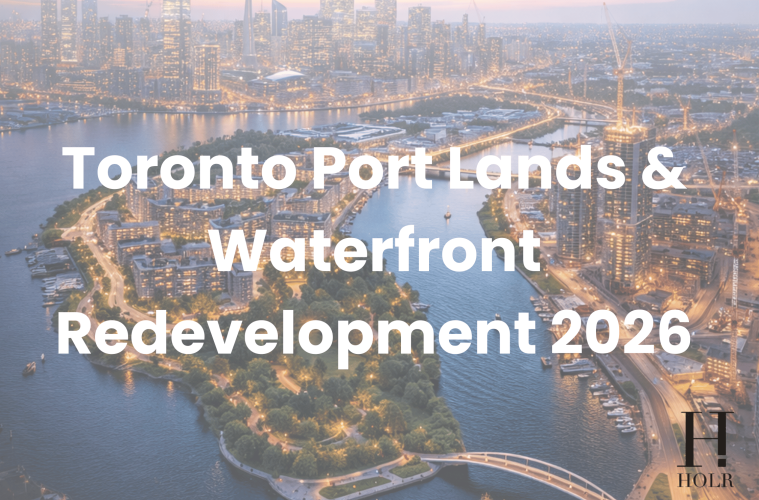
Toronto’s Port Lands and waterfront redevelopment are transforming the city in 2026, unlocking new investment, mixed-use growth, and structured real estate opportunities.
February 19, 2026: Toronto’s Port Lands and broader waterfront redevelopment represent one of the most ambitious urban transformation projects in North America. In 2026, this large-scale renewal is not just about construction — it is about unlocking economic value, establishing new market rules, attracting global investment, and redefining how waterfront cities grow sustainably.
Once dominated by industrial land and underutilized space, the Port Lands are being reimagined into vibrant mixed-use communities, green public spaces, and transit-connected residential and commercial hubs. HOLR has the latest news on how this transformation is unfolding and what it means for investors, developers, and the future of Toronto real estate.
Image Credit: Bloomberg.com
Flood Protection: The Game-Changer for Development
The most critical catalyst for Port Lands redevelopment has been large-scale flood protection infrastructure. Historically, flood risk from the Don River limited the ability to build in the area. The completion of major flood mitigation and river naturalization projects has unlocked hundreds of acres of land for safe development.
This infrastructure investment fundamentally changed the land’s economic viability. What was previously restricted industrial land is now zoned and prepared for residential, commercial, and mixed-use expansion. Flood protection did not just solve an environmental issue — it created one of Toronto’s most significant real estate opportunities in decades.
Ookwemin Minising and New Waterfront Neighbourhoods
A newly created island district, now known as Ookwemin Minising, is set to become a major residential and employment centre. Plans call for thousands of housing units, retail corridors, parks, and community services. Over time, the broader Port Lands area could support tens of thousands of residents and workers.
The vision centers around integrated living — combining housing, employment space, green infrastructure, and public access to the waterfront. Walkability and sustainability are core principles guiding development.
This model reflects a global urban planning shift: building complete communities rather than isolated towers.

Image Credit: NOW Toronto
Investment Landscape in 2026
Public investment exceeding billions of dollars in infrastructure has paved the way for private capital to enter the Port Lands at scale. Institutional investors, real estate funds, and major developers are closely watching phased land releases and development parcels.
The investment environment in 2026 emphasizes long-term value creation rather than short-term speculation. Because the area is being built from the ground up, returns are expected to be gradual but significant as infrastructure, transit, and population density increase over time.
Proximity to downtown Toronto adds to the area’s appeal. The Port Lands are minutes from the financial district, making them attractive for both residential buyers and commercial tenants.
Market Conditions and Pricing Expectations
While Toronto’s broader housing market has experienced moderation compared to previous peak cycles, waterfront land remains premium due to scarcity and long-term demand. Early-stage development parcels in the Port Lands reflect future growth potential rather than current density.
Market analysts describe the Port Lands as a multi-decade growth corridor. Pricing is expected to rise progressively as transit connections strengthen, amenities are completed, and residential occupancy increases.
In 2026, buyers and investors are evaluating this district through a future-focused lens — prioritizing long-term appreciation and urban transformation rather than immediate flipping opportunities.
Image Credit: Urban Strategies
Development and Zoning Rules
Redevelopment in the Port Lands operates under a comprehensive planning framework guided by the City of Toronto and waterfront development authorities. Zoning policies prioritize mixed-use density, sustainability, public access to green space, and integration with transportation systems.
Developers must adhere to strict environmental standards, urban design guidelines, and phased infrastructure coordination. Building approvals require alignment with master planning objectives that balance residential, commercial, and employment land uses.
These regulatory frameworks provide stability and predictability for investors. Unlike speculative suburban sprawl, Port Lands development follows a structured and carefully sequenced model.
Sustainability and Environmental Standards
Waterfront redevelopment carries heightened environmental responsibility. Projects must incorporate green building practices, stormwater management systems, flood resilience strategies, and energy-efficient designs.
Sustainability is not an optional feature — it is embedded in approval processes. Green space allocation, tree canopy integration, and public shoreline access are mandated components of development plans.
This commitment enhances long-term property value while protecting the natural ecosystem that makes waterfront living desirable.
Image Credit: Instagram
Transit and Infrastructure Expansion
Transit connectivity remains a key pillar of the Port Lands strategy. Plans include expanded streetcar routes, improved bus access, and long-term integration with broader GTA transit systems.
Transit infrastructure significantly influences property value. Developments near future transit lines typically experience stronger demand and pricing resilience. Investors are closely monitoring infrastructure timelines as part of their market evaluation.
Improved connectivity will position the Port Lands as a seamless extension of downtown Toronto rather than a detached waterfront pocket.
Economic Impact and Employment Growth
The redevelopment of the Port Lands is expected to generate thousands of construction jobs and long-term employment opportunities across sectors. As commercial spaces open, new businesses in retail, hospitality, creative industries, and professional services are projected to follow.
This economic ripple effect supports Toronto’s broader metropolitan growth strategy. The waterfront is not simply being transformed for residential use — it is being built as an employment generator and innovation corridor.
Long-term projections suggest billions in economic activity tied directly and indirectly to the Port Lands buildout.
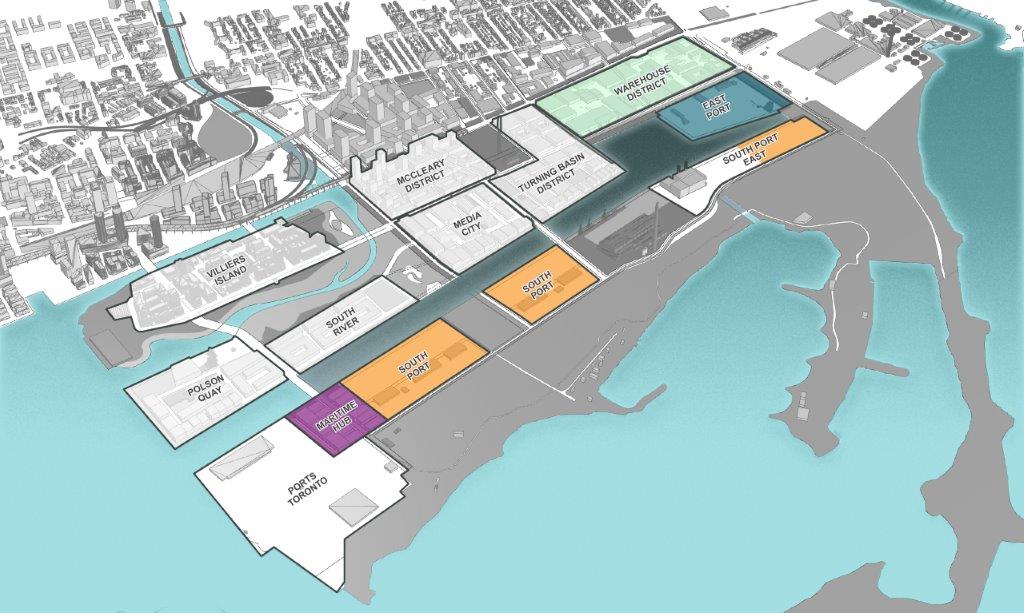
Image Credit: Toronto
Market Rules and Investor Considerations
Investment in the Port Lands requires understanding phased development timelines. Parcels are released strategically, meaning supply enters the market gradually. This prevents oversaturation and supports pricing stability.
Foreign investment rules, municipal development charges, and environmental compliance costs all factor into financial modeling. Investors must account for longer development cycles compared to traditional infill projects.
However, structured planning reduces regulatory uncertainty. Clear master plans provide a roadmap for density targets, public amenities, and land use allocation.
Challenges and Risk Factors
Large-scale redevelopment projects carry risks, including construction cost volatility, approval delays, and infrastructure timing. Waterfront developments also require higher upfront investment in environmental and structural safeguards.
Affordability remains a policy priority. Inclusionary housing requirements and affordable unit allocations may influence profit margins but support social balance within the district.
Despite these challenges, the strategic coordination between government bodies and private developers positions the Port Lands as one of Canada’s most carefully managed redevelopment zones.
A Waterfront Built for the Future
The transformation of Toronto’s Port Lands represents more than new buildings. It reflects a long-term urban evolution centered on sustainability, density, economic opportunity, and integrated planning.
In 2026, the Port Lands stand at the intersection of infrastructure investment, real estate growth, and visionary urban design. As phases continue to unfold, the district is expected to emerge as one of Toronto’s most desirable waterfront communities.
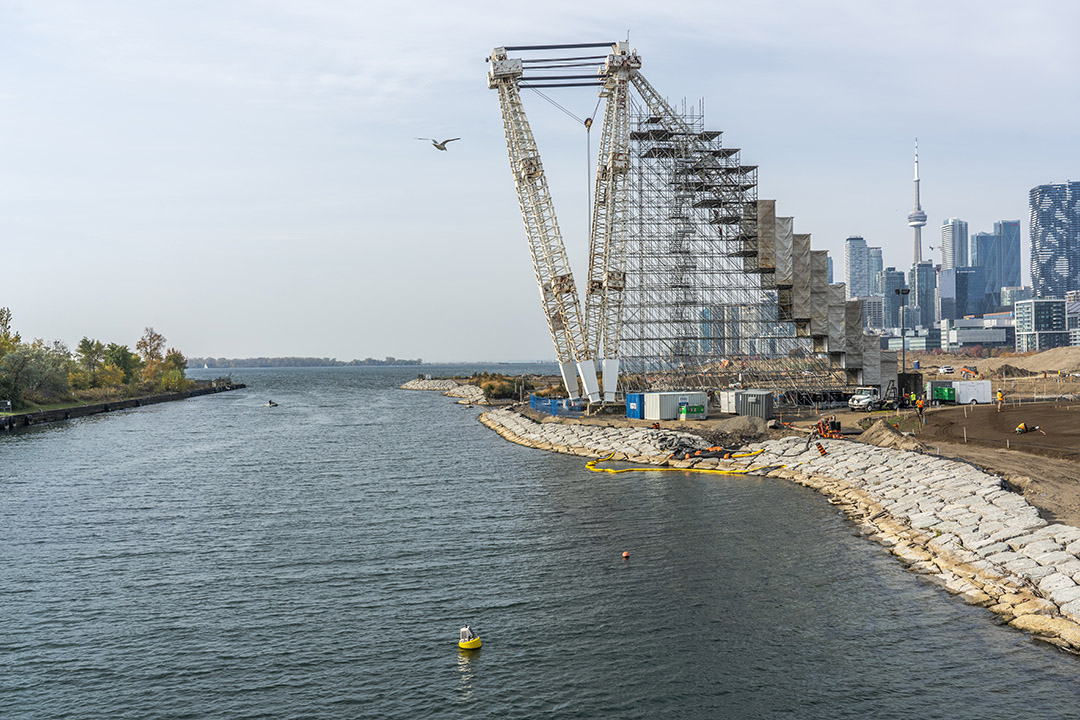
Image Credit: Waterfront Toronto
HOLR recognizes this redevelopment as a defining chapter in Toronto’s urban expansion — one built on strategic planning, disciplined investment, and forward-thinking market rules that prioritize resilience and long-term growth.
Published by HOLR Magazine