


Pilots dead after Montreal flight crash at LaGuardia raises urgent safety questions
What Happened at LaGuardia Airport?
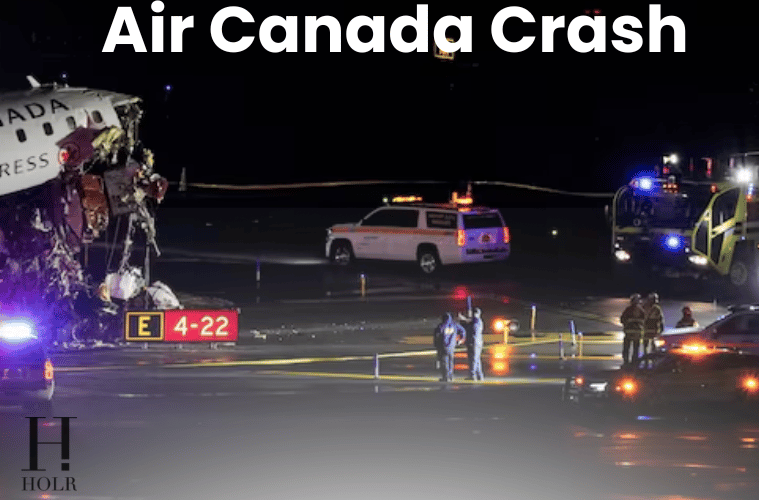
March 23, 2026 — A shocking aviation incident has captured global attention after reports claimed that two Air Canada pilots died following a crash at New York’s LaGuardia Airport shortly after departing from Montreal. The flight originated from Pierre Elliott Trudeau International Airport and was nearing the end of its journey when the incident reportedly occurred.
According to emerging details, the situation may not have been a traditional crash but rather a runway collision, which has raised serious questions about airport ground coordination and safety protocols.
Image Credit: WINK News
Runway Collision: What Reports Suggest
Initial reports indicate that a fire truck was crossing Runway 4 at LaGuardia Airport at the same time the Air Canada aircraft was landing. The emergency vehicle was reportedly responding to a separate incident involving a United Airlines flight, which had experienced an issue during takeoff.
Authorities stated that the United Airlines situation was linked to an unusual odour detected during takeoff, prompting precautionary emergency response measures. As a result, a fire truck was dispatched onto the runway.
In a tragic turn of events, the Air Canada aircraft is said to have collided with the fire truck during its landing sequence.
How Could This Happen?
Runway operations at busy airports like LaGuardia are highly coordinated environments, where every movement is controlled by air traffic control (ATC). Aircraft landings, takeoffs, and ground vehicle movements are carefully timed to avoid conflicts.
However, incidents like this—though extremely rare—can occur due to a combination of factors:
1. Miscommunication Between Ground and Air Traffic Control
One of the most critical elements in aviation safety is clear communication. If there was any delay, misunderstanding, or overlap in communication between:
- Air traffic controllers
- Ground vehicle operators
- Flight crew
it could result in both the aircraft and emergency vehicle being cleared onto the same runway at the same time.
2. Emergency Response Urgency
The presence of the fire truck on the runway suggests that airport authorities were responding quickly to the United Airlines incident. In emergency situations, decisions are often made rapidly to ensure passenger safety.
However, this urgency can sometimes create complex coordination challenges, especially at high-traffic airports where multiple operations are happening simultaneously.
3. Limited Reaction Time During Landing
Landing is one of the most critical phases of flight. Once an aircraft is committed to landing:
- Speed is already reduced but still significant
- Altitude is low
- Pilots have limited time and space to react
If an unexpected obstacle—such as a vehicle—appears on the runway, avoiding it can be extremely difficult, even for highly trained pilots.
4. Runway Visibility and Timing
Depending on visibility conditions and timing, the pilots may not have seen the fire truck until it was too late. Even in clear conditions, the alignment and angle of approach can sometimes limit how quickly an obstacle is detected.
5. High-Traffic Airport Complexity
LaGuardia Airport is known for its intense air traffic and tight operational environment. With multiple flights arriving and departing in close intervals, coordination must be precise.
A simultaneous emergency response and incoming landing can create a narrow margin for error if not perfectly synchronized.

Image Credit: The Sunday Guardian
Important Clarification on Reports
While these details provide a clearer picture of what may have happened, it is important to note that:
- Full official confirmation and investigation findings are still pending
- Details may evolve as authorities release verified information
- Early reports can sometimes contain incomplete or developing information
What Happens Next in the Investigation
If confirmed, this type of incident would trigger a full-scale investigation by aviation authorities. This would include:
- Reviewing air traffic control communications
- Examining runway clearance logs
- Analyzing cockpit voice and flight data recordings
- Investigating emergency response procedures
The goal would be to determine exactly how both the aircraft and the fire truck ended up on the same runway at the same time.

Image Credit: Times Colonist
Aviation Safety Under Scrutiny
This incident, if verified, highlights the importance of seamless coordination between air and ground operations. While aviation remains one of the safest modes of transportation, rare events like runway incursions underscore how critical timing, communication, and protocol adherence truly are.

Image Credit: CBC
FAQs
1. What caused the Air Canada crash at LaGuardia?
Reports suggest a runway collision with a fire truck responding to a separate United Airlines incident involving an odour during takeoff.
2. Where did the Air Canada flight originate?
The flight departed from Pierre Elliott Trudeau International Airport in Montreal.
3. Why was a fire truck on the runway?
It was responding to another aircraft issue involving a United Airlines flight.
4. Are runway collisions common?
No, they are extremely rare due to strict air traffic control systems.
5. Has the incident been officially confirmed?
Investigations and official confirmations are still ongoing.
Published by HOLR Magazine