


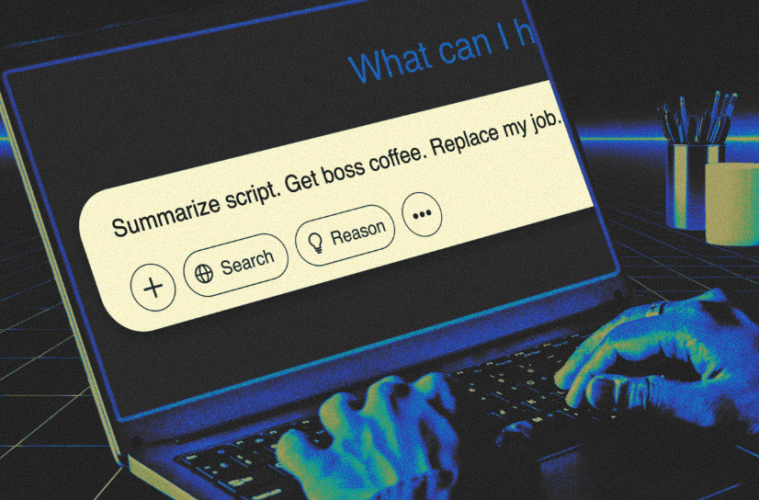
Industry insiders rely on AI tools despite ethical concerns
Assistants Turn to AI Behind the Scenes
April 04, 2026 – A new industry report reveals that Hollywood assistants are increasingly using artificial intelligence tools in their daily workflows—even when they feel uneasy about it. From script coverage to early-stage development, AI is quietly becoming part of the creative process, often without formal approval or acknowledgment.
Many assistants, who are typically overworked and under pressure, are turning to AI to keep up with demanding workloads. Despite concerns about ethics and long-term consequences, the efficiency gains are proving difficult to ignore.

Image Credit: Getty Images
AI’s Growing Role in Script Development
One of the most notable areas where AI is being used is script development. Assistants are leveraging tools to summarize scripts, generate notes, and even help brainstorm ideas. These tools can significantly reduce the time required to process large volumes of material.
AI systems are now capable of analyzing story structure, suggesting edits, and even generating dialogue, making them increasingly attractive for early-stage creative work.
However, this raises questions about authorship and originality, particularly in an industry built on creative expression.
“Better Judgment” vs. Industry Pressure
Despite using AI, many assistants reportedly feel conflicted. There is a widespread understanding that reliance on such tools could undermine creative integrity or even threaten jobs in the long run.
At the same time, assistants face intense pressure to deliver results quickly. In a competitive environment where speed and efficiency are highly valued, AI becomes a practical—if controversial—solution.
This tension between personal ethics and professional demands is at the heart of the issue.

Image Credit: Christopher Smith/TheWrap
A Culture of Quiet Adoption
The use of AI in Hollywood is often described as a “don’t ask, don’t tell” practice. Many professionals are hesitant to openly admit they are using these tools, fearing backlash or reputational damage.
This secrecy reflects broader industry uncertainty about AI’s role. While studios and tech companies are investing heavily in AI, individuals on the ground are navigating its use cautiously.
The result is a landscape where AI is both widely used and rarely discussed openly.
Efficiency vs. Creativity Debate
AI’s appeal lies in its ability to streamline workflows. Tasks that once took hours—such as script breakdowns or coverage—can now be completed in minutes. Tools are even being used to assist with pre-production planning and story analysis.
But critics argue that this efficiency comes at a cost. Creative work is not just about output—it’s about human perspective, emotion, and originality. Relying too heavily on AI risks flattening those elements.
This debate is becoming increasingly central to Hollywood’s future.
Industry-Wide Anxiety Around AI
The concerns expressed by assistants mirror broader anxieties across Hollywood. Writers, actors, and other creatives have raised alarms about AI’s potential to replace human roles or exploit existing work without consent.
At the same time, some industry leaders are reframing AI as a tool rather than a replacement—emphasizing a “human-in-the-loop” approach where technology supports, rather than replaces, creativity.
This divide highlights the uncertainty surrounding AI’s long-term impact.

Image Credit: Cheyne Gateley for Variety
The Risk of Normalizing AI Use
As more assistants adopt AI tools, there is a risk that their use becomes normalized without clear guidelines or protections. What begins as a shortcut for efficiency could evolve into a standard expectation.
This shift could have significant implications for entry-level roles in Hollywood, which have traditionally served as training grounds for future writers and producers.
If AI takes over foundational tasks, the pathway into the industry could fundamentally change.
Ethical and Legal Questions
The use of AI in script development also raises important legal questions. Issues around copyright, data sourcing, and intellectual property remain unresolved.
If AI-generated content is based on existing material, questions arise about ownership and compensation. These concerns are fueling ongoing debates and could lead to new regulations in the future.

Image Credit: Illustration by Antonio Sortino
A Transitional Moment for Hollywood
Hollywood appears to be in a transitional phase, moving from skepticism to cautious experimentation with AI. While the technology offers undeniable benefits, it also challenges long-standing norms about creativity and authorship.
Assistants, often at the front lines of production workflows, are playing a key role in this transition—testing the boundaries of what AI can and should do.
Final Thoughts
The quiet adoption of AI by Hollywood assistants reveals a complex and evolving relationship between technology and creativity. While the tools offer efficiency and support, they also introduce ethical dilemmas and industry-wide uncertainty.
As AI continues to integrate into filmmaking, the challenge will be finding a balance—one that preserves human creativity while embracing technological innovation. For now, assistants remain caught in the middle, navigating a future that is still being defined.
FAQs
Q1: How are Hollywood assistants using AI?
They are using it for tasks like script summaries, coverage, brainstorming, and development support.
Q2: Why are they hesitant about using AI?
Concerns include ethical issues, job security, and the impact on creative integrity.
Q3: Is AI officially approved in these workflows?
In many cases, its use is informal and not openly discussed.
Q4: What are the risks of AI in script development?
Potential risks include loss of originality, copyright issues, and reduced opportunities for entry-level roles.
Q5: Will AI replace human creatives in Hollywood?
Most industry perspectives suggest AI will augment rather than fully replace human creativity, though concerns remain.
Published by HOLR Magazine