


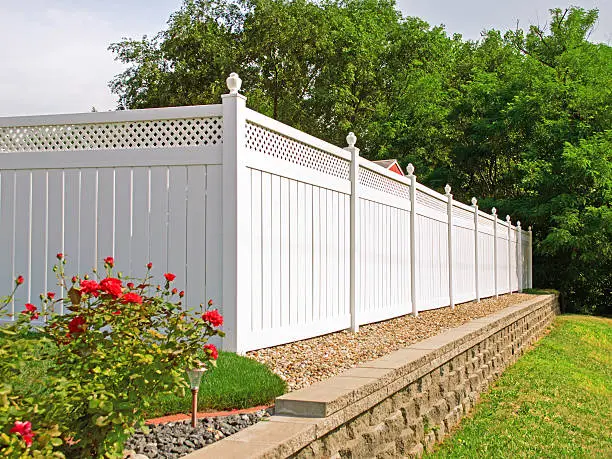
Here’s the short answer Washington State homeowners need: vinyl fence durability in Pacific Northwest weather is genuinely strong — but only when you buy the right grade of material and have it professionally installed. Thin-wall vinyl panels from big-box retailers won’t survive Seattle’s freeze-thaw cycles or Puget Sound’s gusting winds for long. Premium-grade virgin PVC fencing, reinforced with UV stabilizers and properly anchored with deep concrete footings, routinely lasts 20 to 30 years in Western Washington — often more.
This matters in a region where annual rainfall in Seattle averages 39.3 inches, wind events off Puget Sound regularly push 30–50 mph gusts during fall and winter, and summer UV exposure — while lower than states like Arizona — still causes gradual material degradation in untreated plastics. Understanding exactly how vinyl responds to each of these stressors helps Eastside and Seattle-area homeowners make a genuinely informed fencing decision, not just a trendy one.

What Is Vinyl Fencing, and Why Does Material Grade Matter?
Vinyl fencing is manufactured from polyvinyl chloride (PVC), a rigid thermoplastic polymer that is non-porous, dimensionally stable, and chemically resistant to moisture, mold, and most organic compounds. Unlike wood, it cannot absorb water. Unlike metal, it cannot rust. Those two properties alone make it structurally well-suited to Pacific Northwest conditions.
However, not all vinyl is equivalent. There are two primary grades on the market:
- Virgin PVC — Made entirely from new, unrecycled PVC compound, blended with UV stabilizers (typically titanium dioxide), impact modifiers, and heat stabilizers during extrusion. This is the grade used by professional fence contractors across the Seattle metro area.
- Regrind or recycled PVC — Made partially or fully from recycled material, which degrades faster, yellows more quickly under UV exposure, and shows brittleness in freeze-thaw conditions sooner than virgin PVC.
Wall thickness is equally critical. In Pacific Northwest installations, professional contractors specify panels at .080 inches or thicker. Panels thinner than this threshold are documented to lean, bow, or crack under sustained wind loads and freeze-thaw stress common in Western Washington winters. If a contractor doesn’t discuss wall thickness upfront, that’s a question worth asking before any contract is signed.
For homeowners on Mercer Island, Bellevue, and the broader Eastside who want to skip the guesswork entirely, Low Maintenance vinyl fence installation Mercer Island, WA connects you with contractors who specify grade-appropriate materials for the local climate from the start.
How Vinyl Holds Up Against Pacific Northwest UV Exposure
Western Washington doesn’t receive the aggressive UV radiation levels of California or Nevada, but cumulative sun exposure over Seattle’s long, dry summers still degrades untreated plastics over time. The UV index in Seattle peaks at 7–8 during July and August — classified as “high” by the World Health Organization — and even overcast skies transmit a meaningful percentage of UV-B radiation.
The primary UV failure modes in low-grade vinyl fencing are:
- Chalking — A powdery white surface residue caused by UV breaking down the polymer surface layer
- Yellowing — Oxidation of the PVC compound turning white panels a dull cream or yellow
- Surface brittleness — UV degradation reduces impact resistance over time, making panels more susceptible to cracking from falling debris or minor physical contact
How quality vinyl addresses UV in the PNW:
Premium vinyl fencing manufacturers compound titanium dioxide directly into the PVC material during the extrusion process. Titanium dioxide functions as a UV reflector at the molecular level — it absorbs UV radiation before it can break down the polymer chains in the PVC. The result is a fence that maintains color stability and surface integrity far longer than untreated or thin-grade alternatives.
In real-world terms, professionally installed virgin PVC fencing with adequate titanium dioxide content shows no meaningful chalking or yellowing for the first 10–15 years in Pacific Northwest conditions. By contrast, thin-wall regrind vinyl can show visible yellowing within 3–5 seasons in the same Seattle-area climate.
Mold and Moss Resistance: Vinyl’s Biggest Advantage in the PNW
If there’s one climate variable that separates Pacific Northwest fence maintenance from anywhere else in the country, it’s persistent biological growth. Moss, algae, and mildew don’t just grow on roofs in Western Washington — they colonize fences, driveways, and decks during the long wet season that runs from October through April.
Why vinyl resists mold and moss growth better than wood or composite:
Biological growth requires two things: moisture and a substrate to anchor into. Vinyl’s 100% non-porous surface denies both. Water cannot penetrate the fence material, and the smooth PVC exterior offers no microscopic surface texture for moss rhizoids or mold spores to grip and colonize. Contrast this with cedar fencing — which absorbs moisture into its grain structure and provides an organic surface that moss and mildew actively consume — or composite fencing, which contains wood fiber content that retains moisture in shaded or north-facing installations.
In practical terms: a vinyl fence on a shaded north-facing property line in Bellevue or Kirkland will develop surface-level algae staining over time — the green or black discoloration that’s familiar to any Western Washington homeowner. But this is purely cosmetic. The algae or mold is not penetrating the material or degrading the structure. A rinse with a garden hose or a mild solution of dish soap and water removes it completely in most cases.
This distinction — surface staining vs. structural degradation — is what separates vinyl from wood in the Pacific Northwest context. Cedar in the same shaded, wet conditions isn’t just stained; it’s being actively broken down by biological growth. The treatment required is fundamentally different, and the long-term cost is far higher.
The team at Optima Fence & Deck regularly advises Eastside homeowners on how to evaluate north-facing fence lines and choose materials that won’t require replanting or full replacement within a decade due to biological degradation.
Wind Performance: What the Data Shows for Western Washington
Vinyl fencing’s relationship with wind is more nuanced than its relationship with moisture or UV. Properly installed vinyl fences perform well under sustained wind loads — but installation quality determines outcome far more than material alone.
Washington State wind context: The Puget Sound region experiences regular fall and winter windstorm events, with recorded peak gusts at Seattle-Tacoma International Airport frequently reaching 40–60 mph during Puget Sound Convergence Zone events. The Pacific Coast and Straits of Juan de Fuca corridor can see gusts exceeding 70–80 mph during major storm events (publisher note: verify with current NOAA data for your area).
How vinyl behaves under wind load:
Unlike rigid materials such as pressure-treated wood or metal that resist wind by brute structural strength, vinyl performs through controlled flexion. Quality vinyl panels are engineered to flex slightly under lateral wind pressure, absorbing and distributing the load rather than resisting it rigidly until failure. This is the same engineering principle used in earthquake-resistant building design — controlled movement beats brittle resistance.
Key installation factors that determine wind performance in Pacific Northwest conditions:
- Post depth and footing — Posts should be embedded in concrete to a minimum depth of 24 to 30 inches in Western Washington, below the local frost line, to prevent heaving during freeze-thaw cycles that loosen shallow footings over time.
- Panel spacing and wind gaps — Solid privacy panels act as wind sails in high gusts. Professional installers in storm-prone areas use shadow-gap spacing or internal aluminum rail inserts to reduce lateral wind load.
- Internal rail reinforcement — Premium installations use aluminum insert sleeves inside horizontal rails, adding structural rigidity without compromising the vinyl’s visual appearance or flexibility under light wind loads.
- Stainless steel fasteners — Galvanized or stainless steel hardware prevents corrosion-driven fastener failure in WA’s wet environment, which is one of the most common causes of fence panel loosening over time.
A vinyl fence installed with all four of these specifications — deep concrete footings, aluminum-reinforced rails, appropriate panel spacing, and corrosion-resistant fasteners — has demonstrated strong performance through multiple Pacific Northwest windstorm seasons.
Real Cost of Vinyl Fencing in the Seattle and Eastside Market
Understanding the cost landscape helps Washington State homeowners evaluate vinyl fencing not just on performance merits, but as a true financial decision.
According to current Seattle-area market data (publisher note: verify with current contractor quotes):
| Specification | Cost Range (Seattle Metro) |
| Standard 6-ft vinyl privacy fence (installed) | $20–$35 per linear foot |
| Premium grade with aluminum reinforcement | $35–$50 per linear foot |
| 150 ft project — standard grade | $3,000–$5,250 |
| 150 ft project — premium grade | $5,250–$7,500 |
| Average total project cost (Seattle) | $2,444–$4,947 |
| Fence removal (existing fence) | $3–$5 per linear foot |
10-year cost comparison against cedar in the Pacific Northwest:
- Cedar fence (10-year total): Installation at $40/linear foot mid-range + staining every 2–3 years (4 cycles) + board replacements = approximately $7,300–$8,150 for 150 linear feet
- Vinyl fence (10-year total): Installation at $35/linear foot mid-range + annual wash only = approximately $5,250–$5,500 for 150 linear feet
The math favors vinyl significantly once maintenance cycles are factored in — particularly relevant for Eastside homeowners in Mercer Island, Bellevue, and Kirkland where labor rates for painting and staining contractors are among the highest in the state.
Limitations of Vinyl Fencing in the Pacific Northwest — Honestly Stated
No material is without trade-offs, and vinyl fencing has specific limitations Pacific Northwest homeowners should understand before committing.
- Freeze-thaw vulnerability in thin-wall panels — Below-grade PVC becomes brittle at sustained temperatures below 20°F. While Seattle’s lowland climate rarely reaches those extremes, higher-elevation Eastern Washington communities (Spokane, Ellensburg, Wenatchee) should prioritize impact-modified virgin PVC specifically rated for cold-climate performance.
- Warping in extreme solar heat — While quality vinyl resists UV degradation well, dark-colored vinyl panels absorb significantly more radiant heat than white. In Seattle’s increasingly warm summer conditions, dark-toned vinyl panels on south-facing fence lines should be specified in thick-wall grades to minimize thermal expansion warping.
- Challenging repair profile — Unlike wood fencing where individual boards can be replaced cheaply, vinyl panel sections must match the original manufacturer’s color and extrusion profile. Sourcing matching replacement sections years later can be difficult if the product line has been discontinued.
- Not a DIY-friendly material at premium grades — The level of installation precision required for aluminum-reinforced panels, correct post depth, and concrete footing spec is beyond most DIY fence projects. The performance advantage of vinyl in Pacific Northwest conditions is almost entirely dependent on professional-grade installation.
Vinyl Fence Durability in Pacific Northwest Weather: The Verdict
Vinyl fence durability in Pacific Northwest weather earns high marks when the full picture is understood. Its non-porous surface makes it genuinely the best available defense against Western Washington’s mold and moss challenges. Its UV-stabilized surface chemistry handles Seattle’s summer sun exposure across decades without structural degradation. And its engineered flexibility — when properly installed with deep footings and reinforced rails — translates to strong performance through Puget Sound’s seasonal windstorm events.
The conditional in all of this is specification and installation quality. Virgin PVC at .080 inches or thicker, titanium dioxide UV stabilization, aluminum rail inserts, deep concrete footings, and stainless steel fasteners are not optional extras in a Pacific Northwest climate — they are the baseline for a fence that will still look and perform like new in 25 years. Buy to that standard, install it correctly, and vinyl is one of the most defensible fencing investments a Washington State homeowner can make.

❓ FAQ Section
Q1: Does vinyl fencing hold up well in Pacific Northwest rain and moisture?
Yes. Vinyl’s 100% non-porous PVC surface prevents moisture absorption entirely, eliminating rot, swelling, and structural water damage. Unlike cedar or composite fencing, vinyl won’t degrade from Western Washington’s persistent rainfall. Surface algae staining may develop on shaded fence lines but is purely cosmetic and cleans off easily with soap and water — no structural concern involved.
Q2: Will vinyl fencing yellow or fade in Seattle’s climate over time?
Premium-grade vinyl fencing containing titanium dioxide UV stabilizers resists yellowing and chalking for 10–15 years or more in Pacific Northwest conditions. Low-grade or regrind PVC fencing without adequate UV stabilizers can show visible yellowing within 3–5 years. Always confirm that your fence contractor specifies virgin PVC with UV inhibitors — not recycled-content or big-box grade panels.
Q3: How does vinyl fencing perform in Pacific Northwest wind and storms?
Quality vinyl fencing handles Puget Sound-area wind events well when properly installed with deep concrete footings (24–30 inches), internal aluminum rail reinforcement, and stainless steel fasteners. Vinyl’s engineered flexibility allows it to absorb lateral wind pressure without cracking. Improperly installed shallow-post fences or thin-wall panels are the primary cause of wind-related vinyl fence failures in Washington State.
Q4: How much does vinyl fence installation cost in Seattle and Bellevue, WA?
Vinyl fence installation in the Seattle metro area runs approximately $20–$35 per linear foot for standard 6-foot privacy grades and $35–$50 per linear foot for premium aluminum-reinforced specifications. A 150-linear-foot project averages $3,000–$7,500 depending on spec and contractor. Average total project cost in Seattle is roughly $2,444–$4,947 (verify current rates with local contractors).
Q5: Does vinyl fencing grow mold or moss in the Pacific Northwest?
Vinyl fencing does not structurally grow mold — its non-porous surface denies moisture and organic material from penetrating the material. However, surface-level algae and mildew staining can appear on shaded or north-facing fence sections during Western Washington’s wet season. This is cosmetic only and washes off with a garden hose or mild soap solution. It requires no chemical treatment or structural repair.