


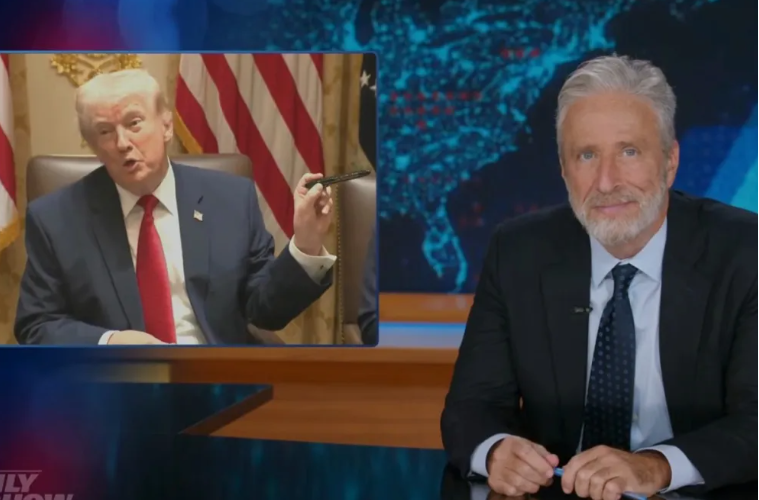
Comedian critiques presidential tone amid Iran conflict
Jon Stewart’s Latest Critique Goes Viral
March 31, 2026 – Jon Stewart is making headlines once again after delivering a sharp critique of Donald Trump, comparing his recent public behavior to that of a “grandpa who’s lost his filter in public.”
The comment came during a recent appearance where Stewart addressed Trump’s tone and communication style amid the ongoing U.S. military conflict involving Iran. As expected, the remark quickly spread across social media, sparking widespread discussion and debate.

Image Credit: Comedy Central
The Line That Sparked Attention
Stewart framed his critique by contrasting expectations of presidential leadership during wartime with what he described as Trump’s current demeanor. Rather than projecting the seriousness typically associated with a “commander-in-chief at war,” Stewart argued that Trump’s tone feels informal, erratic, and at times overly casual.
The “unfiltered grandpa” comparison, while humorous, was intended to highlight what Stewart sees as a disconnect between the gravity of the situation and the language being used by the president.
Comedy as Political Commentary
Jon Stewart has long been known for blending satire with political analysis, using humor to dissect complex issues and public figures.
His critique of Trump fits into a broader tradition of late-night commentary, where comedians act as cultural commentators, offering perspectives that resonate with audiences seeking both information and entertainment.
In this case, Stewart’s remarks reflect ongoing concerns about communication style, leadership tone, and the role of rhetoric during times of conflict.

Image Credit: Matt Wilson/Comedy Central’s ‘The Daily Show’
Trump’s Communication Style Under Scrutiny
Donald Trump has consistently been a polarizing figure when it comes to communication. Known for his direct and often unconventional style, he has both strong supporters who appreciate his candor and critics who argue that his approach lacks the decorum expected of a president.
Stewart’s comments tap into this divide, emphasizing how language and tone can shape public perception—especially during high-stakes situations like military conflicts.
Public Reaction and Divided Opinions
The response to Stewart’s remarks has been predictably mixed. Supporters praised the comedian for articulating concerns about leadership and communication, viewing his comments as both humorous and insightful.
Critics, however, argued that the comparison was overly dismissive and reflective of broader political bias within late-night comedy.
This divide mirrors the larger political landscape, where interpretations of Trump’s behavior often vary widely depending on individual perspectives.
:max_bytes(150000):strip_icc()/jon-stewart-donald-trump-041425-ef689ae2cfa34e0d8d9d606b609536b7.jpg)
Image Credit: Comedy Central/ Anna Moneymaker/Getty
The Broader Context of Wartime Leadership
The debate sparked by Stewart’s comments goes beyond a single remark. It raises broader questions about what audiences expect from leaders during times of conflict.
Historically, wartime communication has emphasized clarity, seriousness, and reassurance. Stewart’s critique suggests that deviations from this approach can create uncertainty or undermine confidence.
At the same time, others argue that modern communication styles have evolved, and that authenticity—even when informal—can resonate with certain segments of the public.
Satire’s Role in Shaping Public Discourse
Moments like this highlight the influence of satire in shaping public conversations. Comedians like Jon Stewart play a unique role in interpreting events, often simplifying complex issues through humor while still prompting deeper reflection.
While satire is not a substitute for traditional news, it can amplify certain perspectives and bring attention to aspects of a story that might otherwise be overlooked.

Image Credit: Phillip Faraone/Getty Images for Comedy Central
Why This Moment Resonates
The viral nature of Stewart’s comment reflects the heightened sensitivity around political leadership during times of crisis. With global tensions high, audiences are paying close attention not only to policy decisions but also to how those decisions are communicated.
Stewart’s framing—humorous yet pointed—captures this tension, making it accessible to a wide audience while still addressing serious concerns.
Final Thoughts
Jon Stewart’s comparison of Donald Trump to an “unfiltered grandpa” may be delivered as comedy, but it speaks to a broader conversation about leadership, communication, and public perception during critical moments.
As debates around tone and responsibility continue, comments like these highlight the power of satire to influence how political figures are viewed. Whether seen as a fair critique or an exaggerated joke, the moment underscores the growing role of comedic voices in shaping modern political discourse.
FAQs
Q1: What did Jon Stewart say about Donald Trump?
He compared Trump’s behavior to a “grandpa who’s lost his filter in public.”
Q2: Why did he make this comment?
He was criticizing Trump’s tone and communication during the Iran conflict.
Q3: Where did Jon Stewart say this?
During a recent appearance discussing political developments.
Q4: How did people react?
Reactions were divided, with both support and criticism.
Q5: Why is this significant?
It highlights ongoing debates about leadership communication and the role of satire.
Published by HOLR Magazine