


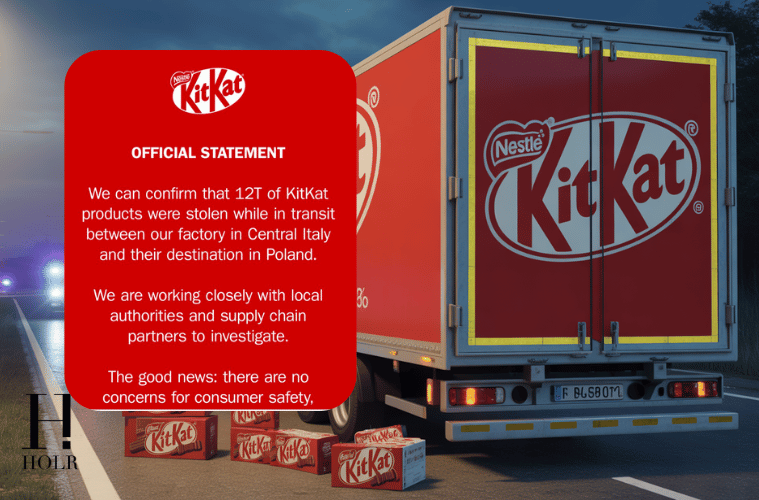
KitKat’s ‘Stolen Chocolate’ Story Explained: How a 12-Ton Heist Turned Into a Viral Tracker Campaign
What Actually Happened: The 12-Ton KitKat Heist
What sounds like a bizarre internet joke is actually a real international theft case involving one of the world’s biggest chocolate brands, KitKat.
Regarding recent press coverage pic.twitter.com/Huh4EnFV2J
— KITKAT (@KITKAT) March 29, 2026
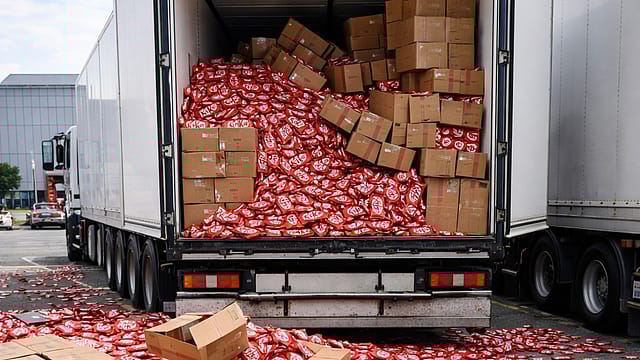
In late March 2026, a massive shipment of KitKat bars—around 12 tonnes (over 400,000 bars)—was stolen while being transported across Europe.
Credits: AI-Generated image
The truck carrying approximately 413,793 chocolate bars had left a factory in central Italy and was headed toward Poland for distribution. However, it never reached its destination, and both the vehicle and its contents disappeared.
This wasn’t a small theft—it was a large-scale cargo heist, something that businesses in Europe have increasingly been dealing with in recent years.
What Made These KitKats Special
The stolen chocolates weren’t just regular KitKat bars.
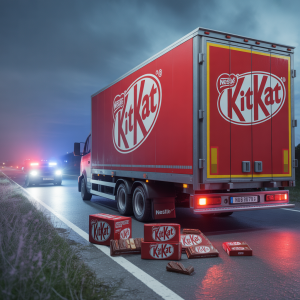
They were part of a special limited-edition release, reportedly linked to Formula 1, with unique designs shaped like race cars.
Credits: AI-Generated image
This made the stolen shipment even more valuable because:
- Limited editions often have higher resale demand
- The F1 connection increased global interest
- The timing near Easter added to market demand
Because of this, experts believe the stolen chocolates could potentially be sold through unofficial or black-market channels across Europe.
The Theft Itself: What We Know So Far
Details around the heist suggest it wasn’t random.
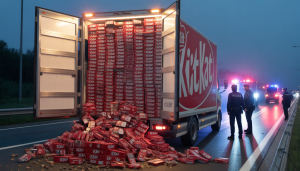
Reports indicate that the truck may have been targeted deliberately, and in some versions, thieves even posed as authorities to intercept the shipment.
As of now:
- The truck is still missing
- The stolen chocolate has not been recovered
- Authorities are actively investigating the case
Nestlé, the parent company behind KitKat, confirmed they are working closely with law enforcement and supply chain partners to track down the stolen goods.
Credits: AI-Generated image
Enter the ‘Stolen KitKat Tracker’
Instead of handling the situation quietly, KitKat did something unexpected—it turned the incident into a public campaign.
The brand launched a tool called the “Stolen KitKat Tracker,” allowing consumers to check whether their chocolate bar is part of the stolen batch.
Here’s how it works:
- Each KitKat bar has an 8-digit batch code on the packaging
- Users can enter this code on the tracker website
- The system tells them if their bar is from the stolen shipment
If a match is found, users are guided on how to report it to the company.
This effectively turns everyday customers into participants in solving a real-world theft case.
Not a Joke: Why KitKat Had to Clarify
Because the campaign launched around April 1, many people initially assumed it was an April Fool’s prank.
However, KitKat quickly clarified that:
The theft is real
The tracker is real
The investigation is ongoing
The brand even emphasized in its messaging that this is not a stunt, but a genuine attempt to locate stolen products.
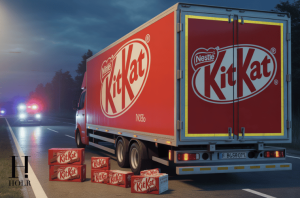
Credits: AI-Generated image
A Smart Marketing Move—Or Just Transparency?
While the theft itself is serious, KitKat’s response has been widely seen as a brilliant marketing move.
By going public, the company achieved several things:
- Turned a negative incident into global attention
- Increased engagement through the tracker
- Created a viral conversation around the brand
The campaign quickly gained traction online, with social media users sharing the story, making jokes, and even checking their own chocolate bars.
At the same time, the brand used humor in its messaging, referencing its famous slogan:
“Have a break… but it seems someone took it too literally.”
The Bigger Issue: Rising Cargo Theft
Beyond the viral moment, this incident highlights a much larger problem—cargo theft is increasing globally.
Companies transporting high-value goods are increasingly becoming targets of organized criminal groups.
Food products, especially limited-edition items, are particularly attractive because they:
- Are easy to resell
- Have high demand
- Can move quickly through unofficial channels
KitKat has openly stated that part of going public was to raise awareness about this growing issue.
Will Consumers Be Affected?
Despite the scale of the theft, KitKat has reassured customers that:
- There is no safety risk to consumers
- Overall supply remains stable
- There will still be enough stock available in stores
So while the story is dramatic, it is not expected to impact availability significantly.
Why This Story Went Viral
The reason this story exploded online is simple—it has all the elements of a viral moment:
- A massive and unusual theft
- A globally recognized brand
- A creative public response
- A participatory element through the tracker
It also sits at the intersection of crime, marketing, and internet culture, making it highly shareable.
Final Thoughts
The KitKat “stolen chocolate” story is a rare case where a real-world crime turned into a global viral moment.
At its core, this is a serious case involving the theft of 12 tonnes of chocolate, still under investigation. But the way KitKat handled it—by launching a public tracker—transformed it into something much bigger.
It’s not just a story about stolen candy.
It’s a case study in how brands can turn unexpected situations into powerful engagement moments—without losing sight of the real issue behind them.
For now, the mystery remains unsolved. And somewhere in Europe, over 400,000 missing KitKats are still unaccounted for.