


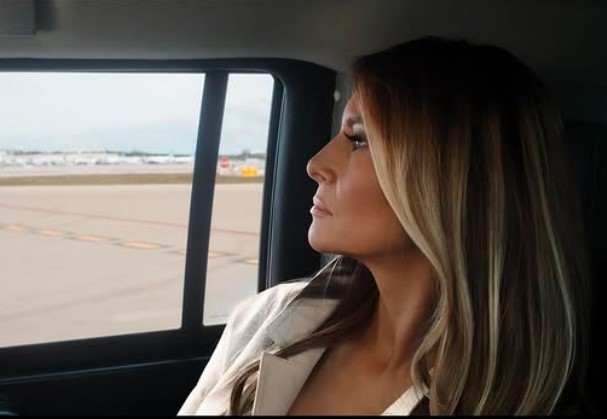
Viewers question whether the new ‘Melania’ trailer is real or an AI-generated parody
Online Reactions Raise Questions About Authenticity
December 18, 2025 — A newly released trailer titled Melania has left viewers across social media wondering whether what they’re watching is legitimate — or an elaborate AI-generated parody. Shortly after the trailer began circulating online, users started questioning its visuals, dialogue, and overall tone, with many suggesting it bears the unmistakable hallmarks of artificial intelligence rather than a traditional film production.
The uncertainty has fueled widespread debate, highlighting growing concerns about how realistic AI-generated media has become — and how difficult it can be for audiences to tell the difference between satire, technology, and reality.
View this post on Instagram
Why the Trailer Triggered AI Speculation
Viewers were quick to point out details they felt seemed “off,” including stiff facial movements, oddly polished lighting, and dialogue that some described as unnatural or overly stylized. These elements led many to speculate that the trailer may have been created using generative AI tools, or at least heavily enhanced by them.
Others noted that the trailer’s dramatic tone and presentation felt exaggerated, prompting questions about whether it was meant as satire rather than a serious cinematic project. The lack of clear studio branding or official confirmation only added to the confusion.
HOLR breaks down why this trailer is being dissected frame by frame.
The Growing Blur Between AI and Entertainment
The reaction to Melania reflects a broader cultural moment in which AI-generated content is becoming increasingly sophisticated — and increasingly deceptive. Tools capable of producing lifelike faces, voices, and cinematic scenes are now widely accessible, allowing creators to generate professional-looking trailers without traditional production resources.
As a result, audiences are growing more skeptical, often assuming AI involvement even when projects may be legitimate. In this case, that skepticism has turned the Melania trailer itself into a conversation about media literacy rather than the story it appears to be promoting.
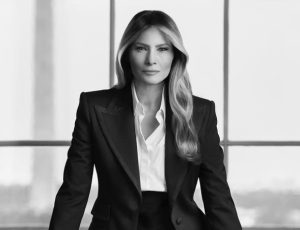
Image Credit: Instagram /@melaniatrump
No Clear Answers From Creators
As of now, no official clarification has been issued confirming whether the trailer is AI-generated, partially AI-assisted, or entirely conventional. The silence has allowed speculation to flourish, with some users arguing that the ambiguity may be intentional — designed to drive attention through controversy.
Media analysts note that even if the trailer is meant as parody, the absence of disclosure raises ethical questions. Without transparency, audiences are left guessing whether they’re engaging with art, satire, or synthetic media masquerading as something else.
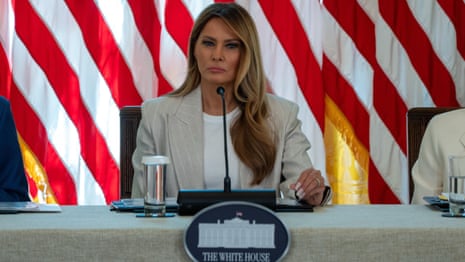
Image Credit: The Guardian
Why AI Parody Hits a Nerve
AI parody occupies a particularly sensitive space, especially when it involves real public figures. While satire has long been protected and celebrated, AI introduces new complications — including consent, likeness rights, and the potential for misinformation.
Critics argue that when parody becomes indistinguishable from reality, it risks misleading viewers rather than entertaining them. Supporters, however, contend that such projects reflect the natural evolution of creative tools and audience expectations.
The Melania trailer sits squarely at the center of that debate.
Social Media Reacts With Humor — and Concern
Online reaction has ranged from amused to unsettled. Some viewers treated the trailer as an obvious joke, sharing memes and sarcastic commentary. Others expressed discomfort, saying the realism made them uneasy about how easily AI could be used to fabricate believable narratives.
The mixed response underscores a shifting relationship between audiences and visual media. Where trailers were once trusted signals of official projects, they are now increasingly scrutinized for signs of manipulation.
HOLR has the latest on how AI continues to disrupt entertainment norms.

Image Credit: UPI
A Sign of What’s Ahead
Whether the Melania trailer is ultimately confirmed as AI-generated or not, the reaction itself is telling. The fact that audiences immediately questioned its authenticity speaks volumes about how normalized AI skepticism has become.
Industry experts warn that without clearer labeling standards, confusion like this will only grow. Platforms, creators, and studios may soon face increased pressure to disclose how AI is used — especially when content closely resembles traditional film marketing.
The Bigger Conversation About Trust
At its core, the Melania trailer controversy isn’t just about one video. It’s about trust — trust in what we see, trust in creators, and trust in the media ecosystem as a whole.
As AI tools continue to evolve, that trust will increasingly depend on transparency. For now, the trailer remains a digital Rorschach test: parody to some, warning sign to others.
What Happens Next
Until more information emerges, the trailer’s true nature remains unresolved. Whether intentional or accidental, the confusion has ensured one thing — people are paying attention.
And in an era where attention is currency, the line between clever marketing and ethical ambiguity has never been thinner.
Published by HOLR Magazine