


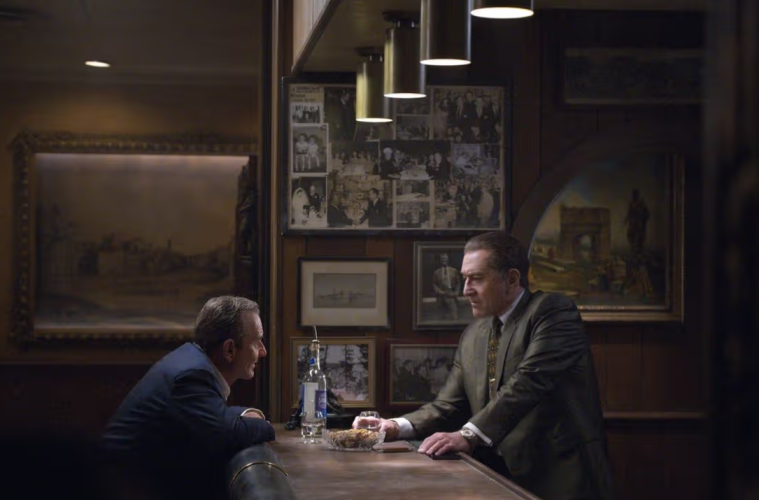
Iconic New York Hotel’s Transformation Reflects Migrant Crisis Shift
From Hollywood Backdrop to Real-World Crisis Hub
March 17, 2026 – A historic New York hotel featured in The Irishman became an unexpected symbol of the city’s migrant crisis after being converted into a temporary sanctuary for asylum seekers—before ultimately closing its doors.
The transformation highlights how New York City repurposed major properties during the height of the migrant influx, turning once-luxurious or culturally significant spaces into emergency housing facilities. What was once associated with cinema and prestige quickly became part of a real-world humanitarian response.

Image Credit: Getty Images
A Hotel at the Center of a Crisis
The hotel—widely identified as the Roosevelt Hotel—played a central role in New York’s response to a surge of migrants arriving in the city beginning in 2022.
Originally opened in 1924 and long considered a landmark property, the Roosevelt Hotel had already closed in 2020 due to financial losses during the COVID-19 pandemic. It later reopened in 2023, but not as a traditional hotel—instead, it was transformed into a migrant intake and shelter center.
At its peak, the site processed hundreds of arrivals daily and housed thousands of asylum seekers, becoming one of the most visible symbols of the city’s efforts to manage the crisis.
Inside the Migrant Sanctuary
The building was repurposed to function as both an intake center and temporary shelter. The lobby, once designed for luxury guests, was converted into a processing hub where migrants received medical care, legal assistance, and translation services.
For many arrivals, the hotel was their first stop in New York City. Long lines often formed outside as people waited for placement, reflecting the overwhelming demand for shelter during the peak of the crisis.
Over time, the facility handled an extraordinary number of cases, with more than 150,000 migrants passing through its doors during its operation.

Image Credit: Getty Images
Why the Hotel Closed
Despite its importance, the migrant center at the Roosevelt Hotel eventually shut down in 2025. The closure came as migrant arrivals to the city significantly declined, reducing the need for large-scale emergency facilities.
City officials cited lower weekly arrivals—dropping dramatically from thousands per week at the peak—as a key reason for scaling back operations.
The closure was part of a broader effort to phase out temporary shelters, including hotels and tent facilities, as the city transitioned toward more stable, long-term housing solutions.
A Symbol of a Larger Policy Shift
The shutdown of the Roosevelt Hotel migrant center marked a turning point in New York City’s handling of the crisis. At one point, the city operated dozens of emergency sites, including hotels, to accommodate tens of thousands of asylum seekers.
As conditions changed and arrivals slowed, officials began consolidating services and closing large facilities that had been set up quickly during the emergency phase.
The Roosevelt, once dubbed a central hub of the migrant system, became one of the most high-profile closures—symbolizing both the scale of the crisis and the city’s evolving response.

Image Credit: Getty Images
The Cultural Contrast
What makes the story particularly striking is the contrast between the hotel’s past and its recent role. Once associated with luxury, history, and even Hollywood—thanks to its appearance in The Irishman—the building became a frontline space for humanitarian aid.
This shift underscores how urban spaces can be rapidly redefined by global events. A location once tied to entertainment and tourism became, for a time, a place of refuge and transition for thousands seeking a new life.
Public Reaction and Controversy
The use of hotels as migrant shelters sparked significant debate. Supporters argued that it was a necessary response to an urgent humanitarian need, especially given New York City’s legal obligation to provide shelter.
Critics, however, pointed to the high costs, logistical challenges, and impact on local communities. The Roosevelt Hotel, in particular, became a focal point of these discussions due to its scale and visibility.
Concerns were also raised about the sustainability of relying on hotels as long-term solutions, prompting calls for more permanent housing strategies.
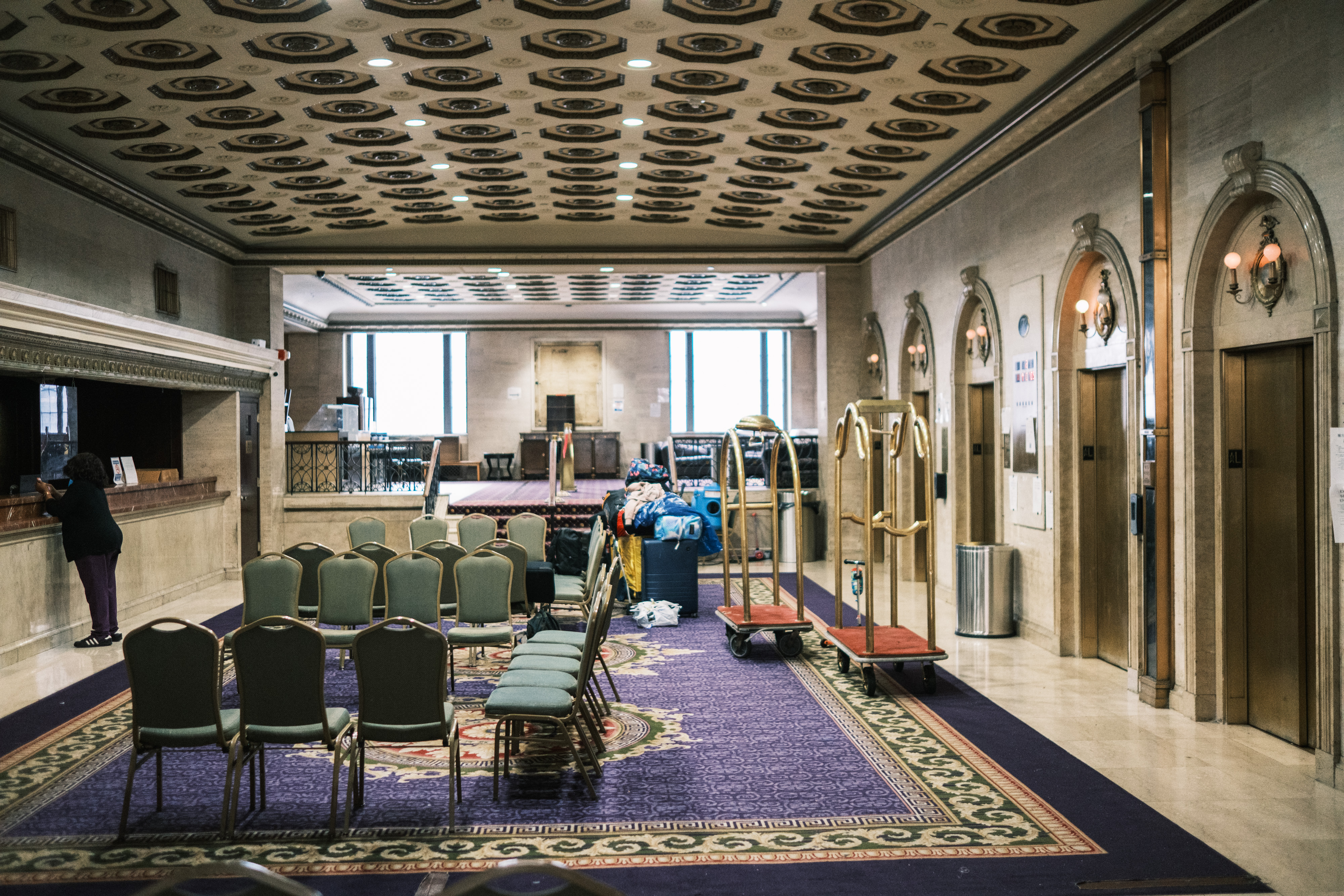
Image Credit: Getty Images
What Happens Next for the Property
Following its closure as a migrant center, the future of the Roosevelt Hotel remains uncertain. Reports suggest that redevelopment or sale of the property is being considered, with potential plans to restore or repurpose the site.
Given its prime location in Midtown Manhattan, the building holds significant real estate value. However, it may require extensive renovations before it can return to commercial use.
Its next chapter could once again redefine its role in New York City—this time in a post-crisis context.
Final Thoughts
The journey of the Roosevelt Hotel—from a historic landmark and Hollywood filming location to a migrant sanctuary and eventual closure—captures a unique moment in New York City’s recent history. It reflects both the challenges and adaptability of urban spaces during times of crisis. While the migrant center is now closed, its impact remains a powerful reminder of how cities respond to global events, balancing humanitarian needs with long-term planning. The story stands as a testament to resilience, transformation, and the evolving identity of one of the world’s most iconic cities.
FAQs
Q1: Which New York hotel was used as a migrant shelter?
The Roosevelt Hotel in Manhattan was converted into a migrant intake and shelter center.
Q2: Why was the hotel turned into a migrant sanctuary?
It was repurposed to handle a surge of asylum seekers arriving in New York City.
Q3: Why did the migrant center close?
The facility shut down as migrant arrivals declined and the city scaled back emergency shelters.
Q4: How many migrants passed through the hotel?
More than 150,000 migrants were processed through the site.
Q5: What is next for the Roosevelt Hotel?
The property may be redeveloped or repurposed, though its future remains uncertain.
Published by HOLR Magazine