


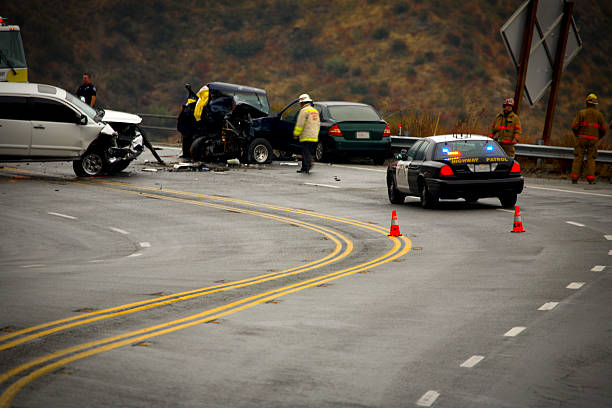
Highway accidents happen in the blink of an eye. The chaos of twisted metal and shattered glass makes it hard to know exactly what happened. Investigators spend hours at the scene taking photos and measuring skid marks.
Even with that data, explaining the sequence of events to a jury is a major challenge. Digital tools now allow experts to turn raw data into clear movies. These animations show the exact moment of impact from every possible angle.
The Science Of Digital Reconstruction
With modern technology, experts can map a crash site with extreme precision. A research paper recently highlighted how drone technology and specialized tools create road models with a tiny margin of error of less than 5 centimeters. Drones fly over the scene to snap thousands of photos from the air. Software stitches those images together to create a 3D map of the environment.
Engineers use the map to place virtual vehicles into the scene. Every detail matters when trying to figure out how cars reacted to the force of a hit. Computer models can simulate how a car flips or spins after a side-swipe. These models follow the laws of physics so that the reenactment matches reality.
Visualizing Evidence For Legal Clarity
Legal teams struggle to explain how a multi-vehicle pileup started on a crowded highway. Specialized reconstruction graphics for trial provide a way to see the event through a digital lens. Seeing the impact from different perspectives helps jurors understand the timing and speed involved in the crash. Static photos fail to show the motion and momentum that define a highway accident.
Animations fill the gap between technical reports and human understanding. A juror might find a 50-page engineering report boring or confusing. A 30-second video shows the same information in a way that is easy to follow. Visual aids help witnesses confirm their stories or show where their memories might be wrong.
Improving Safety Metrics On Modern Highways
Data from the first half of 2025 revealed that the rate of fatalities for every 100 million miles driven fell to 1.06 in the United States. This drop shows that road safety efforts are starting to have a positive effect. Better car designs and smart road technology prevent many accidents before they happen.
When a specific highway exit sees too many crashes, experts can look at sightlines and speed limits to find the root cause of the danger. Digital tools give researchers the data they need to make highways safer for every driver.
Detailed Variables In High Speed Incidents
Every crash comes with some variables that change the outcome. Reenactment software must account for these factors to be considered reliable. Experts look at the following elements when building a digital model:
- The friction level of the asphalt is based on weather conditions.
- The amount of tread left on each vehicle tire.
- The weight of the cargo or passengers inside the cars.
- The exact timing of traffic light changes.
- The brightness of the sun or the presence of fog.
Combining these variables creates a complete picture of the accident. If a driver claims they could not see a stop sign, the model can show the exact view from the driver’s seat.
Global Perspectives On Traffic Fatality Trends
Official statistics from the European Union indicate that traffic deaths reached 19,940 in 2024, marking a slight decline from previous counts. Governments across the globe use accident data to update their traffic laws. They look at which types of crashes are the most common and the most deadly.
Rear-end collisions and lane-change accidents happen everywhere people drive. International researchers share their findings on how digital modeling solves these cases. Standardizing how crashes are mapped helps insurance companies process claims faster. When every country uses similar tools, it is easier to compare safety data.
Technological Precision In Virtual Modeling
Building a virtual world requires powerful computers and smart software. Engineers take data from “black boxes” found in most modern vehicles. These devices record speed and braking right before a crash occurs. Feeding this data into a simulation creates a highly realistic version of the event.
The motion of the virtual car follows the exact steering inputs of the real driver. If the model does not follow the rules of physics, a judge might not allow it in court. Experts must prove that their software uses proven math formulas and test their models against real-world crash tests so that they work correctly. High-tech modeling turns a confusing mess of metal into a clear lesson in physics.

Witnesses have different memories of the same event. Digital models act as a neutral witness that does not have feelings or biases. They show the truth based on the physical evidence left at the scene.
As computers get faster, these models will become even more detailed. Clear visuals make the road a safer place for everyone by holding people accountable. We can learn from every crash to prevent the next one.
Published by HOLR Magazine.