


Fashion Week FOMO: Inside the Spectacle Beyond the Runway
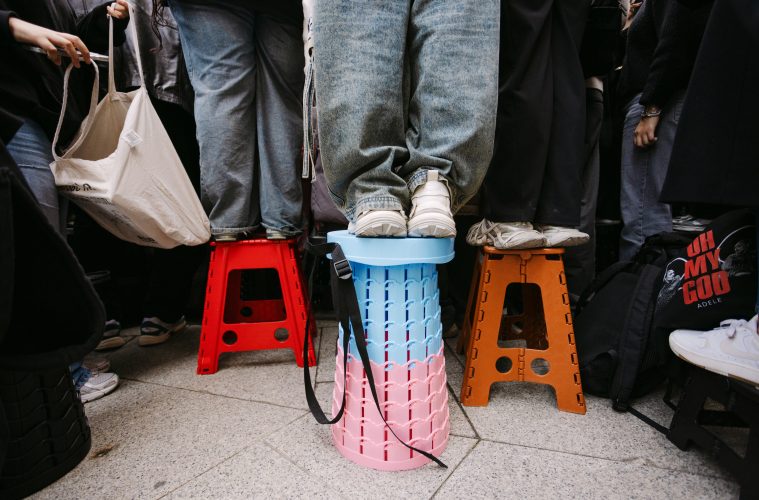
Fashion Week has always been fuelled by desire — for clothes, for creativity, for a seat in the room where culture is shaped. But in today’s image-driven era, the most revealing runway may be the one outside the venue doors. From Paris to New York, Milan to London, Fashion Week FOMO has become a defining phenomenon, transforming sidewalks into stages and crowds into content.
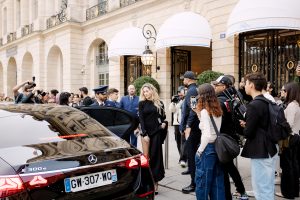
Image: Daniella Lucier
The Wait Before the Show
Long before editors take their seats and models hit the runway, throngs gather behind barricades, phones raised, feeds primed. The anticipation is electric. Attendees wait not just for fashion shows, but for celebrities, designers, and influencers whose fleeting appearances ignite social media in real time. A single arrival — a movie star in sunglasses, a viral TikTok creator in head-to-toe couture — can set off a chain reaction of flashes, reposts, and instant online visibility.
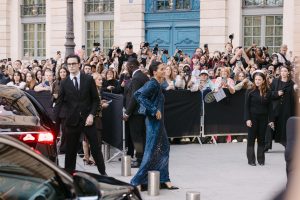
Image: Daniella Lucier
Street Style and the Performance of Visibility
In between these moments, another performance unfolds. Influencers arrive dressed with runway-level intention: sculptural tailoring, archival references, statement accessories chosen as carefully as any look inside the show. They pause, reposition, scan the crowd for a willing photographer. Strangers become collaborators in the pursuit of the perfect street style image. Can you get the shoes? Make sure the logo shows. In the economy of Fashion Week, a strong photo is currency — proof of presence, relevance, and proximity to power.
When Street Style Becomes Industry
This is Fashion Week street style at its most revealing. Once an organic expression of personal fashion, it now operates as a parallel industry, shaped by algorithms and analytics as much as by aesthetics. Visibility has overtaken access as the ultimate status symbol. To be seen outside the show can, in some cases, matter more than seeing the show itself.

Image: Daniella Lucier
The Psychology of Fashion Week FOMO
At the heart of it all is fear of missing out — Fashion Week FOMO amplified by social media platforms that collapse distance while heightening exclusion. Instagram, TikTok, and live feeds offer constant glimpses of what’s happening inside, even as the doors remain firmly closed. The result is a peculiar tension: fashion feels both more accessible and more elusive than ever.
The Beauty of Collective Longing
Yet there is undeniable beauty in this collective longing. The crowds waiting outside Fashion Week venues are dressed with creativity and conviction, often taking more risks than those seated inside. Their presence speaks to fashion’s enduring emotional pull — its power to promise transformation, belonging, and possibility. For a brief moment, captured in a photograph or video clip, anyone can become part of the narrative.
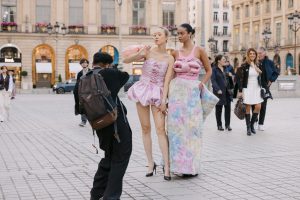
Image: Daniella Lucier
What Are We Really Missing?
Still, the images raise an essential question: what are we really afraid of missing? The collections themselves will be livestreamed, photographed, dissected, and shared within minutes. What cannot be replicated is the feeling of proximity — the sense that something extraordinary is happening just beyond reach.
Perhaps that is the true spectacle of Fashion Week today. Not only the clothes on the runway, but the desire outside the doors. The waiting, the watching, the perfectly styled pause before a shutter clicks. In an era where fashion is as much about perception as creation, FOMO has become Fashion Week’s most powerful accessory — and its most telling reflection of how style, status, and visibility now intersect.