


When the Lights Go Out: What the Fall of Saks Signals for the Future of Fashion
Luxury fashion has always relied on a certain illusion of permanence. Marble floors. Impeccable lighting. Sales floors that felt less like retail and more like ritual. So when a legacy institution like Saks Fifth Avenue begins to falter, the news lands with more weight than a balance sheet ever could.
This is not just about one retailer’s financial restructuring. It is about what happens when the physical spaces that once upheld fashion’s standards — its craftsmanship, its pacing, its sense of occasion — begin to disappear.
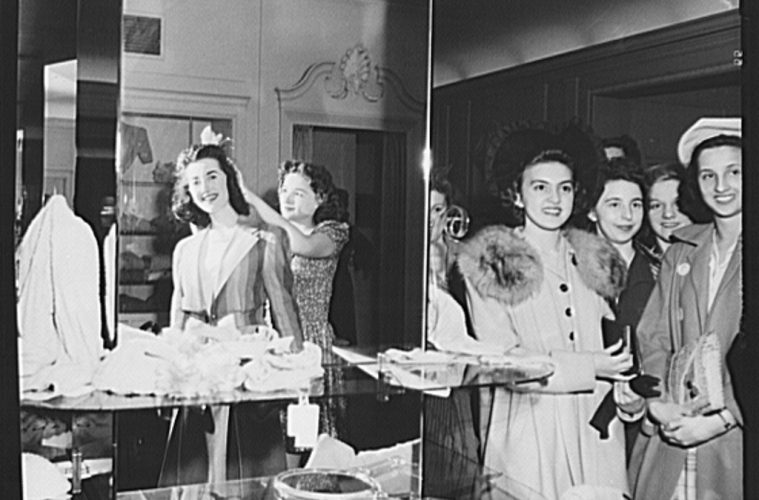
For decades, luxury department stores served as arbiters of taste. They edited collections, contextualized designers, taught consumers how to look, how to feel fabric, how to understand quality before trend. To walk through their doors was to enter a carefully composed world where fashion was not content, but culture.
That world is shrinking.
The Quiet Erosion of Fashion’s Middle Ground
As luxury stores close locations, downsize floors, or disappear entirely, fashion loses something essential: its middle ground. Between the atelier and the algorithm once stood the department store — a space that translated artistry into accessibility without flattening it into mass appeal.
Without those spaces, discovery becomes fragmented. Designers are increasingly forced into extremes: either scale instantly and sell directly to consumers through digital channels, or remain niche and invisible. The curated environment — where an emerging label could sit beside an established house and benefit from proximity, trust, and physical presence — is fading.
This shift doesn’t just affect brands. It reshapes consumer expectations. When fashion is encountered primarily through screens, speed overtakes substance. Fit becomes abstract. Fabric becomes speculative. Quality becomes something inferred from price rather than felt in hand.
What Gets Lost When Stores Disappear
Luxury has always been about time — time spent designing, producing, selling, and experiencing. Department stores honored that rhythm. They slowed fashion down.
Their decline accelerates a different model: one where immediacy is prized, seasonal narratives collapse, and craftsmanship becomes harder to justify when it cannot be properly showcased. Tailoring, hand-finishing, and material integrity are difficult to communicate through a thumbnail.
There is also a human cost. Sales associates once acted as informal historians and stylists, carrying institutional knowledge that bridged brands and customers. As stores close, that expertise vanishes with them — replaced by automated recommendations and trend-driven feeds.
A Cultural Reckoning, Not Just a Retail One
It would be easy to frame this moment as an inevitable correction — changing habits, digital convenience, economic pressure. But fashion is not neutral. The systems that support it shape what it values.
When the places that championed quality begin to disappear, quality itself becomes harder to defend.
The decline of luxury retail is not signaling the end of fashion, but it may mark the end of fashion as a shared, physical experience. What replaces it will likely be faster, more fragmented, and more dependent on spectacle than substance.
After the Storefronts Go Dark
If luxury is to survive this transition with its integrity intact, it will need new spaces that function as more than points of sale — places that restore context, education, and restraint. Whether boutiques, salons, or entirely new formats take their place, the industry now stands at a crossroads.
When the lights go out in fashion’s grand rooms, the loss extends far beyond retail. What disappears is a way of seeing — and valuing — what we wear.