


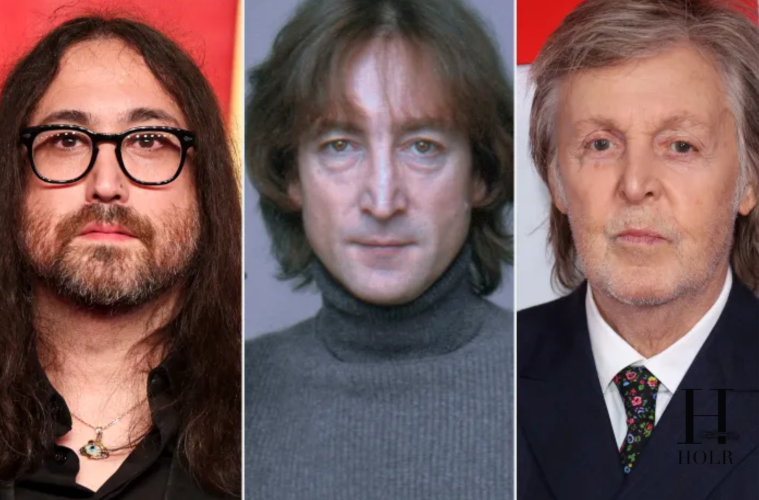
Sean Lennon Defends Paul McCartney’s ‘Robotic’ Reaction After John Lennon’s Murder
19-Feb-26: The murder of John Lennon on December 8, 1980, sent shockwaves across the world. Fans gathered in grief, musicians paid tribute, and headlines mourned the loss of one of the most influential artists of the 20th century. Yet amid the collective sorrow, one moment has lingered in pop culture memory: Paul McCartney’s brief and seemingly detached response to reporters just hours after learning of Lennon’s death.
Now, decades later, Sean Lennon has stepped forward to defend McCartney, pushing back against long-standing criticism that the former Beatle appeared “robotic” or unemotional during that painful moment.
:max_bytes(150000):strip_icc():focal(749x0:751x2):format(webp)/paul-mccartney-john-lennon-100923-3-bc893d4cddc74d5cbc79fc22a8079dfe.jpg)
Image Credit: Getty
The Reaction That Sparked Debate
On the day following Lennon’s murder outside his New York apartment building, McCartney was approached by reporters in London. Visibly shaken but composed, he responded simply, “It’s a drag, isn’t it?” The understated comment stunned many fans who expected a more expressive display of grief.
Over the years, critics have cited that short response as evidence of coldness or unresolved tension between the two former bandmates. The Beatles had famously disbanded in 1970 amid creative and personal conflicts, and public narratives often focused on the rivalry between Lennon and McCartney. For some, McCartney’s reaction seemed to reinforce those assumptions.
However, Sean Lennon believes that interpretation is unfair.
:max_bytes(150000):strip_icc():focal(717x467:719x469):format(webp)/Paul-McCartney-Paris-1976-012726-59cd7db3ded9411780c1ad4cb6a4b72f.jpg)
Image Credit: Getty
Sean Lennon’s Perspective
Sean Lennon, who was just five years old when his father was killed, has spoken openly about the emotional complexity surrounding that tragic time. In addressing McCartney’s reaction, he emphasized that shock and grief manifest differently in each person.
According to Sean, McCartney’s brief remark was less about indifference and more about emotional paralysis. He suggested that being confronted unexpectedly by reporters, while still processing devastating news, could easily result in a subdued or awkward response.
Sean pointed out that McCartney had lost not only a former bandmate but also a creative partner who had shaped his entire adult life. Their partnership in The Beatles had redefined modern music. The emotional bond between Lennon and McCartney, despite its ups and downs, was profound and deeply personal.
In Sean’s view, reducing McCartney’s reaction to a single phrase oversimplifies a moment of intense trauma.
:max_bytes(150000):strip_icc():focal(480x0:482x2):format(webp)/John-Lennon-Chrysler-Arena-122225-98718851820b4392b320326ed6e3575e.jpg)
Image Credit: Getty
Understanding Grief in Public
Grief is rarely tidy, especially under the glare of cameras. When Lennon was shot and killed by Mark David Chapman outside The Dakota in New York City, the news spread rapidly around the globe. Public figures connected to him were immediately thrust into the spotlight.
McCartney, like other celebrities, had little time to process his emotions privately. Being asked for a statement within hours of such devastating news left little room for reflection. Psychological experts often note that shock can produce flat affect—a state where outward emotional expression does not match internal feelings.
Sean Lennon’s defense highlights this reality. He has suggested that McCartney’s apparent composure may have been a coping mechanism rather than a reflection of his inner state.
A Complicated but Enduring Bond
Although Lennon and McCartney experienced creative clashes in the late 1960s, their history was intertwined. From writing early hits like “She Loves You” to crafting groundbreaking albums such as Sgt. Pepper’s Lonely Hearts Club Band, their collaboration reshaped popular culture.
In the years before Lennon’s death, there were signs of reconciliation. The two had reportedly reconnected on friendly terms, speaking by phone and reflecting on their shared past. Many close to them have described the relationship as one of deep affection, even if pride and circumstance sometimes kept them apart publicly.
Sean Lennon has consistently expressed warmth toward McCartney, even collaborating with him musically in later years. His recent defense reinforces the idea that whatever tensions existed, they were overshadowed by mutual respect.
Revisiting History with Compassion
The debate over McCartney’s response speaks to a broader issue: how history judges public figures during moments of crisis. In hindsight, brief statements can be replayed endlessly, stripped of context, and interpreted through shifting cultural expectations.
Sean Lennon’s remarks encourage fans to reconsider that December 1980 footage with empathy. Rather than seeing a “robotic” reaction, he asks observers to recognize a grieving friend confronted unexpectedly in front of cameras.
Over four decades later, the loss of John Lennon still resonates deeply. For those closest to him, including McCartney, the pain was immediate and personal—regardless of how it appeared on television screens.
As Sean Lennon reminds us, grief does not always look dramatic. Sometimes, it is quiet, stunned, and searching for words that simply do not exist.
What are the biggest stories trending online today? Read the latest here
Published by HOLR Magazine