


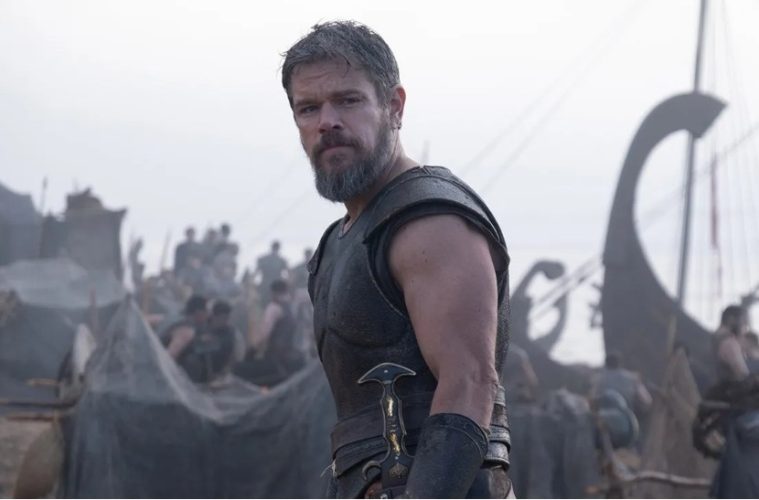
Christopher Nolan disagreed with Matt Damon’s belief that The Odyssey marks the end of an era, insisting ambitious filmmaking still has a vibrant future.
Nolan Pushes Back On Damon’s Comments
July 13, 2026 – Christopher Nolan has responded to Matt Damon’s recent suggestion that The Odyssey may be the last opportunity to make a large-scale epic of its kind, calling the outlook “defeatist.” While promoting the highly anticipated film, Nolan expressed confidence that ambitious filmmaking remains alive and well despite the industry’s rapid evolution.
Damon, who stars as Odysseus in Nolan’s adaptation of Homer’s epic poem, previously remarked that he believed this could be his final chance to work on a production of such enormous scale. The actor pointed to the increasing challenges of financing globe-spanning productions featuring practical filmmaking and massive ensemble casts.
Although Nolan understood the sentiment behind Damon’s remarks, he made it clear that he does not share that perspective, arguing that cinema continues to evolve rather than disappear.
Credit: Universal Pictures
Cinema Continues To Evolve
Nolan explained that viewing The Odyssey as the final example of epic filmmaking overlooks the constant evolution of cinema. He argued that every generation introduces new voices and fresh approaches that reshape the medium instead of replacing it.
The Oscar-winning filmmaker pointed to recent unconventional successes as evidence that audiences remain eager to embrace ambitious storytelling, even when projects challenge traditional expectations. According to Nolan, younger filmmakers continue expanding the possibilities of cinema through original ideas and innovative techniques.
Rather than focusing on perceived limitations, Nolan believes the industry should celebrate its ability to adapt while continuing to produce films that inspire audiences around the world.
Matt Damon’s Perspective
Damon’s original comments reflected the immense scale of The Odyssey. Filmed across six countries using practical locations and IMAX cameras, the production demanded months of travel, physically challenging shoots, and large-scale logistical coordination unlike many contemporary studio films.
The actor has repeatedly described the project as the most demanding production of his career, explaining that the combination of practical effects, real ships, and difficult weather conditions created an experience unlike anything he had previously encountered.
His comments were less a criticism of modern filmmaking than an acknowledgment of how rare productions of this magnitude have become.
Defending The Future Of Filmmaking
For Nolan, however, rarity should not be mistaken for impossibility. Throughout his career, he has consistently championed practical filmmaking, large-format photography, and theatrical exhibition while demonstrating that audiences continue supporting ambitious cinematic experiences.
He believes filmmakers should resist assuming that changing industry trends signal the end of large-scale storytelling. Instead, Nolan argues that cinema has repeatedly reinvented itself throughout history, with each generation discovering new ways to captivate audiences while preserving the artistry of filmmaking.
An Ambitious Adaptation
The Odyssey is widely regarded as one of Christopher Nolan’s most ambitious productions to date. Based on Homer’s ancient Greek epic, the film follows Odysseus’ long and perilous journey home after the Trojan War, blending mythology, adventure, and human drama on an epic cinematic scale.
The production features an ensemble cast that includes Matt Damon, Tom Holland, Anne Hathaway, Zendaya, Charlize Theron, Lupita Nyong’o, Robert Pattinson, Jon Bernthal, and Mia Goth. Combined with Nolan’s signature large-format filmmaking techniques, the project has become one of the most anticipated films of the coming year.
Its scale reflects Nolan’s ongoing commitment to creating immersive theatrical experiences despite the industry’s rapidly changing landscape.
Inspiring The Next Generation
During the conversation, Nolan emphasized that he remains optimistic about the future of filmmaking because of the creativity shown by emerging directors. Rather than believing epic cinema is nearing its end, he argued that every generation introduces filmmakers who challenge expectations and discover innovative ways to tell stories.
He suggested that today’s aspiring directors should not be discouraged by assumptions that certain types of films can no longer be made. Instead, Nolan encouraged a mindset focused on possibility, innovation, and artistic ambition.
His comments echoed a theme that has defined much of his career—pushing creative boundaries while encouraging others to do the same.
Looking Beyond Today’s Industry
Nolan acknowledged that the film industry continues evolving through new technologies, changing audience habits, and different methods of distributing movies. However, he believes those shifts create opportunities rather than limitations for filmmakers willing to adapt.
Throughout cinema’s history, major technological and cultural changes have repeatedly transformed the industry without diminishing audiences’ desire for compelling stories. Nolan argued that storytelling remains the foundation of filmmaking, regardless of how movies are produced or experienced.
For him, ambitious cinema is not disappearing—it is simply continuing to evolve.
Credit: AP Images
A Conversation That Resonated
The exchange between Nolan and Damon has attracted widespread attention because it reflects a broader discussion taking place throughout Hollywood. Many filmmakers have expressed concerns about rising production costs and changing theatrical habits, while others remain confident that large-scale filmmaking will continue thriving.
Although Nolan respectfully disagreed with Damon’s outlook, both share a deep appreciation for the extraordinary effort required to bring The Odyssey to the screen. Their conversation ultimately highlighted two different perspectives on the future of cinema rather than a fundamental disagreement about the value of ambitious filmmaking.
Final Thoughts
Christopher Nolan’s response to Matt Damon’s comments offers an optimistic vision for the future of cinema. While Damon acknowledged that The Odyssey may represent one of the most demanding productions of his career, Nolan rejected the idea that such films are becoming impossible to make.
Instead, the acclaimed director argued that filmmaking has always evolved through innovation and creative ambition. As anticipation continues building for The Odyssey, their thoughtful discussion has added another layer of excitement to a project already expected to become one of the year’s biggest cinematic events.
FAQs
Why did Christopher Nolan disagree with Matt Damon?
Nolan disagreed with Damon’s suggestion that The Odyssey represents the last opportunity to make a film of its scale, calling that outlook “defeatist.”
What did Matt Damon say about The Odyssey?
Damon described it as potentially the last production of its kind that he expects to work on because of its extraordinary scale and complexity.
Who plays Odysseus in The Odyssey?
Matt Damon stars as Odysseus in Christopher Nolan’s adaptation.
What is The Odyssey based on?
The film is based on Homer’s classic Greek epic poem The Odyssey.
Why is the film highly anticipated?
It combines Christopher Nolan’s filmmaking style, a star-studded cast, large-scale practical production, and one of literature’s most celebrated stories.
Published by HOLR Magazine