


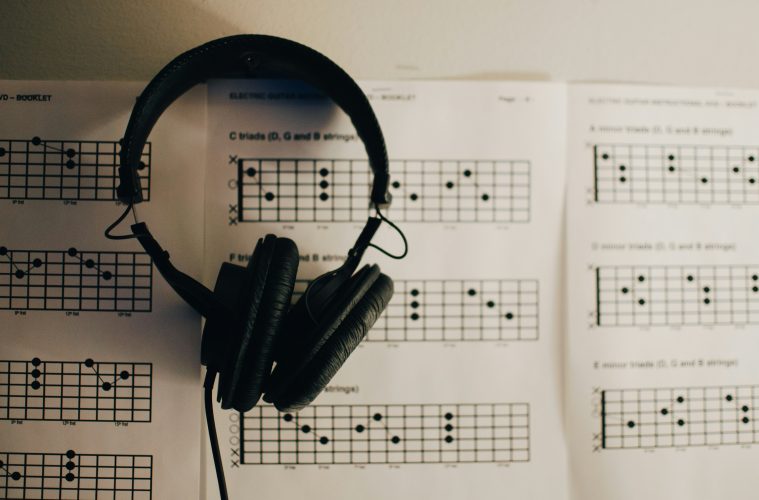
Picking up a guitar for the first time can be challenging. Traditional sheet music adds to that challenge because it demands a solid grasp of musical theory and notation before a single note rings out. Tablature strips away that complexity. It relies on numbers and lines to show exactly where fingers should land on the fretboard. For first-time players, this format removes one of the biggest early hurdles and helps them progress at a pace that actually feels encouraging.

What Makes Tablature So Accessible
Standard notation asks the reader to decode symbols on a five-line staff, match them to a pitch, and then figure out where that pitch lives on six strings. That process involves multiple mental steps before any sound is produced. Tablature condenses all of that. Each line corresponds to a string, and each number points to a specific fret. The visual layout mirrors the instrument itself, which is why beginners gravitate toward it so quickly.
So, what is guitar tablature? It works as a reading system shaped around the guitar’s physical design. Instead of interpreting abstract musical symbols, a player simply follows a diagram that reflects the strings sitting right in front of them. That immediate, intuitive connection means someone can start producing recognizable sounds within their very first practice session.
Faster Song Learning Without Music Theory
Tabs let beginners jump straight into playing songs without any formal background. There is no need to memorize scales, study key signatures, or decode time signatures before strumming along to a favorite track. The format lays out every note or chord in sequence, ready to follow.
That early sense of achievement matters more than most people realize. A new guitarist is far more likely to keep going after just a few days of practice playing a familiar melody. Sessions feel productive rather than discouraging, and the instrument stops feeling like an obstacle.
Building Finger Strength and Muscle Memory
Working through tabs repeatedly strengthens the fingers and trains them to find positions without conscious thought. Because the format reinforces fretboard geography with every song, beginners develop physical comfort on the instrument faster than they might expect.
Chord Transitions
Most beginner-friendly songs revolve around three or four chord shapes. Tabs clearly outline those shapes, giving players a structured way to practice moving between them. With consistent repetition, switches that once felt clumsy start to flow naturally.
Picking Patterns
Fingerpicking tabs isolate each string-and-fret combination within a pattern. A beginner can slow a tricky passage down, work through it note by note, and then build speed gradually. That kind of focused, incremental practice sharpens technique more reliably than free-form noodling.
A Gateway to Reading Standard Notation
A common concern is that relying on tabs will prevent you from reading traditional sheet music. In reality, the opposite tends to happen. Once a player feels comfortable on the fretboard, curiosity about formal notation often follows naturally.
Tabs function as a bridge. They develop fretboard awareness, sharpen the ear for intervals, and build a sense of rhythm. Every one of those skills carries over directly when a guitarist eventually opens a book of standard notation.
Availability and Community Support
An enormous library of tabs exists online, spanning every genre from folk to progressive metal. Community contributors have transcribed thousands of popular songs, giving beginners a practically limitless pool of practice material at no cost.
Beyond the tabs themselves, online forums offer corrections, technique discussions, and advice from seasoned players. Comparing multiple tab versions of the same song and reading through comment threads teaches beginners to think critically about accuracy. That collaborative learning environment pushes growth well beyond what solitary practice can deliver.
Limitations Worth Knowing
Tabs do carry certain drawbacks. They rarely communicate rhythm, dynamics, or phrasing with any real precision. A beginner might play every correct fret position yet still miss the groove of a song entirely. Listening closely to the original recording while reading tabs helps fill that gap.
Accuracy is another consideration. Because many tabs come from community submissions, errors and oversimplifications are common. Getting into the habit of cross-referencing multiple sources and comparing them against the actual track saves a lot of frustration down the line.

Conclusion
Tablature hands beginners a clear, visual method for getting started on guitar without drowning in theory. It keeps those crucial early practice sessions productive and genuinely enjoyable by tying written notation directly to fretboard positions. Tabs do have their shortcomings, particularly around rhythm and accuracy, but they remain one of the most effective tools for building a solid foundation. Combining them with attentive listening and a gradual move toward standard notation sets up any aspiring guitarist for long-term growth.
Published by HOLR Magazine.