


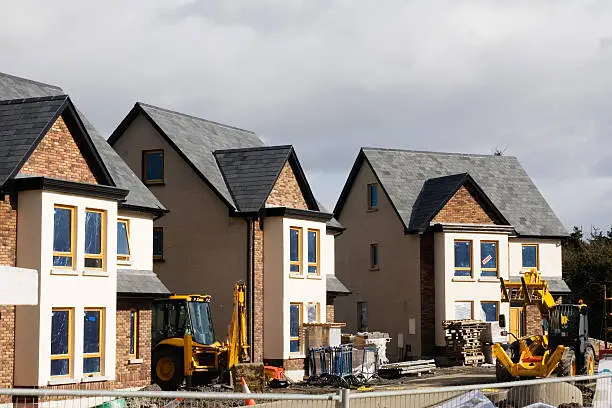
Starting a remote house flipping business requires exactly three things: accurate public data, competent local contractors, and structured debt. You manage property acquisitions and renovations entirely from your home office without ever touching a hammer. The model works by identifying distressed assets remotely, verifying the seller’s actual financial distress, securing targeted capital for the rehab, and managing local crews through daily video updates.

What Is Remote House Flipping?
It is glorified project management disguised as real estate investing. You sit at your desk in one state. You buy a rotting shell three time zones away. You fix it. You sell it. The margin left over is your profit.
Most online gurus sell a fantasy of passive income. It isn’t passive. The risk of total capital loss is immense if you blindly trust local real estate agents who just want a quick commission check. You are not buying a home; you are buying a math equation. Successful operators survive because they automate their lead generation and enforce draconian oversight on their operations.
You don’t survive remote flipping by winging it. You survive through cold, inflexible systems.
Finding deals means digging through the trash. You scrape county records for the pain points. Pre-foreclosures. Code violations. Exhausted absentee owners. Then you have to actually manage the chaos. Forget endless phone calls. You run the entire operation through cloud software. As for paying your crews? You hold the money hostage. Contractors do not get funded until they upload visual, irrefutable proof that a specific job is finished.
New guys always think they can just guess the math. They can’t.
Exactly about 72% of first-time remote investors lose money on their initial deal. They fabricate a local labor estimate out of thin air and completely underfund their contingency budgets.
How Do You Select a Remote Market?
You ignore standard media narratives about hot real estate markets. A booming market means tight inventory and sellers who demand premium pricing. You want boring, secondary, or tertiary markets in the Midwest or South where the entry price is low and the days-on-market metrics are stable.
- Q: What makes a city a good target for remote flipping?
- A: Job growth, a median home price under $250,000, and a predictable regulatory environment for pulling building permits.
Do not invest in coastal cities with heavy tenant protection laws or notoriously slow permitting offices. If a city takes six months to approve a roof replacement, your holding costs will bleed your profit margin dry. You look for landlord-friendly states with high transactional velocity.
“The single biggest mistake remote flippers make is assuming their local labor costs apply out of state,” says Mark H., a high-volume buyer in Memphis. “Drywall installation in California costs triple what it does in Tennessee. If you underwrite a deal using California numbers in a Tennessee market, your math is fiction.”
How Do You Vet Property Owners Before Buying?
You don’t trust them. Sellers lie. They obscure structural property damage. They mask their immediate financial reality to negotiate better terms. You need an informational advantage before you ever draft an offer.
Pulling public data is non-negotiable. You look up their asset records to determine if they own alternative properties, harbor undisclosed tax liens, or are sitting on hidden cash reserves. You match their actual, documented financial desperation to your initial offer price.
- Q: Why run background checks on property sellers?
- A: To verify motivation. A seller with zero equity and mounting mechanics liens will take a lowball cash offer. A seller with three other paid-off homes will just wait you out.
A distressed seller facing immediate bank foreclosure typically accepts offers 25% to 30% below standard market value just to escape the impending debt collection.
What Are Your Funding Options for Remote Rehabs?
Cash is safe. Debt scales. Hard money loans destroy profit margins with absurd 12-15% interest rates and predatory origination fees. You cannot build a sustainable home-based flipping business paying loan sharks points upfront just to borrow their capital.
Experienced remote flippers segment their debt. They use specialized home improvement financing to cover big-ticket, essential repairs like roofing replacements, foundation stabilization, and HVAC installations. This keeps their own liquid capital parked safely in reserve for future property down payments and unexpected overruns. You must calculate the exact After Repair Value (ARV) before signing any promissory note.
- Q: Should I use my own cash for renovations?
- A: No. Use other people’s money for the asset improvements. Keep your cash for the acquisitions.
- Q: What is the 70% Rule?
- A: Never pay more than 70% of the ARV of a property, minus the cost of repairs.
National building material costs jumped 18.3% in the last 24 months.
How Do You Manage Out-of-State Contractors?
You manage them through legally binding scopes of work and absolute financial control. General contractors will prioritize the loudest client or the client standing physically in front of them. Since you are completely remote, your money is your only voice.
Do not hand a local crew a 50% deposit upfront. They will use your money to finish the job they started three weeks ago for someone else. You break the renovation down into highly specific milestones. Demolition. Framing. Rough plumbing. Drywall. Paint. Fixtures.
- Q: How do I verify work from a thousand miles away?
- A: You mandate daily video walk-throughs. The contractor must upload a continuous, unedited video from the front curb, through every room, to the back fence.
If they miss an update, you withhold the draw payment. If they ask for an advance for materials, you buy the materials directly from the local big-box hardware store and set it for will-call pickup under their name. You never let a contractor act as your bank, and you never act as theirs.
Always require signed lien waivers from every subcontractor before releasing the final payment to the general contractor. In 2023, over 14,000 out-of-state investors faced property liens because their general contractors failed to pay the local plumbers and electricians.
How Do You Handle the Final Sale Remotely?
You outsource the final stretch to competent local professionals. You do not try to sell the house By Owner (FSBO) from your laptop. You hire a top-producing local real estate agent who understands the specific neighborhood’s buyer demographic.
You pay for professional staging. An empty, flipped house looks like an empty, flipped house. A staged home hides minor drywall imperfections and provides scale to empty rooms. You instruct the agent to list the property slightly below the recent comps to trigger a bidding war. The goal is velocity.
- Q: What is a holding cost?
- A: The daily financial bleed of property taxes, utility bills, insurance premiums, and loan interest while the house sits empty waiting for a buyer.
Every single day a property sits on the market eats into your net profit. An agent who promises a higher list price but lets the house languish for ninety days costs you significantly more than an agent who lists aggressively and closes in fourteen days.
The average daily holding cost for a $300,000 property is $82.

Summary / Takeaway
Data beats intuition every time. Do not buy a property based on a feeling or a single virtual tour sent by a hungry wholesaler. Remote house flipping is an exercise in risk mitigation and aggressive project management. Verify the seller’s financial reality through public databases to secure the best purchase price. Segment your renovation debt to protect your liquid cash reserves. Treat your local contractors like unproven employees who need constant, verifiable supervision before getting paid a single dime. Master the math, enforce the systems, and completely remove your emotions from the transaction.
Published by HOLR Magazine.