


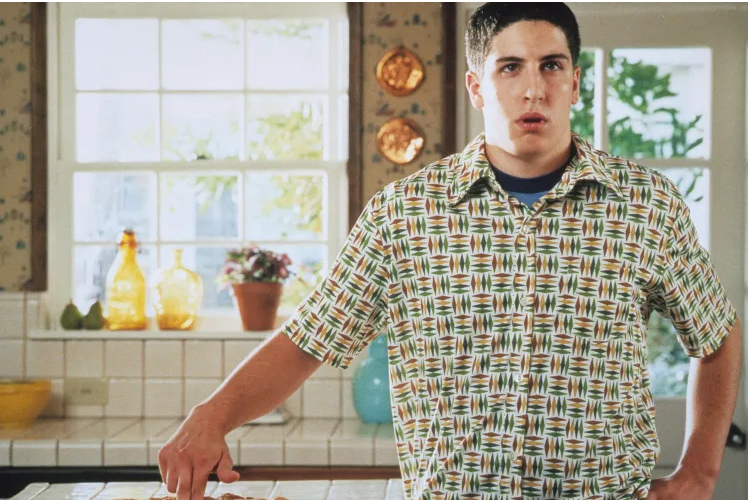
Actor Shares Behind-the-Scenes Detail of Iconic Scene
Jason Biggs Reflects on a Defining Moment
March 24, 2026 – Jason Biggs is revisiting one of the most talked-about moments in teen comedy history—and revealing just how close it came to being far more controversial. In a recent interview, the actor shared that the infamous pie scene from American Pie had to be carefully edited to avoid receiving an NC-17 rating.
According to Biggs, the filmmakers took an unusually precise approach: they counted the number of thrusts in the scene to ensure it stayed within acceptable limits for an R rating. The revelation offers a fascinating glimpse into the fine line filmmakers often walk when dealing with edgy content.
:max_bytes(150000):strip_icc():focal(749x0:751x2):format(webp)/Jason-Biggs-american-pie-2-032326-3f414aafaef5485d955bcc05b85293b2.jpg)
Image Credit: Universal/Kobal/Shutterstock
The Infamous Scene That Defined a Generation
When American Pie debuted in 1999, it quickly became a cultural phenomenon. The film’s humor, centered on teenage awkwardness and coming-of-age experiences, resonated with audiences worldwide.
The pie scene, in particular, became one of the most memorable—and controversial—moments in the film. It pushed boundaries for mainstream comedy at the time, blending shock value with humor in a way that captured the spirit of late-90s teen movies.
Jason Biggs’ character, Jim, became instantly iconic because of this scene, cementing his place in pop culture history.
Avoiding the NC-17 Rating
In Hollywood, the difference between an R rating and an NC-17 rating can significantly impact a film’s success. An NC-17 rating often limits distribution, advertising opportunities, and audience reach, making it a risk many studios try to avoid.
Biggs’ revelation highlights just how meticulous the production team had to be. By carefully monitoring the scene’s duration and movement, they ensured it stayed within the Motion Picture Association’s guidelines.
This level of detail underscores the challenges filmmakers face when balancing creative expression with commercial viability. Even small adjustments can determine how a film is classified—and ultimately received.
:max_bytes(150000):strip_icc():focal(749x0:751x2)/jason-biggs-american-pie-082825-1c559ef1c3be4ab995012250c6acc7ab.jpg)
Image Credit : Alamy
The Role of the Motion Picture Association
The Motion Picture Association (MPA) plays a crucial role in determining how films are rated in the United States. Its guidelines are designed to help audiences understand the content of a film, but they also influence how filmmakers approach storytelling.
Scenes involving sexual humor or suggestive content are often subject to particularly close scrutiny. As Biggs’ story illustrates, even comedic moments can face strict evaluation, requiring filmmakers to make precise edits to meet rating standards.
The process is not always transparent, which has led to ongoing debates about consistency and fairness in film ratings.
Comedy, Controversy, and Cultural Impact
American Pie was part of a wave of teen comedies that embraced bold, sometimes controversial humor. While some critics questioned its approach, the film’s success demonstrated a strong audience appetite for this kind of storytelling.
The pie scene, despite its shock value, became emblematic of the film’s tone—awkward, exaggerated, and unapologetically comedic. Over time, it has been recontextualized as a defining moment of its era, reflecting both the humor and the boundaries of late-90s cinema.
Jason Biggs’ recent comments add a new layer to this legacy, revealing the behind-the-scenes decisions that shaped what audiences ultimately saw.
:max_bytes(150000):strip_icc():focal(749x0:751x2):format(webp)/jason-biggs-082825-dcbd54b5caf84d1f8fef1226d12449f8.jpg)
Image Credit: Stephanie Augello/Variety/Getty
How Ratings Shape Creative Decisions
The story also sheds light on the broader impact of film ratings on creative decisions. Directors and producers often have to make compromises to ensure their work reaches the widest possible audience.
In some cases, this means toning down scenes, altering dialogue, or editing sequences to fit within specific guidelines. While these adjustments can be frustrating for creators, they are often necessary for commercial success.
Biggs’ anecdote serves as a reminder that what audiences see on screen is often the result of careful negotiation between artistic intent and regulatory standards.
Why This Story Still Resonates
More than two decades after its release, American Pie continues to hold a special place in pop culture. The film’s humor, characters, and memorable moments have ensured its lasting relevance.
Jason Biggs’ revelation resonates because it offers a behind-the-scenes perspective on something fans thought they already understood. It highlights the effort and precision involved in creating even the most outrageous comedic scenes.
For longtime fans, it’s a nostalgic reminder of a film that defined a generation—and a testament to the enduring appeal of its humor.
:max_bytes(150000):strip_icc():focal(749x0:751x2):format(webp)/american-reunion-082825-dae80fa02767439eb0c8ae378096d7b4.jpg)
Image Credit: Universal Pictures/Alamy
Final Thoughts
Jason Biggs’ insight into the making of American Pie reveals just how close the film came to crossing a major line in Hollywood’s rating system. By carefully controlling the details of one infamous scene, the filmmakers managed to preserve both their creative vision and the film’s accessibility.
The story underscores the delicate balance between pushing boundaries and staying within them—a balance that continues to shape the entertainment industry today. As audiences revisit American Pie, this behind-the-scenes detail adds a new layer of appreciation for a comedy classic.
FAQs
Q1: What did Jason Biggs reveal about American Pie?
He said the filmmakers counted thrusts in the pie scene to avoid an NC-17 rating.
Q2: Why is an NC-17 rating significant?
It restricts audience access and can negatively impact a film’s distribution and revenue.
Q3: What is American Pie known for?
It’s a popular teen comedy known for its bold humor and memorable coming-of-age storyline.
Q4: Who determines film ratings in the U.S.?
The Motion Picture Association is responsible for assigning ratings to films.
Q5: Why does this story matter today?
It highlights how creative decisions are influenced by rating systems and offers insight into a classic film’s production.
Published by HOLR Magazine