


Micron Reaches $1 Trillion Market Cap as Shares Jump 19%
Introduction
May 27, 2026: Micron Technology made Wall Street history after its stock soared 19% in a single trading session, pushing the semiconductor giant’s market valuation beyond the $1 trillion mark for the first time ever. The dramatic rally came after the company delivered stronger-than-expected earnings and projected booming demand for artificial intelligence memory chips.
The milestone places Micron among the world’s most valuable technology companies and highlights the growing investor enthusiasm surrounding AI infrastructure and advanced semiconductor manufacturing.
Analysts described the move as another sign that the AI revolution is reshaping the global chip industry, with memory manufacturers emerging as major beneficiaries.
Strong Earnings Trigger Massive Rally
Micron’s shares surged after the company reported quarterly revenue and profits that exceeded analyst expectations. The company also issued optimistic guidance for upcoming quarters, citing strong demand for high-bandwidth memory (HBM) chips used in AI servers and data centers.
Executives said AI-related products are now becoming a major growth engine for the business. Demand from cloud computing companies and AI developers has accelerated rapidly over the past year as firms race to expand computing power.
Investors responded immediately, sending Micron stock sharply higher during trading and pushing its market capitalization past the historic $1 trillion threshold.
The rally also lifted broader semiconductor stocks, reinforcing confidence in the long-term growth potential of AI-focused hardware companies.
AI Boom Continues to Drive Semiconductor Growth
The explosive growth of artificial intelligence has dramatically increased the need for advanced memory and storage chips. AI systems require massive amounts of data processing power, creating strong demand for high-performance semiconductors.
Micron has become one of the key players supplying this technology. Its HBM products are used in advanced AI accelerators and next-generation data center systems powering machine learning models.
Industry experts believe memory chipmakers are entering a new growth cycle after several difficult years marked by oversupply and weak consumer electronics demand.
Now, AI spending is helping offset those earlier challenges. Companies building AI infrastructure are investing billions into servers, graphics processors, and memory systems, creating major opportunities for semiconductor manufacturers like Micron.

Image Credit: Micron Technology
Investors Reward Micron’s AI Strategy
Wall Street analysts praised Micron’s ability to position itself at the center of the AI hardware boom. Several investment firms raised their price targets following the earnings report, citing confidence in long-term revenue growth.
The company’s focus on advanced memory technologies has allowed it to compete more aggressively in high-growth markets. Investors also welcomed management’s comments about improving profit margins and increasing production capacity.
Micron executives emphasized that AI demand remains exceptionally strong and could continue driving revenue growth over the next several years.
The stock’s 19% surge reflects growing investor belief that memory chips are becoming just as essential to AI systems as graphics processors and CPUs.
Semiconductor Industry Reaches New Heights
Micron’s historic valuation milestone comes during a powerful rally across the semiconductor sector. AI enthusiasm has fueled record gains for several chipmakers over the past two years.
Companies involved in data centers, cloud computing, and AI infrastructure have experienced strong investor demand as businesses worldwide increase spending on artificial intelligence technologies.
The semiconductor industry has become one of the biggest winners of the AI race, with firms competing to supply the hardware needed to train and operate advanced AI models.
Micron’s breakthrough valuation highlights how rapidly the market’s perception of memory chip companies has changed. Once viewed as highly cyclical businesses tied mainly to smartphones and PCs, memory manufacturers are now increasingly seen as essential AI infrastructure providers.
Challenges Still Remain
Despite the strong momentum, analysts caution that the semiconductor market remains highly competitive and cyclical. Supply chain disruptions, pricing volatility, and geopolitical tensions could still affect future growth.
Micron also faces intense competition from global rivals in the memory chip market. Maintaining technological leadership and meeting rising AI demand will require continued investment in research, manufacturing, and production expansion.
However, many analysts believe AI demand could support the industry for years, potentially reducing some of the volatility traditionally associated with memory chip companies.
For now, investor optimism surrounding AI appears strong enough to outweigh near-term concerns.
Image Credit: Watcher Guru
A Historic Moment for Micron
Crossing the $1 trillion market cap mark represents a defining moment for Micron Technology. The achievement reflects not only the company’s financial performance but also the broader transformation taking place across the global technology industry.
As AI adoption accelerates, semiconductor companies are becoming increasingly central to the future of computing. Micron’s rapid rise demonstrates how critical memory and storage technologies have become in powering next-generation AI systems.
With demand for AI hardware expected to continue growing, Micron’s position within the semiconductor industry could become even more influential in the years ahead.
For investors, the company’s latest rally signals confidence that the AI boom is still in its early stages — and that chipmakers may remain among the biggest winners of the technology revolution.
High-Bandwidth Memory Becomes a Key Growth Driver
One of the biggest reasons behind Micron’s rapid rise is the growing importance of High-Bandwidth Memory technology.
HBM chips are specifically designed for AI workloads that require extremely fast data transfers and large processing capabilities. These chips are now widely used alongside advanced AI accelerators powering generative AI models and large-scale machine learning systems.
Micron has invested heavily in HBM development to compete with global rivals in the rapidly expanding AI memory market. Analysts say the company’s ability to secure large AI-related contracts has significantly strengthened investor confidence.
Demand for HBM products has reportedly exceeded supply, giving memory manufacturers stronger pricing power and improving profit margins.
Some analysts predict HBM could become one of the most profitable segments of the semiconductor industry over the next several years.
Image Credit: The Motley Fool
Challenges Still Face the Semiconductor Industry
Despite the excitement surrounding Micron’s milestone, challenges remain for the company and the broader chip industry.
Semiconductor manufacturing is highly capital-intensive, requiring billions of dollars in ongoing investments for research, development, and factory expansion. Competition among global memory manufacturers also remains fierce.
In addition, geopolitical tensions and trade restrictions continue affecting the semiconductor supply chain. Governments worldwide are increasingly viewing advanced chips as strategically important technologies, leading to tighter regulations and export controls.
Market volatility is another concern. Semiconductor stocks often experience large swings depending on pricing cycles, inventory levels, and global economic conditions.
However, many analysts believe AI demand could help reduce some of the industry’s traditional instability by creating stronger long-term growth opportunities.
Micron’s Historic Milestone Reflects a Changing Tech Industry
Micron surpassing a $1 trillion market cap represents more than just a strong day for investors. It reflects a major shift happening across the technology industry.
For years, software companies dominated discussions around innovation and growth. Today, the rise of artificial intelligence has placed hardware and semiconductor companies back at the center of the tech world.
AI systems cannot function without enormous amounts of computing power, memory, and storage infrastructure. That reality has transformed semiconductor companies like Micron into critical building blocks of the AI economy.
The company’s latest rally shows how dramatically investor perception has changed. Memory chipmakers were once viewed primarily as cyclical suppliers tied to consumer electronics. Now, they are increasingly seen as foundational AI infrastructure providers.
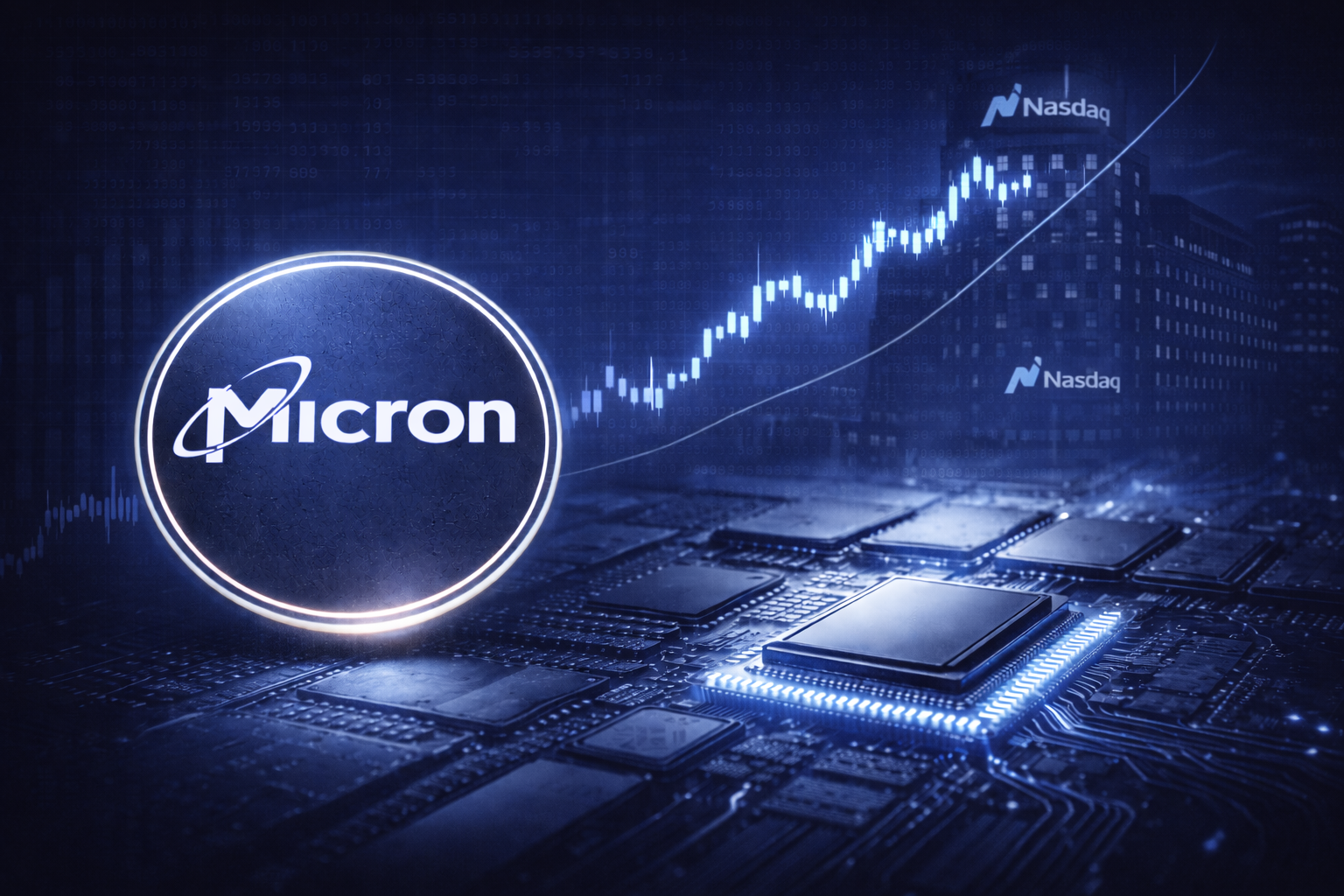
Image Credit: Appreciate Wealth
What’s Next for Micron?
Investors will now closely watch whether Micron can maintain its momentum as AI spending continues to rise. Analysts expect strong demand for advanced memory products to remain a major growth catalyst over the next several years.
The company is also expected to continue expanding production capacity and investing heavily in next-generation semiconductor technologies.
If AI adoption accelerates further across industries such as healthcare, finance, cloud computing, robotics, and autonomous systems, demand for memory chips could continue reaching record levels.
For Micron, crossing the $1 trillion threshold may only represent the beginning of a much larger growth story tied to the future of artificial intelligence.
FAQs
Why did Micron stock rise 19%?
Micron shares surged after the company reported stronger-than-expected earnings and optimistic guidance driven by booming AI chip demand.
What does Micron Technology do?
Micron Technology manufactures memory and storage semiconductors used in computers, smartphones, servers, and AI systems.
Why is AI increasing demand for memory chips?
Artificial intelligence systems require massive amounts of high-speed memory to process and store data efficiently.
What are HBM chips?
HBM stands for High-Bandwidth Memory, an advanced type of memory used in AI accelerators and high-performance computing systems.
Is Micron now worth over $1 trillion?
Yes. After the stock rally, Micron’s market capitalization crossed the $1 trillion milestone for the first time.
Why are semiconductor stocks performing strongly?
Investor enthusiasm around AI infrastructure, cloud computing, and advanced chip technology has boosted the entire semiconductor sector.
Published by HOLR Magazine