


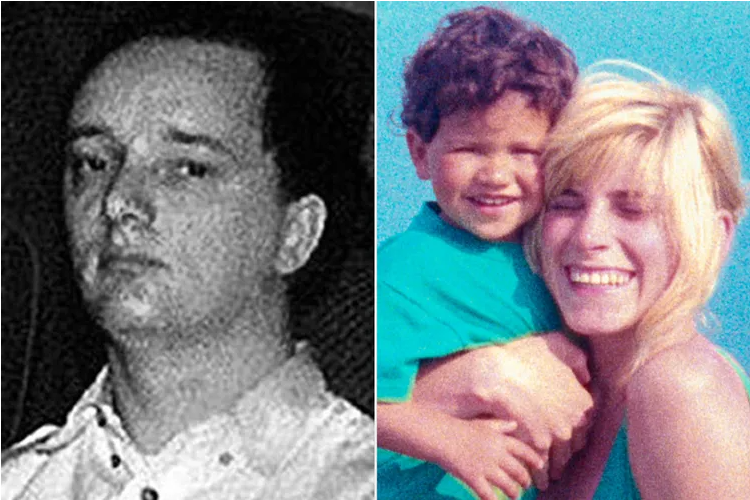
Robert Napper’s motives in the 1992 murder of Rachel Nickell continue to spark questions, especially regarding why her two-year-old son, Alex Hanscombe, survived the attack unharmed.
Netflix Revives Interest in a Chilling Case
June 12, 2026 – More than three decades after Rachel Nickell’s murder shocked Britain, renewed attention surrounding Netflix’s The Murder of Rachel Nickell and companion drama The Witness has introduced the case to a new generation of viewers. As audiences revisit the events of July 15, 1992, one question continues to haunt investigators, criminologists, and the public alike: why did Robert Napper spare Rachel’s young son?
Rachel Nickell, a 23-year-old mother, was walking her dog on Wimbledon Common in London with her two-year-old son, Alex Hanscombe, when she was attacked. She was stabbed 49 times and sexually assaulted. Alex witnessed the horrifying crime and was later found clinging to his mother’s body by a passerby.
Although justice eventually came, some questions surrounding the tragedy remain unanswered.
Image Credit: Casey Rodgers/AP
Understanding Robert Napper’s Troubled Background
Robert Napper was eventually identified as Rachel Nickell’s killer through advances in DNA technology. Before his arrest in the case, he had already been convicted in connection with the murders of Samantha Bisset and her four-year-old daughter, Jazmine.
Experts and court records revealed that Napper suffered from paranoid schizophrenia and Asperger syndrome. His childhood was reportedly marked by abuse, neglect, and severe psychological trauma. Mental health professionals also described him as exhibiting sexually sadistic tendencies from a young age.
In 2008, Napper pleaded guilty to manslaughter on the grounds of diminished responsibility and was ordered to remain indefinitely at Broadmoor Hospital. It is considered highly unlikely that he will ever be released.
Theories Behind Alex Hanscombe’s Survival
Perhaps the most disturbing aspect of the case is that Alex Hanscombe, who was only two years old, survived physically unharmed.
Investigators and psychologists have proposed several theories. One suggestion is that Napper’s rage and violent fantasies were directed specifically toward women due to his traumatic upbringing and complicated relationship with female figures in his life. Under this theory, young boys may not have represented the focus of his aggression.
Another theory suggests that Napper deliberately targeted mothers accompanied by children because they were easier to isolate and manipulate. Some experts believe the presence of children made victims more vulnerable and less likely to resist. Discussions surrounding his other attacks have led investigators to consider this possibility.
However, Napper himself never publicly explained his motives. As a result, these explanations remain theories rather than confirmed facts.
How Police Errors Delayed Justice
The Rachel Nickell investigation became one of the most controversial in British history because authorities initially pursued the wrong suspect.
Colin Stagg was arrested following a highly criticized undercover operation known as Operation Edzell. A policewoman posed as a potential romantic partner and attempted to lure him into confessing. Despite months of contact, Stagg repeatedly denied involvement. The judge later condemned the operation, describing police tactics as excessively deceptive.
Stagg was eventually acquitted, and years later he received compensation and a formal apology. Meanwhile, crucial evidence linking Napper to the crime was overlooked, allowing him to remain free long enough to commit additional violent crimes.
Subsequent investigations described the handling of the case as a “catalogue of bad decisions and errors.”
:max_bytes(150000):strip_icc():focal(734x455:736x457):format(webp)/the-murder-of-rachel-nickell-suspect-sketch-060426-16f501c284ff40bb88714808949112be.jpg)
Image Credit: Casey Rodgers/AP
Alex Hanscombe’s Journey After the Murder
Although Alex survived physically, the emotional consequences of witnessing his mother’s death followed him for years.
His father, André Hanscombe, eventually relocated with him to France in an attempt to escape media attention. Later, they settled in Spain, where Alex pursued music, yoga, and healing after years of trauma.
Alex eventually wrote a memoir titled Letting Go: A True Story of Murder, Loss and Survival and participated in Netflix’s documentary about the case. His story has become one of remarkable resilience and survival.
New Audiences Are Revisiting the Tragedy
Netflix’s documentary and dramatization have reignited discussions surrounding the case across Reddit, TikTok, YouTube, and other social media platforms.
Many viewers have expressed sympathy for Alex and outrage over the police mistakes that delayed justice. Others have been struck by how easily an innocent man was nearly convicted while the real perpetrator remained free.
The renewed attention has also led to conversations about mental illness, criminal profiling, and the dangers of tunnel vision during investigations.
Questions That May Never Be Answered
Despite decades of investigations, one mystery remains unresolved.
Robert Napper has never publicly explained why he spared Alex Hanscombe. No confession or psychiatric evaluation has provided a definitive answer. Everything known about his motives comes from expert analysis and behavioral patterns rather than direct statements from the killer himself.
Because of this, the precise reason Alex survived may never be fully understood.
:max_bytes(150000):strip_icc():focal(745x393:747x395):format(webp)/rachel-nickell-alex-hanscombe-060426-5eaee2bd24604976b12140b7c862a347.jpg)
Image Credit: Courtesy of Netflix
Why Rachel Nickell’s Case Still Captivates the Public
More than 30 years after the tragedy, Rachel Nickell’s murder continues to fascinate audiences because it combines several extraordinary elements: a devastating crime, investigative failures, a wrongful accusation, and ultimately a breakthrough achieved through modern forensic science.
The story also highlights the resilience shown by Alex and André Hanscombe, whose lives were forever changed by the events of 1992.
For many viewers discovering the case for the first time through Netflix, it remains one of Britain’s most heartbreaking and disturbing true crime stories.
Final Thoughts
Robert Napper’s decision to spare Rachel Nickell’s son remains one of the greatest mysteries surrounding the case.
While psychologists and investigators have proposed theories, the killer himself never offered an explanation. More than three decades later, the unanswered question continues to haunt those who study the case.
At the same time, the courage displayed by Alex Hanscombe and his father serves as a reminder that even after unimaginable tragedy, healing and resilience are possible.
FAQs
Q1. Why is the Rachel Nickell case trending?
Interest has surged because of Netflix’s 2026 documentary The Murder of Rachel Nickell and the drama series The Witness, which have introduced the story to new audiences.
Q2. Who killed Rachel Nickell?
Robert Napper was identified through DNA evidence and pleaded guilty to manslaughter on grounds of diminished responsibility in 2008.
Q3. Why did Robert Napper leave Alex Hanscombe alive?
Napper never publicly explained his motives. Experts believe his violence was primarily directed toward women, though this remains a theory.
Q4. How old was Alex Hanscombe during the attack?
Alex was just two years old when he witnessed his mother’s murder.
Q5. Was the wrong man initially arrested?
Yes. Colin Stagg was wrongly accused and later acquitted after controversial police tactics were exposed.
Q6. Where is Robert Napper now?
He remains indefinitely detained at Broadmoor Hospital in England.
Q7. Where is Alex Hanscombe today?
Alex lives in Spain and has written a memoir about his experiences and recovery.
Q8. Has Robert Napper ever explained why he spared Alex?
No. He has never publicly provided a reason, leaving experts to rely on theories and behavioral analysis.
Published by HOLR Magazine