


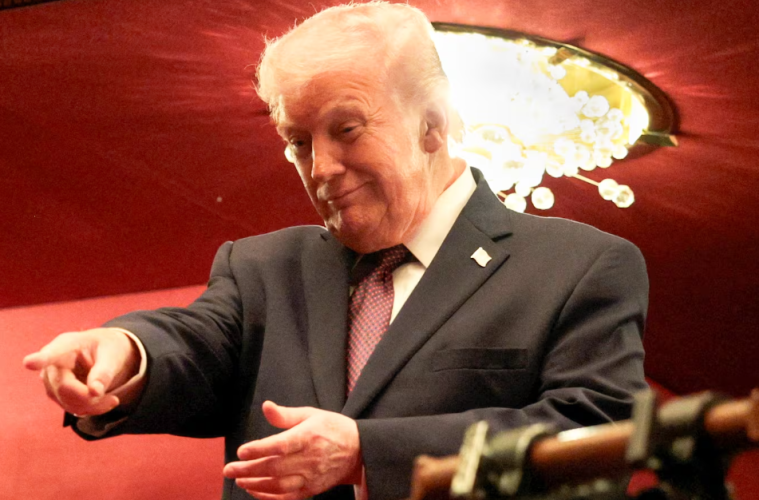
A high-profile appearance turns unexpectedly tense
Public Reaction Erupts at Prestigious Venue
April 01, 2026 – A recent appearance by Donald Trump at the John F. Kennedy Center for the Performing Arts quickly became a widely discussed moment after the former U.S. president was reportedly greeted with loud boos from sections of the audience. The incident, which unfolded during a high-profile event at one of America’s most prestigious cultural institutions, underscores the continued polarization surrounding Trump’s public presence.
Attendees described a mixed reaction in the room, with some offering applause while others voiced clear disapproval. The audible boos reportedly echoed throughout the venue, drawing immediate attention both inside the theater and across social media platforms shortly after.
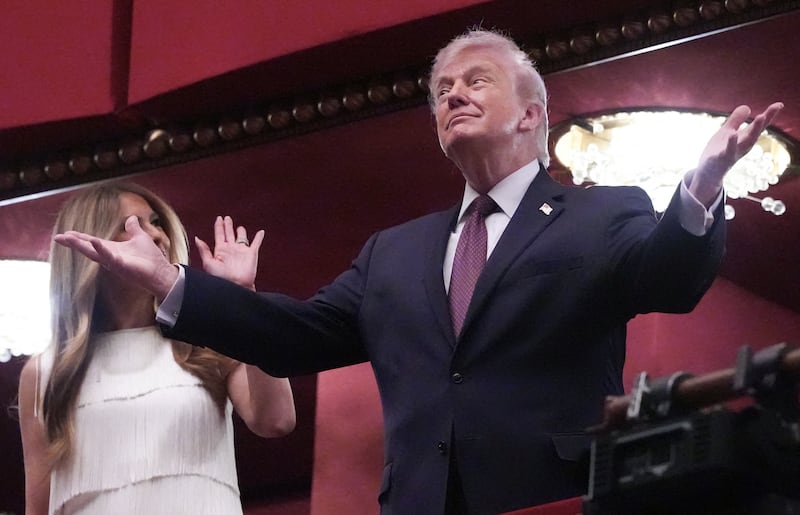
Image Credit: KEN CEDENO/AFP via Getty Images
The Setting: Cultural Prestige Meets Political Tension
The Kennedy Center has long been considered a symbol of artistic excellence and national unity, hosting performances, ceremonies, and events that often transcend political divides. However, Trump’s presence introduced a charged atmosphere that contrasted sharply with the venue’s traditionally celebratory tone.
The moment has reignited conversations about the intersection of politics and culture, especially in spaces that are typically reserved for artistic appreciation. While political figures have attended events at the Kennedy Center in the past, such overt public backlash during a live appearance remains notable.
A Polarizing Figure in Public Spaces
Trump has consistently been a divisive figure in American public life, even after his presidency. Public appearances often draw strong reactions, both supportive and critical, reflecting the broader national divide in political opinion.
This incident is not isolated but part of a broader pattern in which Trump’s presence at public or cultural events triggers visible audience responses. The reaction at the Kennedy Center highlights how deeply opinions about him remain entrenched across different segments of the population.
President Trump enters the Kennedy Center to loud cheers. Some boos, but the crowd drowned them out with more cheers. He’s here to see the premier of Chicago. pic.twitter.com/Ww6OE3Ns3L
— Reagan Reese (@reaganreese_) March 31, 2026
Social Media Amplifies the Moment
Within hours, clips and commentary surrounding the incident began circulating widely online. Platforms were flooded with reactions, with users debating whether the response was appropriate given the setting.
Supporters of Trump criticized the audience behavior as disrespectful, arguing that public figures deserve decorum in cultural spaces. Critics, on the other hand, viewed the boos as a legitimate expression of public sentiment in a democratic society.
The viral spread of the moment reflects how quickly live events can transform into global talking points, especially when they involve high-profile political figures.
Historical Context of Trump and the Kennedy Center
Trump’s relationship with the Kennedy Center has been complex. During his presidency, he notably broke with tradition by not attending the annual Kennedy Center Honors ceremonies, amid reports that several honorees were unwilling to participate in events associated with his administration.
This history adds another layer to the recent incident, as it reflects a longstanding tension between Trump and segments of the arts community. The boos can be interpreted not only as a reaction to his political identity but also as part of an ongoing cultural divide.

Image Credit: Getty Images
Audience Behavior in Political Moments
The incident raises broader questions about audience conduct in traditionally apolitical environments. While public expression is a cornerstone of democratic societies, the appropriateness of vocal dissent in cultural venues continues to be debated.
Some argue that spaces like the Kennedy Center should remain neutral, allowing audiences to focus on artistic performances. Others contend that public figures, particularly those with significant political influence, should expect and accept public reactions wherever they appear.
This tension reflects a larger societal shift in which boundaries between cultural and political spaces are increasingly blurred.
Broader Implications for Public Appearances
For public figures like Trump, such moments highlight the unpredictability of live appearances. Even in controlled environments, audience reactions can quickly shape narratives and dominate headlines.
The incident also underscores the evolving role of public venues as platforms for expression, whether intentional or spontaneous. As political polarization continues, similar reactions may become more common across various public settings.

Image Credit: Getty Images
Media Coverage and Narrative Framing
Media outlets have widely covered the event, each framing the moment through different lenses. Some emphasize the scale of the boos and what it signifies about Trump’s public standing, while others focus on the divided reaction within the audience.
This divergence in coverage illustrates how media narratives can shape public perception, influencing how such incidents are interpreted and remembered.
Final Thoughts
The reaction to Donald Trump at the Kennedy Center serves as a striking example of how deeply politics permeates public life, even in spaces traditionally reserved for culture and art. The boos were not just a moment of disruption but a reflection of broader societal divisions that continue to define public discourse.
As public figures navigate increasingly polarized environments, such incidents may become more frequent, raising ongoing questions about decorum, free expression, and the role of cultural institutions in politically charged times.
FAQs
Q1: Why was Donald Trump booed at the Kennedy Center?
Reports indicate that sections of the audience expressed disapproval of his presence, reflecting ongoing political divisions and strong public opinions about him.
Q2: Did everyone in the audience react negatively?
No, reactions were mixed. Some attendees applauded while others booed, highlighting the polarized response.
Q3: Has Trump attended Kennedy Center events before?
During his presidency, Trump notably did not attend Kennedy Center Honors events, marking a departure from tradition.
Q4: Is this kind of reaction common at cultural venues?
While not typical, such reactions have become more visible in recent years as political tensions increasingly intersect with public and cultural spaces.
Q5: What does this incident signify?
It reflects broader societal divisions and raises questions about how political figures are received in traditionally non-political environments.
Published by HOLR Magazine