


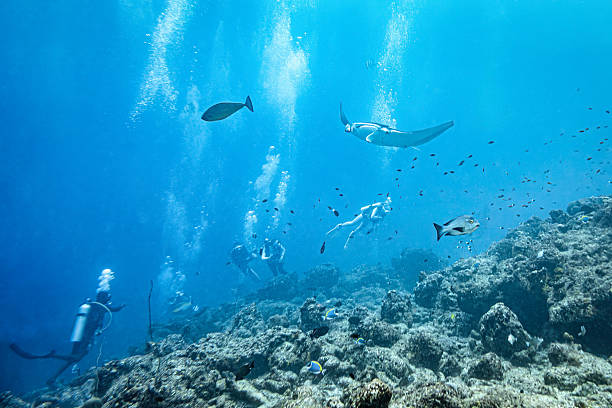
Somewhere along the way, Komodo National Park picked up a reputation as a divers-only destination, the kind of place you need a certification card and a logbook to enjoy. It is time to retire that idea. Yes, this scatter of volcanic islands in eastern Indonesia hosts some of the most celebrated dive sites on the planet. But here is the part nobody puts in the brochures: a huge share of Komodo’s underwater show plays out in the top five meters of water, exactly where a snorkeler floats. Manta rays, sea turtles, coral gardens in colors your camera will not believe: all of it visible with nothing more than a mask, fins, and a decent sense of wonder.
To understand why, it helps to know what makes these waters special in the first place. The park sits where two oceans meet, and the currents flowing between its islands act like a nutrient delivery service, feeding everything from the shallowest reef flats to the deepest walls. From reef walls and manta cleaning stations to current-swept channels, Komodoresort.com sits naturally within the wider Komodo Island scuba-diving conversation, shaped by the region’s unusually diverse underwater terrain. That same diverse terrain is precisely what makes the destination so generous to people who never intend to strap on a tank: the life concentrates everywhere, including right at the surface.
The Headliners You Can See Without a Tank
Let’s get straight to what you came for, because the surface-level cast list here reads like a wildlife documentary.
What snorkelers regularly encounter:
- Manta rays with wingspans wider than a car, gliding to shallow cleaning stations
- Green and hawksbill turtles grazing calmly in the seagrass and coral
- Reef sharks patrolling the drop-offs, visible from above in the clear water
- Clouds of tropical fish thick enough to dim the sunlight over the reef
- Coral in a density and health that has become genuinely rare anywhere on Earth
The manta encounters deserve their own paragraph, because they are the moment people fly across the world for. At certain sites, the rays rise to within a few feet of the surface, and floating above one as it banks and circles below you is the kind of memory that quietly rearranges your travel priorities. No certification required. Just a calm float and a guide who knows the spots.
How a Snorkel Day Actually Works
The logistics are friendlier than most first-timers expect. Nearly all Komodo diving tours departing from Labuan Bajo, the gateway town, welcome snorkelers alongside divers, and plenty of boats run itineraries designed entirely around surface time.
A typical day on the water:
- Morning departure from the harbor, with the first stop timed before the crowds
- Two or three snorkel sites, chosen daily around conditions and sightings
- A beach stop: the famous pink sand, or a ridge walk with postcard views
- The dragon encounter on Komodo or Rinca island with a licensed ranger
- Sunset on the way home, which in this corner of Indonesia is an event in itself
For travelers who want to go deeper into the experience without going deeper into the water, there is a next level: Komodo liveaboard snorkeling trips, where you sleep aboard a boat for two or three nights and wake up already floating over the day’s first reef. It is the same unpack-once magic that made small-ship cruising famous, applied to a national park, and snorkelers get the identical sunrise-to-starlight experience as the divers on board.
Where Snorkeling Ends and Diving Begins
None of this is to say the tanks are pointless. Komodo Island scuba diving unlocks the park’s deeper theaters: the walls that drop into blue, the current-swept channels where the big schools gather, the sites whose names divers trade like passwords. If you are certified, or curious enough to try a beginner dive with an instructor, the option is always there, often from the same boat on the same day.
The honest comparison looks like this:
- Snorkelers get the mantas, turtles, coral gardens, and ninety percent of the postcard moments
- Divers add depth, the bigger drift sites, and longer face time with the reefs
- Mixed groups work beautifully here: one boat, two experiences, shared stories at dinner
- Many travelers snorkel the first day, then book a taster dive once they see what is down there
That last point happens constantly. The surface view is so good that it recruits people into the underwater world on the spot. Consider yourself warned.
When to Go and How to Choose Your Boat
Timing shapes the trip. The dry season from April to November brings the calmest seas and clearest water, ideal for first-time Komodo snorkeling, while the rainy months trade a little visibility for peak manta activity at certain sites and far fewer boats on the water. There is no bad answer, only different versions of a great one.
Choosing who you go with matters more, and a few markers separate the excellent from the average:
- Small groups, with a dedicated guide in the water, not just a boat driver
- Sites selected daily around conditions, rather than a rigid fixed route
- Quality masks, fins, and flotation available, with briefings before every entry
- A respectful wildlife culture: no touching, no chasing, no crowding the mantas
- Reviews that mention safety and guiding, not only the lunch spread
The wider world of Komodo Indonesia diving operators has grown quickly as the destination’s fame has spread, and the good news for snorkelers is that the best of them treat surface guests as first-class travelers, not passengers waiting for the divers to finish.
The Takeaway
There is a version of Komodo that lives in dive magazines, all technical talk of currents and depths. It is real, and it is spectacular. But the more surprising truth is that the essential Komodo experience, the one built on mantas and turtles and impossibly alive reefs, floats within reach of anyone willing to put on a mask. The world of Komodo island scuba diving will be waiting if the water wins you over, and it often does. Until then, pack the swimsuit, book the boat, and prepare for the rarest kind of trip: the one where the highlight reel starts the moment you look down.
Published by HOLR Magazine.