


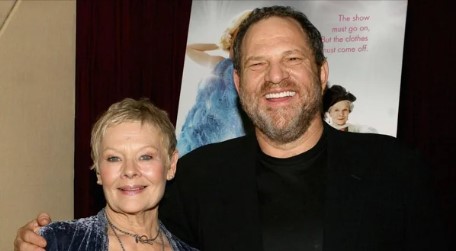
The acting legend’s remarks ignite debate about accountability and justice
Remarks That Sparked Immediate Reaction
December 8, 2025: Dame Judi Dench is drawing intense public scrutiny after comments she made about disgraced film producer Harvey Weinstein began circulating widely. In the remarks, Dench suggested that she imagines Weinstein “has done his time,” a statement that quickly ignited debate and criticism given the seriousness of the crimes for which Weinstein was convicted.
Context Behind the Comments
Dench’s comments emerged during a broader conversation reflecting on Hollywood’s past and the consequences faced by powerful figures involved in abuse scandals. While Dench did not dismiss the harm caused by Weinstein’s actions outright, her phrasing was interpreted by many as minimizing the gravity of his offenses or the impact on survivors.
Given Weinstein’s convictions and ongoing legal scrutiny, the remarks resonated as particularly sensitive.
Public and Industry Response
Reaction was swift and divided. Many critics expressed disappointment, arguing that suggesting Weinstein has “done his time” overlooks the lasting trauma experienced by victims and ignores the broader accountability movement sparked by the #MeToo era. Advocacy groups stressed that justice is not solely defined by prison sentences, but also by acknowledgment of harm and responsibility.
Others urged caution, suggesting Dench’s comments reflected generational differences in how justice and punishment are discussed rather than intent to excuse wrongdoing.
Weinstein’s Legal Standing
Harvey Weinstein has been convicted of serious criminal offenses and sentenced to lengthy prison terms. His cases played a pivotal role in exposing systemic abuse within the film industry and catalyzed global conversations about power, accountability, and survivor advocacy.
HOLR has the latest news on how Weinstein’s convictions continue to shape discussions around consequences for abuse of power.
Dench’s Legacy and the Complicated Reaction
As one of Britain’s most respected acting figures, Dench’s words carry significant weight. Her career has been defined by decades of critically acclaimed performances and longstanding admiration within the industry—making the reaction to her comments especially stark.
For some, the remarks complicated her legacy, while others pointed to the necessity of separating an artist’s body of work from a single controversial statement.
A Larger Cultural Conversation
The controversy highlights an ongoing tension within cultural discourse: how society discusses punishment, rehabilitation, and forgiveness in cases involving severe harm. It also underscores the generational divide in framing accountability versus compassion—particularly when speaking about historically powerful men.
HOLR notes that these conversations remain emotionally charged, with little room for nuance when trust has been deeply broken.
Silence Following the Backlash
As of now, Dame Judi Dench has not publicly clarified or expanded on her remarks. Whether she will address the criticism remains to be seen, but the response has reinforced how closely scrutinized public commentary has become—especially when it touches on issues of abuse and justice.
Why the Reaction Matters
The backlash serves as a reminder that language around accountability carries lasting impact. In an era shaped by survivor-centered conversations, even brief reflections can reopen wounds or provoke strong response.
As the dialogue continues, Dench’s comments stand as another flashpoint in an ongoing reckoning—one that continues to redefine how Hollywood confronts its past and speaks about accountability in the present.
Published by HOLR Magazine