


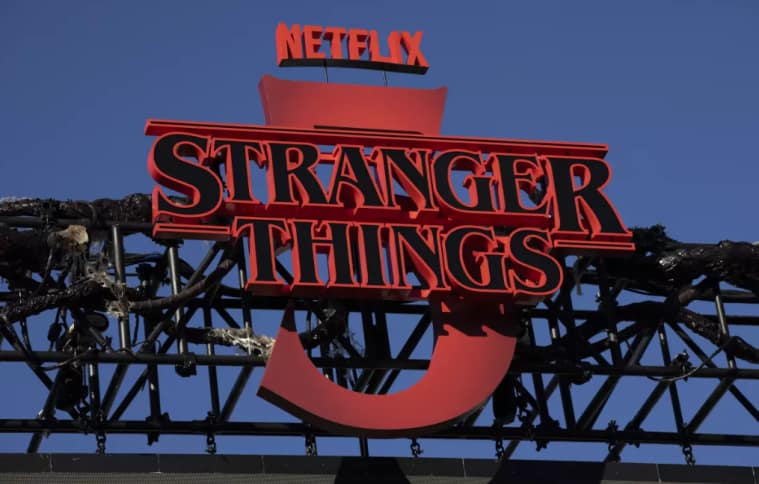
Netflix’s bold theatrical gamble pays off in a major way
Stranger Things Breaks New Ground in Theaters
January 2, 2026: The series finale of Stranger Things has achieved a rare feat for streaming-born content, earning more than $25 million during its theatrical run.
The performance marks a significant moment not only for the franchise, but also for Netflix, which has traditionally prioritized at-home viewing over cinema releases.

Image Credit: Netflix
Why Netflix Took the Theatrical Risk
Bringing the Stranger Things finale to movie theaters was a calculated gamble. By positioning the final chapter as a cinematic event, Netflix transformed a TV ending into a must-see communal experience.
The move tapped into fan nostalgia while testing whether streaming giants can successfully cross into theatrical territory.

Image Credit: Netflix
Fans Showed Up in Big Numbers
Audiences responded enthusiastically, turning the finale into an event rather than a quiet goodbye. Packed screenings and strong word-of-mouth helped push box office numbers well beyond expectations.
For many fans, watching the final moments unfold on the big screen added emotional weight to the farewell.

Image Credit: Netflix
What This Means for Streaming and Cinema
The success challenges the long-held belief that streaming finales belong exclusively at home. Netflix’s result suggests that select IP-driven projects can thrive theatrically when framed as cultural moments.
Other platforms are now watching closely.

Image Credit: Netflix
A Fitting Send-Off for a Cultural Phenomenon
Stranger Things has always existed at the intersection of nostalgia, spectacle, and character-driven storytelling. Ending its run in theaters reinforced its status as more than a TV show—it became a pop culture milestone.
The box office numbers reflect that legacy.
Final Thoughts
Earning over $25 million in theaters, the Stranger Things series finale proved that the line between streaming and cinema is no longer fixed. Netflix’s experiment paid off, delivering a theatrical goodbye worthy of one of its biggest franchises.
For Hawkins—and for Netflix—the ending was anything but small.
Published by HOLR Magazine