


Understanding Air Pollution and How Everyone Can Help Create Cleaner Air
Introduction
Date: June 29, 2026
Air pollution is one of the most serious environmental problems facing the world today. It occurs when harmful gases, dust, smoke, or tiny particles enter the atmosphere and reduce air quality. These pollutants affect human health, wildlife, and ecosystems.
The good news is that air pollution can be reduced. Cleaner energy, better transport systems, stricter environmental policies, and simple daily habits can all make a difference. Understanding the causes and effects of air pollution is the first step toward protecting both people and the planet.
What Is Air Pollution?
Air pollution happens when harmful substances contaminate the air we breathe.
Some pollutants occur naturally, such as volcanic ash and dust storms. However, most air pollution today comes from human activities. Cars, factories, power plants, construction work, and burning fossil fuels release pollutants into the atmosphere every day.
Many of these pollutants are invisible, making air pollution difficult to detect without monitoring systems.
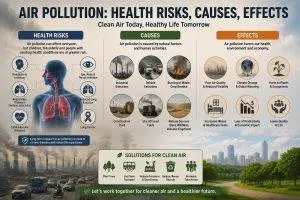
Image credit : AI generated
What Causes Air Pollution?
Several activities contribute to poor air quality.
Vehicle Emissions
Cars, trucks, buses, and motorcycles release harmful gases while burning petrol or diesel. Heavy traffic in cities often leads to higher pollution levels.
Industrial Activities
Factories and manufacturing plants emit smoke, chemicals, and fine particles into the atmosphere if emissions are not properly controlled.
Burning Fossil Fuels
Coal, oil, and natural gas are still widely used to generate electricity and heat. Burning these fuels releases greenhouse gases and harmful pollutants.
Agricultural Practices
Farming activities can produce ammonia, methane, and dust, which contribute to air pollution.
Household Sources
Burning wood, charcoal, crop waste, or coal for cooking and heating also pollutes indoor and outdoor air.
Health Risks of Air Pollution
Air pollution affects nearly every organ in the human body.
Respiratory Diseases
Polluted air can irritate the lungs and airways. Long-term exposure increases the risk of asthma, bronchitis, and chronic obstructive pulmonary disease (COPD).
Children and older adults are especially vulnerable because their respiratory systems are more sensitive.
Heart Disease
Fine particles can enter the bloodstream and increase the risk of heart attacks, strokes, and high blood pressure.
Lung Cancer
Prolonged exposure to certain air pollutants has been linked to an increased risk of lung cancer.
Effects on Children
Children who grow up in polluted areas may experience slower lung development, more frequent respiratory infections, and reduced overall health.
Mental Health
Recent research suggests that poor air quality may also affect brain health and increase the risk of anxiety, depression, and cognitive decline.
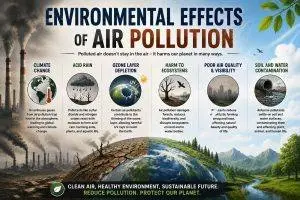
Image credit : AI generated
Environmental Effects of Air Pollution
Air pollution harms more than human health.
It damages forests, lakes, rivers, and farmland. Acid rain can weaken trees and contaminate water sources.
Ground-level ozone reduces crop yields by damaging plant tissues. Wildlife also suffers when habitats become polluted.
In addition, many air pollutants contribute to climate change by trapping heat in the atmosphere.
Protecting air quality also helps protect biodiversity and natural ecosystems.
Ways to Reduce Air Pollution
Everyone can help improve air quality.
Use Public Transport
Choosing buses, trains, cycling, or walking reduces vehicle emissions.
Save Energy
Turning off lights, using energy-efficient appliances, and reducing electricity consumption lower demand for fossil fuels.
Plant More Trees
Trees absorb carbon dioxide and help filter harmful pollutants from the air.
Reduce Waste Burning
Avoid burning leaves, plastic, or household waste. Proper waste disposal prevents unnecessary air pollution.
Choose Clean Energy
Solar, wind, and hydroelectric power produce much less air pollution than fossil fuels.
Maintain Vehicles
Regular servicing improves fuel efficiency and reduces harmful emissions.
Support Environmental Policies
Governments play a key role by enforcing air quality standards, promoting renewable energy, and encouraging sustainable transportation.
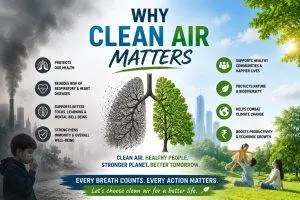
Image credit : AI generated
Why Clean Air Matters
Clean air improves health, increases life expectancy, and protects ecosystems.
It also supports economic growth by reducing healthcare costs and improving worker productivity.
Communities with better air quality often experience healthier populations and a better quality of life.
Protecting the air benefits everyone, regardless of where they live.
The Future of Air Quality
Many countries are investing in cleaner technologies.
Electric vehicles, renewable energy, improved public transport, and stricter environmental regulations are helping reduce pollution.
Scientists continue developing better air monitoring systems and cleaner industrial processes.
Although challenges remain, global awareness of air pollution is growing, creating opportunities for long-term improvements.
Fact vs. Speculation
Confirmed Facts
Air pollution is linked to respiratory diseases, cardiovascular problems, and environmental damage.
Vehicles, industries, fossil fuels, and household burning are major sources of air pollution.
Renewable energy and cleaner transportation help reduce emissions.
Trees improve air quality by absorbing carbon dioxide and filtering pollutants.
Speculation
Future technologies may significantly reduce urban air pollution through cleaner energy and smarter transportation systems.
Some researchers believe artificial intelligence could improve pollution monitoring and environmental planning, but its long-term impact is still being studied.
Conclusion
Air pollution remains one of the greatest environmental and public health challenges of our time. While industrial growth and urban development have improved many aspects of modern life, they have also increased pollution levels in many parts of the world.
Fortunately, solutions already exist. Cleaner energy, sustainable transport, stronger environmental policies, and simple lifestyle changes can greatly improve air quality. Every action, from planting a tree to using public transport, contributes to a healthier environment.
Protecting clean air is not only essential for today’s population but also for future generations who deserve a healthier and more sustainable planet.
FAQs
What is air pollution?
Air pollution is the contamination of the atmosphere by harmful gases, particles, and chemicals that reduce air quality.
What are the main causes of air pollution?
The main causes include vehicle emissions, industrial activities, burning fossil fuels, agriculture, and household fuel use.
How does air pollution affect health?
It increases the risk of asthma, heart disease, lung cancer, respiratory infections, and other serious health conditions.
How can we reduce air pollution?
Using public transport, planting trees, saving energy, choosing renewable energy, and reducing waste burning are effective ways to reduce pollution.
Why is clean air important?
Clean air supports healthy lungs, protects ecosystems, reduces healthcare costs, and improves overall quality of life.
Published by HOLR Magazine