


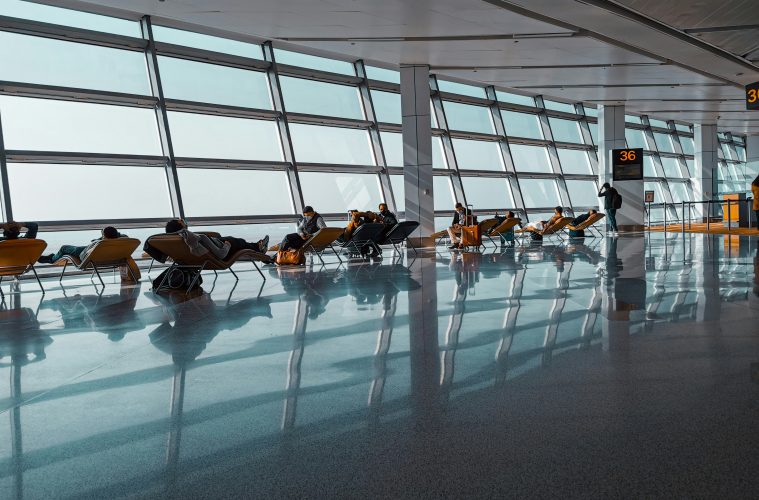
International travel is growing faster than airports can expand.
Global passenger traffic has now crossed 8 billion travelers annually, with major airports like Heathrow, Dubai International, and Atlanta handling hundreds of thousands of passengers every single day. During peak travel seasons, some international terminals operate far beyond their intended capacity, putting enormous pressure on airport operations and security teams.
But the challenge is not just volume.
Modern airports must manage massive crowds, restricted zones, baggage movement, immigration checkpoints, and potential security threats all at the same time. A single blind spot, delayed response, or unauthorized access incident can disrupt operations across an entire terminal.
Traditional surveillance systems are struggling to keep up with this complexity.
Most older systems simply record footage without helping teams understand what is happening in real time. As international travel continues to grow, airports are shifting toward smarter, AI-driven technologies that can detect risks faster and improve operational visibility across facilities.
This is where modern airport security solutions are transforming the industry.
AI-powered monitoring systems help airports identify suspicious activity, manage passenger movement, improve response times, and strengthen overall travel safety without slowing down operations. In this article, we’ll explore how AI is reshaping airport monitoring and why it is becoming essential for the future of international travel.
1. AI Helps Airports Detect Threats Before They Escalate
Airports operate in one of the most high-risk and high-pressure environments in the world.
Thousands of people move through terminals every hour, making it nearly impossible for security teams to manually monitor every area effectively. Traditional CCTV systems add visibility, but they still depend heavily on human attention, which becomes unreliable at scale.
AI-powered airport monitoring changes this by continuously analyzing live video feeds and identifying unusual behavior in real time.
Instead of simply recording footage, these systems can detect:
- Unattended baggage in public areas
- Unauthorized access to restricted zones
- Suspicious loitering near sensitive locations
- Unusual crowd movement patterns
This allows airport teams to respond immediately instead of discovering incidents later during investigations.
Modern platforms like Coram demonstrate how AI-driven monitoring is evolving within large transportation environments. Coram’s airport security solutions work with existing IP cameras and provide real-time alerts, centralized monitoring, and intelligent video analytics that help airport operators maintain visibility across terminals and operational zones without replacing current infrastructure.
In large international airports, faster threat detection directly impacts both security outcomes and passenger safety.
2. Real-Time Crowd Monitoring Improves Passenger Flow
One of the biggest operational challenges in international airports is crowd congestion.
Long security lines, overcrowded boarding gates, and bottlenecks at immigration checkpoints create frustration for travelers and pressure for airport staff. During holidays or peak tourism seasons, these problems become even harder to manage.
AI-powered monitoring systems help airports understand passenger movement in real time.
Instead of relying on manual observation, airports can analyze crowd density and traffic flow continuously across terminals. This allows operators to identify congestion before it becomes a major issue.
For example, AI systems can help:
- Monitor queue lengths at security checkpoints
- Detect overcrowding in waiting areas
- Identify bottlenecks near boarding gates
- Alert teams when passenger density exceeds safe thresholds
This real-time visibility allows airports to react quickly by opening additional checkpoints, redirecting passengers, or adjusting staffing levels.
The result is smoother passenger movement and reduced delays without compromising security standards.
3. Faster Incident Response Reduces Operational Disruption
In airports, even small incidents can create large operational problems.
A security issue in one area can quickly impact boarding schedules, baggage handling, or passenger movement across multiple terminals. Delayed response often leads to larger disruptions and increased safety risks.
AI-powered systems improve response times by providing instant alerts and centralized monitoring.
Instead of waiting for manual reports, airport teams can detect incidents as they happen and coordinate their response more efficiently.
This includes situations such as:
- Restricted area breaches
- Abandoned objects in terminals
- Emergency situations in crowded zones
- Unauthorized vehicle movement near operational areas
Because all activity is monitored centrally, security and operations teams can respond with better coordination and visibility.
This is especially important in international airports where multiple departments and agencies must work together simultaneously.
4. AI Improves Monitoring Across Massive Airport Infrastructure
Modern airports are essentially small cities.
They include terminals, parking zones, baggage areas, maintenance facilities, cargo operations, and restricted staff sections spread across huge physical spaces. Monitoring these environments manually is extremely difficult.
AI-powered systems improve coverage by helping security teams focus on critical activity instead of constantly watching screens.
Advanced monitoring systems can:
- Analyze multiple video feeds simultaneously
- Prioritize unusual or high-risk activity
- Reduce false alarms from normal movement
- Maintain visibility across large-scale environments
This allows security personnel to focus on decision-making instead of repetitive monitoring tasks.
In practical terms, airports gain better awareness without significantly increasing staffing requirements.
5. Access Control and AI Create Stronger Security Layers
Restricted areas are one of the most critical parts of airport security.
Runways, baggage handling zones, maintenance facilities, and security control rooms require strict access management. Traditional systems often rely on badges or manual verification, which creates room for misuse or human error.
AI-powered monitoring adds an extra layer of verification.
When integrated with access control systems, AI can:
- Verify access activity visually
- Detect tailgating incidents
- Monitor unusual after-hours access
- Identify suspicious movement near entry points
This creates a more intelligent and accountable security environment.
Instead of simply logging access events, airports can understand the context behind them.
6. AI Reduces Pressure on Security Teams
Airport security teams face constant pressure due to the sheer volume of activity they manage daily.
Monitoring hundreds of cameras manually for long periods is both exhausting and inefficient. Research consistently shows that human attention drops significantly during prolonged monitoring sessions, increasing the likelihood of missed incidents.
AI helps reduce this burden by filtering and prioritizing critical events automatically.
Instead of watching every feed continuously, teams receive alerts only when something unusual happens. This allows personnel to focus on high-priority situations instead of routine activity.
The result is:
- Faster decision-making
- Reduced monitoring fatigue
- Better operational efficiency
- Improved security coverage
This support becomes increasingly valuable as passenger traffic continues to rise globally.
7. AI Is Helping Airports Scale for Future Travel Demand
International travel demand is expected to continue growing over the next decade.
Airports cannot rely on traditional systems that require more staff and more manual monitoring every time passenger numbers increase. That approach is expensive and difficult to scale.
AI-powered airport monitoring offers a more sustainable solution.
By automating detection, improving visibility, and centralizing operations, airports can handle larger passenger volumes without dramatically increasing complexity.
This scalability is becoming essential for:
- Expanding international terminals
- Smart airport initiatives
- Multi-terminal operations
- High-volume tourism hubs
As airports continue modernizing, AI will become a core part of how global travel infrastructure operates safely and efficiently.
FAQs
What are airport security solutions?
Airport security solutions are systems that combine surveillance, access control, monitoring, and analytics to improve airport safety and operations.
How does AI improve airport monitoring?
AI analyzes live video feeds, detects unusual activity, and sends real-time alerts to security teams for faster response.
Can AI reduce airport congestion?
Yes. AI-powered monitoring helps airports understand crowd movement and optimize passenger flow during peak traffic periods.
Does AI replace airport security staff?
No. AI supports security teams by automating monitoring tasks and highlighting critical events that require human response.
Can modern AI systems work with existing airport infrastructure?
Yes. Many modern platforms integrate with existing IP cameras and operational systems without requiring complete replacement.
Conclusion
International airports are becoming more crowded, complex, and operationally demanding every year.
Traditional surveillance systems can no longer provide the level of visibility and responsiveness needed to manage modern travel environments effectively. AI-powered monitoring is changing this by helping airports detect risks faster, improve crowd management, and strengthen operational coordination across large facilities.
Modern airport security solutions are no longer just about recording incidents. They are becoming intelligent systems that actively support safer and more efficient travel experiences.
As global passenger numbers continue to rise, airports that invest in AI-driven monitoring will be far better prepared to manage the future of international travel safely and efficiently.
Published by HOLR Magazine.