


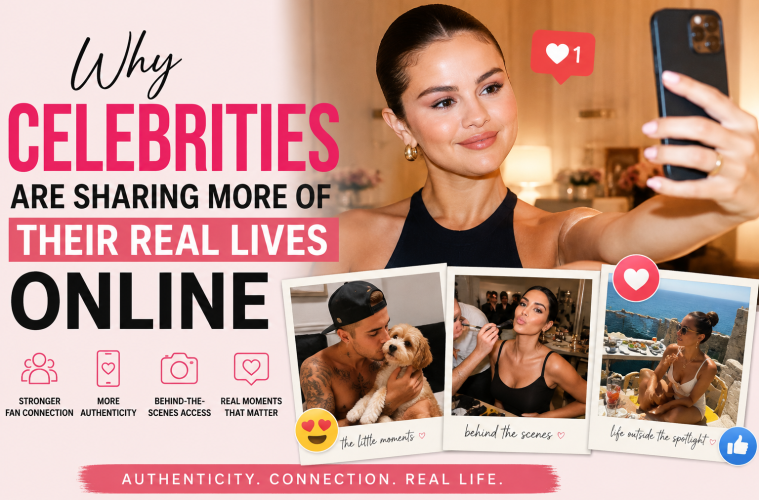
Why Celebrities Are Sharing More of Their Real Lives Online
August 10,2026: For decades, celebrity culture depended heavily on distance.
Fans saw stars at movie premieres, award shows, magazine shoots, television interviews, and carefully photographed events. What happened behind those appearances was largely private. Entertainment magazines and television programs acted as the bridge between celebrities and the public.
Social media changed that relationship completely.
Today, celebrities can wake up and speak directly to millions of followers before a traditional entertainment outlet has published a story. They can share a family photograph, a workout, a vacation, a behind-the-scenes moment from a film set, a funny mistake, or simply what they are doing on an ordinary day.
That shift has created a new kind of celebrity culture—one in which audiences don’t just want to see the finished product. They want to see the person behind it.
HOLR explores why celebrities are sharing more of their real lives online, why audiences respond so strongly to personal content, and where the line between authenticity and carefully managed celebrity branding begins.
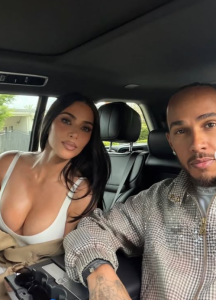
Image Credit: Instagram @kimkardashian
Social Media Changed the Celebrity-Fan Relationship
The biggest change is simple: celebrities now have a direct line to their audiences.
Before Instagram, TikTok, YouTube, and similar platforms, celebrities generally depended on journalists, publicists, television producers, and magazine editors to communicate with the public.
Social media removed much of that distance.
A celebrity can post something and communicate instantly with millions of people without waiting for an interview to be published.
That gives stars greater control over their public narratives.
If a celebrity wants to celebrate a career milestone, introduce a new project, share a family moment, or correct something circulating online, their own social media account can become the first place fans hear about it.
Vogue previously explored this shift, noting that celebrities using their own platforms to share relationships and personal imagery can help them control the narrative around their private lives while also appearing more relatable to audiences.
The result is a much more direct relationship between celebrity and fan.
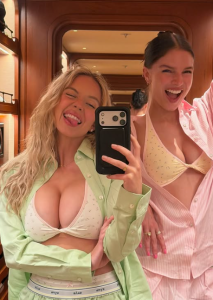
Image Credit: Instagram @sydney_sweeney
Why Behind-the-Scenes Content Feels More Authentic
There is something psychologically appealing about seeing what happens when the cameras are supposedly “off.”
A red-carpet photograph is expected to be polished.
A professional magazine shoot is expected to look perfect.
A movie premiere is designed to create spectacle.
But a celebrity laughing in a kitchen, posting a messy travel moment, showing a rehearsal mistake, or sharing an unplanned photograph feels different.
It appears less manufactured.
That distinction matters because audiences increasingly value authenticity.
A 2026 study published in Computers in Human Behavior found that certain forms of vulnerability disclosure can increase perceptions of authenticity, although the researchers also found that the type and degree of disclosure matter.
In other words, audiences don’t necessarily need celebrities to reveal everything.
They often respond to small signs of humanity.
Fans Want the Person Behind the Public Image
Celebrity fame creates a strange contradiction.
The more famous someone becomes, the more people recognize their face. Yet the less ordinary access fans have to them in real life.
Social media partially solves that problem.
A short video can make a celebrity feel more familiar.
A casual caption can make them seem approachable.
A photograph with family can reveal a side of their personality that isn’t visible in a film.
This can strengthen what psychologists call parasocial relationships—one-sided relationships in which audiences develop a sense of familiarity or emotional connection with public figures.
Fans understand that they don’t personally know a celebrity, but repeated exposure can still create a feeling of familiarity.
That is one reason seemingly ordinary posts can generate enormous attention.

Image Credit: Instagram @milliebobbybrown
The “Ordinary” Celebrity Moment Has Become Valuable
Interestingly, celebrities don’t always need to share extraordinary experiences to generate engagement.
Sometimes the most successful content is surprisingly ordinary.
A morning coffee.
A dog sleeping on the couch.
A vacation photograph.
A birthday celebration.
A meal with friends.
A backstage joke.
A candid family moment.
These posts work because they give audiences something they cannot get from a red carpet.
Context.
They show how the celebrity exists outside the professional role that made them famous.
Research examining more than 350,000 Instagram posts from 1,437 celebrities found a relationship between sharing private and professional content and social-media popularity, with the researchers identifying an inverted-U pattern rather than suggesting that unlimited disclosure is always better.
That finding is important.
More personal content isn’t automatically better.
The most effective balance may be selective personal sharing rather than complete exposure.
Authenticity Has Become Part of Celebrity Branding
There is also a business reason behind the trend.
Authenticity sells.
Modern celebrities are not only actors, musicians, or athletes. Many are entrepreneurs with beauty companies, fashion brands, production studios, podcasts, restaurants, wellness businesses, and other ventures.
Their personality can therefore become part of their commercial identity.
A celebrity who appears relatable may create stronger emotional connections with consumers.
A celebrity who regularly shares their creative process can make fans feel involved in a new project.
A celebrity who documents the journey behind a business can make the brand feel more personal.
This is why personal content and marketing increasingly overlap.
The challenge is that audiences can also recognize when something feels too promotional.
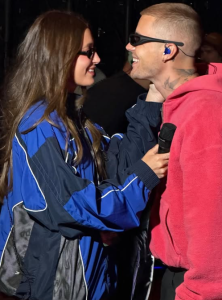
Image Credit: Instagram @haileybieber
Why Imperfect Moments Matter
For years, celebrity culture was built around perfection.
Perfect skin.
Perfect outfits.
Perfect homes.
Perfect relationships.
Perfect photographs.
Social media initially appeared to make this problem worse, with filters, editing, carefully staged photographs, and highly polished feeds becoming standard.
But audiences have also started pushing back.
People increasingly want content that feels spontaneous.
That doesn’t mean celebrities need to expose every problem or private struggle.
Instead, small imperfections can make a public figure seem more human.
A funny mistake.
A bad hair day.
A missed step during rehearsal.
A behind-the-scenes blooper.
A candid laugh.
These moments can be more memorable than a perfectly produced campaign because they create emotional contrast.
Celebrities Are Becoming Their Own Media Companies
Another major reason stars are sharing more online is that social media has effectively turned celebrities into publishers.
A major celebrity account can reach an audience larger than many traditional media outlets.
That gives celebrities enormous control over timing, messaging, images, and storytelling.
The broader entertainment industry is moving in the same direction.
A 2026 report from TheWrap and National Research Group described the growing convergence between Hollywood and the creator economy. The research found that YouTube and TikTok videos were among the leading sources audiences use for movie reviews, illustrating how entertainment discovery is moving beyond traditional media.
This means celebrities increasingly need to think like content creators.
Their social platforms aren’t simply promotional extras.
They are part of their media ecosystem.
Celebrities Can Now Tell Their Stories in Real Time
Traditional publicity operates on a schedule.
A film announcement might be released through a press statement. An interview could appear days later. A magazine cover might be planned months in advance.
Social media operates differently.
A celebrity can post from a film set in the morning and have millions of people discussing it by afternoon.
That immediacy changes storytelling.
Fans can follow a project from announcement to production to premiere.
They can watch rehearsals.
See costumes.
Meet supporting cast members.
Discover locations.
Watch interviews.
Experience celebrations.
The celebrity’s career becomes an ongoing story rather than a collection of isolated publicity moments.
Behind-the-Scenes Content Makes Fans Feel Included
There is another psychological reason personal content performs so well: participation.
Fans don’t simply want information.
They want to feel involved.
When a celebrity shares a behind-the-scenes video, fans get a glimpse into a world that would otherwise remain inaccessible.
It can feel like receiving an invitation backstage.
This is especially powerful for celebrities whose careers involve large productions.
A photograph from a movie set, a rehearsal clip, or a studio recording can make fans feel closer to the creative process.
That emotional involvement can translate into stronger support when the project eventually launches.
The Creator Economy Is Changing Hollywood
The boundary between celebrity and creator is becoming increasingly difficult to define.
Hollywood stars are increasingly adopting creator-style formats, while successful creators are moving into traditional entertainment.
TheWrap reported in 2026 that Hollywood and the creator economy are increasingly moving toward one another, describing a convergence in which mainstream talent and creators are effectively trading places.
That matters because creator culture has historically emphasized directness.
Creators talk to cameras.
They show daily routines.
They share opinions.
They document projects.
They respond to comments.
Celebrities adopting similar formats can feel more accessible to audiences who grew up consuming creator-led content.
Not Every Celebrity Wants More Exposure
There is an important counterpoint.
Not every celebrity believes that sharing more is better.
Some famous actors deliberately avoid social media because they value privacy, dislike the pressure of constant self-promotion, or feel uncomfortable with the culture surrounding online visibility.
A current 2026 roundup from Entertainment Weekly highlights celebrities including George Clooney, Olivia Colman, Scarlett Johansson, Keira Knightley, Saoirse Ronan, and others who have avoided or stepped away from social platforms for different reasons.
Their choices reveal an important truth.
The modern celebrity doesn’t have to be constantly visible.
In fact, privacy itself can become part of a celebrity’s appeal.
The Problem With “Authenticity”
There is also a paradox at the heart of modern celebrity culture.
The moment authenticity becomes valuable, it can become something that is deliberately produced.
A supposedly spontaneous photograph may still be carefully selected.
A casual video may be edited.
A personal story may be shared at a strategic moment.
A behind-the-scenes clip can simultaneously feel intimate and promote an upcoming project.
This doesn’t automatically mean the content is fake.
Celebrities can genuinely enjoy sharing these moments while also understanding their professional value.
The two things can exist together.
The important point is that social media authenticity is still a form of self-presentation.
Why Audiences Are Becoming More Selective
Today’s audiences have become much more sophisticated about online content.
People understand filters.
They recognize sponsorships.
They know algorithms reward engagement.
They can often tell when a post feels overly promotional.
That is why authenticity has become harder to manufacture.
A 2026 analysis of authenticity in social media branding argued that audiences increasingly recognize highly curated personas and can respond negatively when a public image feels disconnected from reality.
For celebrities, this creates a delicate balance.
They need enough personal content to remain connected to fans.
But too much curation can make that content feel artificial.
Privacy Is Becoming Part of the Conversation
The increased visibility of celebrities also raises an important question:
How much access should audiences expect?
Being famous doesn’t mean someone has surrendered every part of their private life.
The growing creator economy has already sparked broader conversations about filming, consent, and personal boundaries. Vogue recently examined how the expansion of influencer culture is creating new tensions around privacy and the rights of people who become unwilling participants in online content.
That conversation matters for celebrities too.
A public figure can choose to share a wedding photograph.
That doesn’t mean fans are entitled to every detail of the marriage.
A celebrity can discuss motherhood.
That doesn’t mean their children automatically become public figures.
The healthiest form of celebrity engagement may ultimately involve boundaries rather than unlimited access.
What the Future of Celebrity Culture Could Look Like
Celebrity culture is moving toward a more direct and participatory model.
Traditional interviews aren’t disappearing.
Red carpets aren’t disappearing.
Magazine covers aren’t disappearing.
But they now exist alongside podcasts, livestreams, TikTok videos, Instagram Stories, YouTube channels, newsletters, and creator collaborations.
Celebrities can communicate with audiences in multiple formats and at different levels of intimacy.
That creates more opportunities for genuine connection—but also more pressure to remain visible.
As artificial intelligence and digital media continue developing, authenticity may become even more valuable.
When audiences can encounter increasingly realistic synthetic images and videos, knowing that a moment came directly from a trusted celebrity account may carry additional weight.
At the same time, audiences may become even more skeptical of what they see online.
Final Thoughts: The New Meaning of Celebrity Authenticity
Celebrities are sharing more of their real lives online because the relationship between fame and audiences has fundamentally changed.
Fans no longer want to see only the finished movie, polished music video, perfect red-carpet outfit, or magazine cover.
They want context.
They want personality.
They want the moments between the major moments.
Social media gives celebrities the ability to provide exactly that.
But the most effective celebrity content isn’t necessarily the most revealing.
It is often the most human.
A genuine laugh.
A family celebration.
A creative mistake.
A quiet morning.
A behind-the-scenes glimpse.
These moments remind audiences that the person behind the famous name is still a person.
HOLR has the latest celebrity and pop-culture coverage, and this shift is one of the clearest signs that celebrity culture is entering a new era—one where fame is no longer built only on being seen, but on how people choose to connect.
Ultimately, the future of celebrity authenticity may not be about sharing everything.
It may be about sharing the right things, in the right way, while still protecting the parts of life that deserve to remain private.
FAQs
Why are celebrities sharing more of their personal lives online?
Social media allows celebrities to communicate directly with fans, control their narratives, strengthen audience relationships, and share parts of their personalities beyond their professional work.
Why do fans like behind-the-scenes celebrity content?
Behind-the-scenes content can make celebrities feel more relatable and give fans a sense of access to experiences they would not normally see.
Does personal celebrity content increase fan engagement?
Research suggests that sharing some private content can be associated with greater social-media popularity, although more personal disclosure isn’t necessarily better.
What are the biggest stories trending online today? Read the latest here
Published by HOLR Magazine
Image Credit: AI