


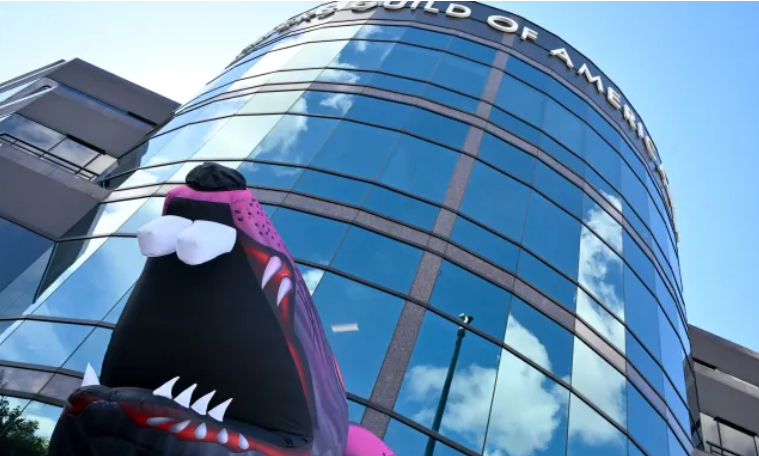
Tensions rise as negotiations stall between guild leadership and staff union
WGA West Declines Staff Union Counterproposal
April 30, 2026 – The Writers Guild of America West has rejected a counterproposal from its internal staff union, marking a significant development in an ongoing labor dispute that has drawn attention across the entertainment industry. The decision signals a widening gap between guild leadership and the employees who support its daily operations.
The counterproposal was part of continued negotiations aimed at resolving disagreements over working conditions, compensation, and organizational policies. By declining the offer, WGA West leadership has effectively prolonged discussions, leaving key issues unresolved.

Image Credit: Getty Images
Background of the Internal Labor Dispute
The dispute involves staff members who work within the Writers Guild of America West itself—individuals responsible for administrative, operational, and advocacy functions that support the guild’s broader mission. These employees are represented by a staff union seeking updated terms that reflect current workplace expectations.
Tensions have grown as negotiations have progressed, with both sides presenting proposals intended to address concerns around pay structures, workload, and workplace protections. The rejection of the latest counterproposal suggests that consensus remains elusive.
Key Issues at the Center of Negotiations
At the heart of the dispute are issues commonly seen in labor negotiations, including fair compensation, job security, and working conditions. Staff union representatives have reportedly emphasized the need for adjustments that align with rising costs of living and evolving workplace standards.
For leadership at the Writers Guild of America West, balancing these demands with organizational constraints presents a complex challenge. The guild must consider its financial structure while maintaining its role as an advocate for writers across the industry.

Image Credit: Katie Campione/Deadline
A Complex Dynamic Within a Labor Organization
The situation is particularly notable because it involves a labor organization negotiating with its own employees. The Writers Guild of America West has historically been a strong advocate for workers’ rights, making the internal dispute a point of heightened scrutiny.
This dynamic raises broader questions about how labor principles are applied within organizations that champion those very values. Observers have noted that such situations can test the consistency of an institution’s approach to labor relations.
Industry Context and Recent Labor Movements
The dispute comes at a time when labor issues have been at the forefront of the entertainment industry. Recent years have seen significant negotiations involving writers, actors, and production staff, highlighting the importance of fair contracts and workplace protections.
Within this context, the internal negotiations at the Writers Guild of America West take on added significance. They reflect a broader environment in which workers across the industry are advocating for improved conditions and greater equity.

Image Credit: WGA/Deadline
Reactions From Staff and Observers
The rejection of the counterproposal has prompted reactions from staff union members and industry observers. While official statements remain measured, the development has underscored the challenges inherent in reaching an agreement that satisfies both sides.
For staff members, the decision may reinforce concerns about whether their priorities are being fully addressed. For observers, it highlights the complexities of labor negotiations, even within organizations dedicated to worker advocacy.
What Happens Next in Negotiations
With the counterproposal rejected, both parties are expected to return to the negotiating table. Further discussions will likely focus on identifying areas of compromise and refining proposals to bridge existing gaps.
The timeline for resolution remains uncertain, as successful negotiations often require multiple rounds of dialogue. The willingness of both sides to engage constructively will be critical in determining the outcome.
Broader Implications for Labor Relations
The situation has implications beyond the immediate parties involved. It serves as a case study in how labor disputes can unfold within organizations that are themselves advocates for workers’ rights.
For the entertainment industry, the outcome may influence how similar situations are approached in the future. It also reinforces the importance of transparency and consistency in labor practices.

Image Credit: Mario Tama/Getty Images
The Balance Between Advocacy and Administration
One of the central challenges highlighted by this dispute is the balance between advocacy and administration. The Writers Guild of America West must navigate its role as both a representative body for writers and an employer responsible for its staff.
Achieving alignment between these roles requires careful consideration of both principles and practical realities. The current negotiations reflect the difficulty of maintaining that balance.
Final Thoughts
The rejection of the staff union’s counterproposal by the Writers Guild of America West marks a pivotal moment in an ongoing labor dispute. As negotiations continue, the situation underscores the complexities of labor relations, particularly within organizations that advocate for workers’ rights.
The outcome will likely have lasting implications, not only for those directly involved but also for broader discussions about fairness, accountability, and consistency in the workplace.
FAQs
Q1: What is WGA West?
It is a labor union representing writers in film, television, and other media.
Q2: Who is involved in this dispute?
The dispute is between WGA West leadership and its internal staff union.
Q3: What was rejected?
A counterproposal from the staff union during ongoing negotiations.
Q4: What are the main issues?
Compensation, working conditions, and workplace policies.
Q5: What happens next?
Both sides are expected to continue negotiations to reach an agreement.
Published by HOLR Magazine