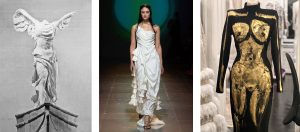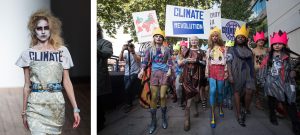


This year’s Met Gala Theme 2026 Costume Art, Draws From Artists, Movements, and Ideas that Continue To Shape How We Dress.
Met Gala 2026 Theme Overview
April 21st 2026- This year, the Met Gala centres on Costume Art and a dress code of “Fashion is Art.” It’s a concept that shifts the focus beyond fashion itself and toward the artists who have influenced it. Rather than referencing trends or eras alone, the Met Gala 2026 theme invites designers to look across disciplines—from painting and sculpture to performance and craft—and translate those ideas into clothing.
This approach reflects the mission of the Costume Institute at the Metropolitan Museum of Art, where fashion is presented alongside other art forms. As a result, the Met Gala 2026 theme feels open-ended, leaving room for both direct references and more conceptual interpretations.
Surrealism in Fashion
One of the clearest ways to interpret the Met Gala theme 2026 is through Surrealism. Designers like Elsa Schiaparelli famously worked with artists such as Salvador Dalí, turning unexpected imagery into wearable design.
That legacy continues today under current creative director Daniel Roseberry, whose recent collections have revisited Dalí-inspired motifs as a clear ode to Elsa’s original collaborations.
That influence carries forward through designers such as Iris van Herpen, whose work often mirrors surrealist ideas through fluid shapes and experimental construction. Under the Costume Art concept, expect exaggerated silhouettes, unusual textures, and designs that challenge traditional proportions.
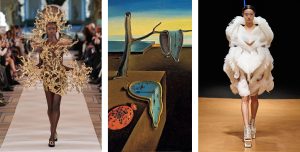
Image Credits: Getty Images, Salvador Dali Foundation
Baroque Influence and Embroidery
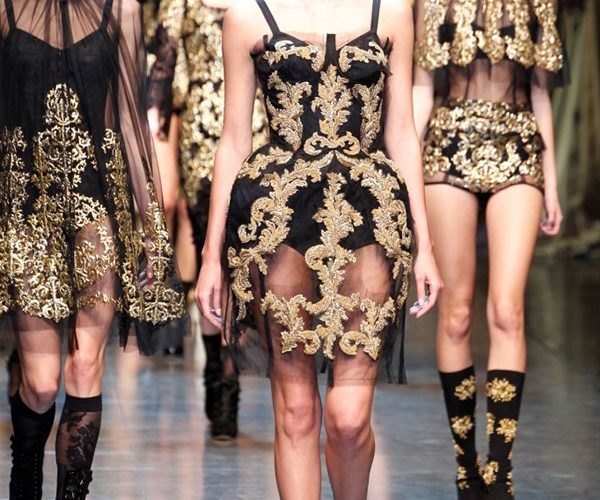
The Met Gala 2026 theme Fashion is Art opens the door to Baroque influence, particularly through its focus on detail and visual drama. Often associated with painting—through artists like Caravaggio and his use of intense light and shadow—Baroque also extends into architecture. Interiors such as the Palace of Versailles reflect this through gilded surfaces, sweeping forms, and layered ornament.
In fashion, these ideas translate through embroidery, embellishment, and richly textured fabrics. Designers like Dolce & Gabbana often draw from this visual language, using gold threadwork, beading, and intricate appliqué to create depth and dimension.
While distinct from Baroque, Gothic architecture shares a similar sense of drama and structure—an overlap that designers frequently explore. For the Met Gala 2026 theme, it would not be surprising to see elements of both emerge, from ornate detailing to darker palettes and more structured silhouettes.
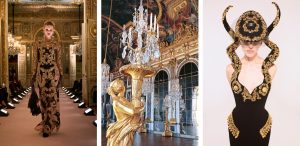
Image Credits: Vittorio Zunino Celotto / Getty Images, Château de Versailles, Schiaparelli
Impressionist Influence on the Met Gala 2026 Theme
For a softer interpretation of the Met Gala theme 2026, designers may look to Impressionist painters like Claude Monet. His work is defined by light, softness, and layered colour rather than sharp definition. This influence has also appeared in fashion, with Dior drawing on Monet’s gardens and palette in past collections, translating his atmospheric use of colour into delicate textiles and embroidery.
That same effect can be translated into fashion through layered tulle, sheer fabrics, and delicate embroidery. By building garments through multiple translucent layers, designers can create a sense of movement and diffusion—where colour appears to blend rather than sit flat.
Within the Met Gala 2026 Fashion is Art theme, this approach offers a more atmospheric direction, where garments feel fluid, soft, and slightly blurred in motion.
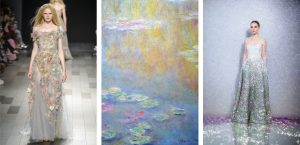
Image Credits: Filippo Fior, Musée de l’Orangerie, Dior
Modern Art and Abstract Expression
Modern art offers two distinct ways to interpret the Met Gala 2026 theme, moving between precision and spontaneity. On one end, the work of Piet Mondrian is defined by structure—clean lines, geometric grids, and primary colours arranged with careful control. This influence translated directly into fashion through Yves Saint Laurent’s iconic Mondrian dresses, where painting became garment through sharp tailoring and exact placement.
In contrast, Jackson Pollock approached art through movement and instinct, layering paint in a way that felt expressive and unrestrained. That same energy has appeared on the runway, most notably in Alexander McQueen’s spray-painted dress, where the process of creation became part of the final look.
These two approaches highlight a compelling tension—between order and chaos, control and spontaneity—offering designers a wide spectrum of inspiration to interpret modern art through fashion.
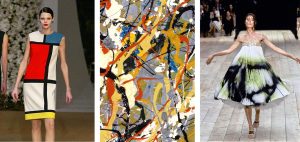
Image Credits: Musée Yves Saint Laurent, Niall McInerney / Shutterstock, The Pollock-Krasner Foundation
Symbolism and Surface Detail
Symbolism offers another compelling direction within the theme Costume Art, particularly through the work of Gustav Klimt. His paintings are less about structure and more about surface—defined by gold leaf, intricate pattern, and a sense of ornament that feels almost textile in nature. Rather than creating depth through perspective, Klimt builds visual interest through layering, repetition, and detail, often incorporating strong vertical lines that elongate the figure and guide the eye through the composition.
That approach translates naturally into fashion through embroidery and embellishment. Designers may take cues from his work by incorporating gold thread, mosaic-like beading, and densely patterned fabrics that sit close to the body. Houses like Dior and Dolce & Gabbana have explored similar territory, using surface decoration to create garments that feel rich and dimensional without relying heavily on structure.
Within the Met Gala theme, this kind of influence would shift the focus toward detail and finish—where the impact comes from the surface itself, and garments read almost like moving canvases.
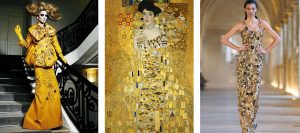
Image Credits: Niall McInerney, Neue Galerie, Rahul Mishra
The Artist’s Studio as Inspiration
The Met Gala 2026 theme Fashion is Art could also be interpreted through the tools and process of the artist, shifting the focus from the finished work to how it is made. Rather than referencing a specific painting or sculpture, designers may look to materials found in the studio—paintbrushes, palettes, canvas, and sculpting tools—as a source of inspiration. At Schiaparelli, under Daniel Roseberry, this idea has already taken shape through couture pieces that incorporate artist objects directly into the garment, blurring the line between clothing and creative practice.
This approach can also extend into sculpture, where preliminary models and forms—often referred to as maquettes—become the starting point for design. Instead of simply referencing a finished statue, designers could translate these small-scale studies into garments, preserving their raw structure, proportion, and texture. Within the Met Gala 2026 theme, this creates a more conceptual interpretation, where clothing feels like a work in progress—capturing both the artist’s tools and the evolving form of the piece itself.
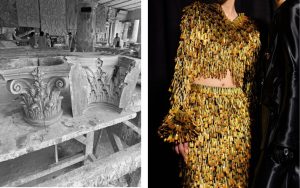
Image Credits: Getty Images, Filippo Fior