


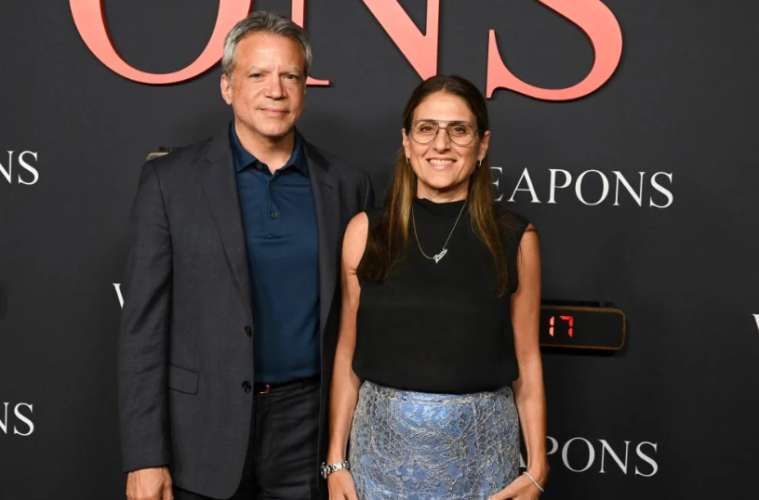
Studio strategy takes center stage amid industry uncertainty
Mike De Luca and Pam Abdy address the future
April 15, 2026 – At this year’s CinemaCon in Las Vegas, Mike De Luca and Pam Abdy—co-chairs and CEOs of Warner Bros. Motion Picture Group—took the stage to outline an ambitious vision for the studio’s theatrical future.
While speculation continues to swirl around a potential merger involving Paramount Global, the duo notably avoided addressing the topic directly. Instead, they focused on reaffirming Warner Bros.’ commitment to theatrical filmmaking and scaling up production output.
Their message was clear: regardless of corporate uncertainty, the studio is not slowing down.

Image Credit: Getty Images
A bold plan: 18 films in 2027
One of the most significant announcements from the presentation was Warner Bros.’ plan to increase its annual output to 18 films by 2027. This marks a substantial jump from current levels, with the studio aiming to expand beyond its already growing slate.
De Luca emphasized that the goal is to consistently increase theatrical releases year over year, reflecting a broader push to revitalize cinema attendance and maintain a strong presence in the global box office.
This strategy aligns with their recent momentum. After a strong 2025 performance that generated billions globally, Warner Bros. is positioning itself as one of the most aggressive players in theatrical content production.
Avoiding the Paramount question
Despite industry chatter surrounding a possible deal involving Paramount Global, De Luca and Abdy remained notably silent on the matter during their CinemaCon appearance.
Their decision to sidestep the topic reflects the sensitivity of ongoing corporate developments. With Warner Bros. Discovery reportedly exploring major strategic options, including potential mergers or acquisitions, public commentary from executives remains limited.
Instead, the focus stayed firmly on content—signaling confidence in the studio’s current leadership and creative direction, regardless of what may unfold behind the scenes.
Image Credit: Paramount
Expanding the Warner Bros. ecosystem
Beyond sheer volume, Warner Bros. is also expanding its internal structure to support this growth. At CinemaCon, the studio highlighted its various production labels, including New Line Cinema, DC Studios, and Warner Bros. Animation.
A newer addition, Warner Bros. Clockwork, was also spotlighted as part of the strategy to diversify content and support filmmaker-driven projects.
This multi-label approach allows the studio to balance blockbuster franchises with mid-budget and auteur-driven films, appealing to a wide range of audiences.
A slate built on franchises and originals
The studio’s upcoming lineup reflects a mix of high-profile franchises and original storytelling. Projects teased or highlighted include major titles like Digger, along with franchise continuations and new IP across genres.
Looking ahead to 2027, the slate is expected to include a diverse range of films—from large-scale tentpoles to experimental projects—reinforcing Warner Bros.’ commitment to theatrical variety.
This balanced approach has become a defining feature of De Luca and Abdy’s leadership, as they continue to champion both commercial and creative risks.

Image Credit: Getty Images
Rebuilding theatrical momentum
The push for an 18-film slate is not just about volume—it’s part of a broader effort to strengthen theatrical exhibition.
CinemaCon, attended by theater owners and industry leaders, serves as a key platform for studios to demonstrate their commitment to the big screen. By expanding its slate, Warner Bros. is signaling confidence in the theatrical model at a time when streaming continues to reshape viewing habits.
De Luca and Abdy’s strategy reflects a belief that consistent, high-quality releases are essential to bringing audiences back to cinemas.
Industry implications and competition
Warner Bros.’ aggressive expansion places it in direct competition with other major studios vying for box office dominance. As the industry recovers from pandemic-era disruptions and adapts to new consumption patterns, studios are under pressure to deliver both quantity and quality.
The decision to scale up production also carries risks. Increasing output requires significant investment and careful curation to ensure that each release resonates with audiences. However, Warner Bros. appears willing to take that risk in pursuit of long-term growth.

Image Credit: Getty Images/Christopher Smith for TheWrap
Final Thoughts
Mike De Luca and Pam Abdy’s CinemaCon presentation underscores a pivotal moment for Warner Bros. As the studio navigates potential corporate changes and an evolving entertainment landscape, its leadership is doubling down on theatrical filmmaking.
By targeting an 18-film slate for 2027 and expanding its creative ecosystem, Warner Bros. is positioning itself as a major force in the future of cinema. While questions about Paramount remain unanswered, the studio’s strategy suggests confidence, ambition, and a clear commitment to the big screen.
In an industry defined by uncertainty, Warner Bros. is making one thing clear: it intends to lead, not follow.
FAQs
Q1: What did Warner Bros. announce at CinemaCon 2026?
The studio revealed plans to increase its output to 18 films per year by 2027.
Q2: Who are Mike De Luca and Pam Abdy?
They are the co-chairs and CEOs of Warner Bros. Motion Picture Group.
Q3: Did they address the Paramount merger rumors?
No, they avoided commenting on any potential deal involving Paramount.
Q4: What types of films will be included in the slate?
A mix of major franchises, original projects, and filmmaker-driven films.
Q5: Why is this announcement significant?
It reflects a strong commitment to theatrical releases and signals aggressive growth in film production.
Published by HOLR Magazine