


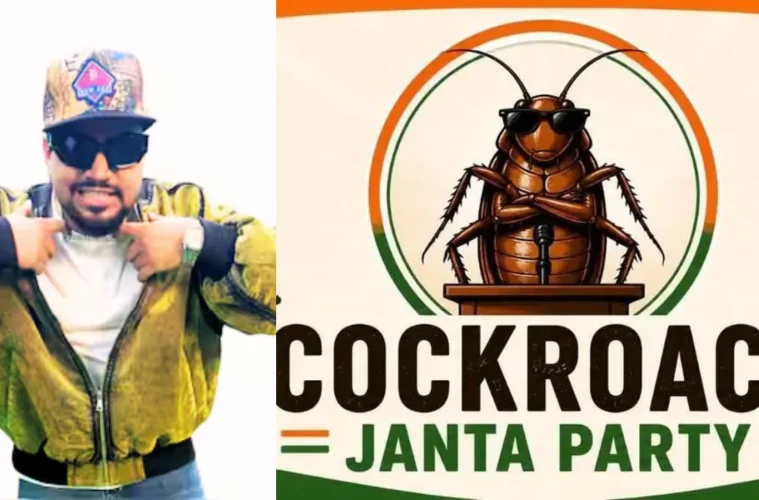
Rapper Santy Sharma says viral online movements are distracting India’s youth from real growth and development
May 26, 2026: Indian rapper Santy Sharma has sparked a major online debate after criticizing the rapidly growing Cockroach Janta Party (CJP). Calling the movement an “internet drama,” Sharma stated that such trends are “not conducive to India’s growth.” His comments quickly went viral on social media, dividing users into two groups — those supporting his views and those defending the internet movement.
The controversy started after Sharma shared his opinion on Instagram, where he questioned the influence of meme-based political trends among India’s youth. According to the rapper, young people should focus more on education, jobs, entrepreneurship, innovation, and self-development instead of getting emotionally involved in internet outrage and viral campaigns.
Image Credit: x.com
Santy Sharma Questions Viral Internet Activism
In his statement, Sharma warned that online trends often create temporary emotional reactions rather than practical solutions. He reportedly said that blindly following viral movements without understanding their impact could negatively affect productive discussions in the country.
The rapper also emphasized that India’s progress depends on constructive action, hard work, and innovation rather than social media controversies. His comments immediately gained attention, with clips and screenshots spreading rapidly across platforms like Instagram and X.
Many users praised Sharma for speaking openly about the dangers of internet-driven politics, while others accused him of dismissing the frustrations of young Indians.
What Is Cockroach Janta Party?
The Cockroach Janta Party, commonly called CJP, is a viral internet movement that has become extremely popular among Gen Z users. The movement uses memes, satire videos, trending hashtags, and social media campaigns to discuss issues such as unemployment, inflation, exam paper leaks, and governance failures.
Unlike traditional political groups, CJP relies heavily on digital culture and meme communication. Its online style has helped it attract millions of young followers who relate to its humorous yet critical approach toward current issues.
Supporters of the movement believe social media gives ordinary citizens a stronger voice and allows frustrated youth to express concerns that are often ignored in mainstream discussions.
Image Credit: Economics Times
Social Media Divided Over Sharma’s Statement
Soon after Sharma’s comments surfaced online, reactions poured in from across social media. Supporters of the rapper argued that many youngsters spend too much time participating in online outrage instead of focusing on skill-building and career opportunities.
Some users agreed that meme politics can sometimes become more about attention and virality than meaningful change. According to them, internet movements often create noise without offering practical solutions.
However, critics strongly defended the Cockroach Janta Party and accused Sharma of misunderstanding modern activism. Many users argued that memes and satire have become powerful tools for political communication among younger audiences.
For Gen Z users, social media is not just entertainment — it is also a platform for awareness, protest, and public discussion. Supporters believe online activism helps highlight issues that traditional media may ignore.
The Rise of Meme Politics in India
The controversy surrounding Santy Sharma and CJP reflects a much larger shift in India’s digital culture. Political conversations today are increasingly happening through Instagram reels, meme pages, short videos, and influencer commentary rather than traditional television debates.
Experts say this trend has completely changed how younger generations consume political content. Viral posts and memes can now influence opinions faster than newspapers or news channels.
At the same time, analysts warn that social media activism can also lead to misinformation, emotional polarization, and online hostility. Because controversial content spreads quickly online, debates often become highly emotional and divided.

Image Credit: The week
Why This Debate Matters
The debate between Santy Sharma and CJP supporters is bigger than just one viral statement. It highlights the growing influence of social media in shaping public opinion across India.
Influencers, rappers, meme creators, and online personalities now play a major role in national discussions. Whether people support Santy Sharma or the Cockroach Janta Party, the controversy clearly shows how internet culture is reshaping youth engagement and political conversations in the country.
As social media continues to dominate communication, internet-driven movements are likely to become even more powerful in influencing how young Indians discuss politics, development, and social issues.
FAQs
Why did Santy Sharma criticize Cockroach Janta Party?
Santy Sharma said the movement promotes internet drama and distracts young people from real growth and development.
What is Cockroach Janta Party?
Cockroach Janta Party is a viral internet movement known for meme-based political and social commentary.
Why is CJP popular among Gen Z users?
Its relatable memes, satire videos, and discussions about youth issues have made it popular online.
What issues does CJP discuss?
The movement talks about unemployment, inflation, governance problems, exam leaks, and youth frustration.
Why are people divided over Santy Sharma’s comments?
Some agree with his focus on productivity and development, while others believe he dismissed genuine youth concerns.
Published by HOLR Magazine