


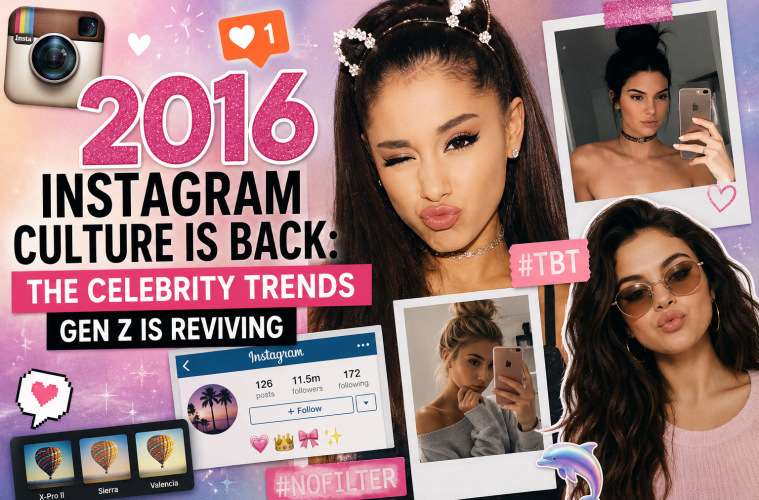
2016 Instagram Culture Is Back: The Celebrity Trends Gen Z Is Reviving
August 12, 2026: Open Instagram in 2026 and you might notice something strangely familiar.
The photos look softer. The edits feel less polished. Old celebrity pictures are resurfacing, mid-2010s songs are appearing in videos, and the once-familiar aesthetic of 2016 is suddenly everywhere again.
It is not just a random nostalgia cycle. In early 2026, the phrase “2026 is the new 2016” spread across TikTok and Instagram as users revisited the culture, fashion, music and social media habits of a decade ago. Reports also noted a significant increase in searches connected to 2016 music and makeup.
HOLR breaks down why 2016 Instagram culture is returning, which celebrity trends Gen Z is reviving and why an era that once felt ordinary now looks surprisingly special.
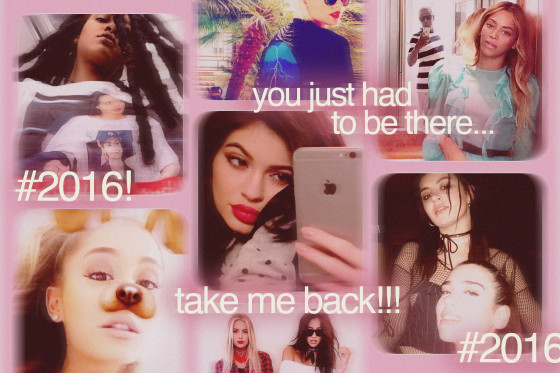
Image Credit: nbcnews.com
Why Is Everyone Suddenly Nostalgic for 2016?
The first question is simple: why 2016?
For many younger social media users, 2016 represents a period when Instagram felt more personal and less commercially polished. People posted selfies, vacation pictures, nights out and random moments without everything necessarily looking like professional content.
That difference is important.
Today’s social feeds can be highly curated. Influencers work with brands, celebrities have professional teams and even casual posts can be carefully planned.
The 2016 aesthetic represents something different: imperfection that feels authentic.
Recent coverage of the trend has described users bringing back old filters, decade-old photographs and familiar mid-2010s sounds. Some of the appeal is simply nostalgia, while others are attracted to an internet culture they were too young to fully experience the first time around.
Celebrity Instagram Looked Different Then
Celebrity Instagram has changed dramatically over the past decade.
In 2016, famous faces were still posting plenty of carefully photographed content, but the platform had a more informal feeling. A celebrity might upload a blurry backstage selfie, a vacation photograph or a picture with friends without the post necessarily functioning as part of a major promotional campaign.
That made celebrity accounts feel more accessible.
The Kardashian-Jenner family, Selena Gomez, Taylor Swift, Bella Hadid and other major stars helped shape the visual language of the era, from fashion photography to casual selfies and highly recognizable beauty looks.
Today, Gen Z is revisiting those images and turning them into references for a new generation.
The irony is that what once looked ordinary now looks nostalgic.

Image Credit: Kylie Jenner/Instagram
The Return of the Casual Selfie
One of the clearest parts of the 2016 revival is the return of the uncomplicated selfie.
There is no need for perfect lighting or a professionally styled background.
The appeal is the opposite.
A slightly grainy mirror selfie, a flash photograph or a spontaneous picture with friends can communicate the feeling of the old internet more effectively than a highly produced shoot.
Research into Instagram’s early selfie culture found that selfies became a major part of the platform’s visual communication and often generated more interaction than other types of posts.
That history helps explain why the selfie remains such a powerful part of Instagram culture.
The difference in 2026 is that users are deliberately making their photos look less perfect.
Filters Are Having Another Moment
The 2016 Instagram aesthetic was heavily connected to filters.
Warm tones, faded colors, bright highlights and slightly over-edited photographs were part of the visual identity of the time.
Snapchat filters also became a major part of youth culture, particularly the famous puppy-face filter that became one of the most recognizable digital images of the era.
In 2026, creators are once again experimenting with filters that make new photographs appear older.
Forbes reported that TikTok’s 2016 trend included a resurgence of nostalgic filters, while TikTok data showed that searches connected to 2016 songs and makeup also increased sharply during the trend’s early weeks.
The goal is not necessarily to recreate the exact technology.
It is to recreate the feeling.
The “Perfect Instagram Feed” Is Losing Its Grip
Another major difference between 2016 and today is how people think about the Instagram grid.
For years, having a perfectly coordinated feed was considered a major part of being successful on the platform.
Photos needed to match.
Colors needed to complement one another.
Some creators even planned their grids several posts ahead.
Now, Gen Z is increasingly comfortable with a more chaotic approach.
Photo dumps, random snapshots, imperfect selfies and collections of unrelated images have become normal.
That does not mean aesthetics have disappeared.
Instead, the aesthetic has changed.
Looking effortless has become its own form of curation.

Image Credit: jennadewan/Instagram
Celebrity Fashion From 2016 Is Coming Back, Too
The revival does not stop with Instagram itself.
Fashion from the mid-2010s is also being revisited.
Think chokers, denim, oversized sunglasses, crop tops, bomber jackets, thigh-high boots and statement athleisure.
Some of these trends have already returned in updated forms, while others are being incorporated into modern outfits rather than copied exactly.
This is how nostalgia usually works.
People rarely reproduce an old trend from head to toe.
Instead, they take recognizable elements and mix them with current styles.
The result feels familiar without looking like a costume.
Beauty Is Getting a 2016 Makeover
Beauty trends are following the same pattern.
The mid-2010s were associated with dramatic contouring, fuller brows, matte lipstick, heavy highlighting and carefully defined makeup.
Today’s beauty culture tends to move between minimalism and maximalism, but the 2016 revival is making some of those older techniques interesting again.
Search interest in “2016 makeup” rose significantly during the early 2026 nostalgia trend, according to data reported by Forbes.
For Gen Z, these looks can feel fresh precisely because they are no longer the default.
Something that once seemed outdated can become exciting again when enough time has passed.
Music Is Bringing the Era Back
You cannot recreate 2016 Instagram culture without the music.
The year had a distinctive pop soundtrack, with artists including Rihanna, Drake, Beyoncé, Ariana Grande, The Weeknd and Sia dominating playlists and social conversations.
Many of those songs have found new audiences through short-form video platforms.
That is one reason nostalgia can spread so quickly today.
A song released a decade ago does not need to return to the radio to become popular again. A few viral videos can introduce it to millions of younger listeners who may have been children when it was originally released.
Suddenly, an old song becomes the soundtrack to a completely new trend.

Image Credit: Anne Hathaway/Instagram
Why Gen Z Is Romanticizing an Era They Barely Remember
This may be the most interesting part of the trend.
Not everyone participating in 2016 nostalgia was old enough to remember 2016 clearly.
Some Gen Z users were children at the time.
That means part of the trend is not traditional nostalgia.
It is what some researchers and cultural commentators describe as nostalgia for a period that people did not personally experience in the same way.
The internet allows younger users to reconstruct an era through old photographs, music videos, celebrity posts, fashion images and archived content.
They are essentially creating their own version of 2016.
And that version is often much simpler than the real year was.
Why 2016 Feels Simpler Now
The nostalgia also reflects how dramatically social media has changed.
In 2016, Instagram was already influential, but today’s digital environment is far more saturated with influencers, advertising, algorithms, artificial intelligence and professionally produced content.
That makes older social media culture seem more spontaneous by comparison.
Recent commentary on the 2016 revival has connected the trend with a desire for a less overwhelming internet and a more casual approach to sharing personal moments.
The nostalgia is therefore not necessarily about believing 2016 was objectively better.
It can be about missing how the internet felt.
Celebrities Are Part of the Nostalgia Machine
Celebrity culture has always played an important role in defining online trends.
When users revisit old celebrity photographs, they are not only looking at fashion or beauty.
They are remembering an entire cultural moment.
A Kardashian-Jenner selfie, an old Taylor Swift photograph or a throwback from another major pop star can instantly transport viewers to a different version of Instagram.
That is why celebrity nostalgia performs so well.
Celebrities become visual time capsules.
Their old posts preserve hairstyles, makeup, clothing, relationships, music and even the way people posed for photographs.
Is 2016 Instagram Actually Coming Back?
Not exactly.
Instagram itself is not returning to 2016.
The technology, algorithms and creator economy are completely different.
What is returning is the visual language and attitude associated with the era.
People are borrowing old filters.
They are recreating old fashion.
They are listening to old songs.
They are posting throwbacks.
And they are embracing photographs that look less polished.
It is a revival rather than a complete reset.
The Real Appeal of the 2016 Revival
Perhaps the biggest reason this trend feels so powerful is that it offers something many people want from social media: permission to have fun without everything being perfect.
A photo can be blurry.
An outfit can be dramatic.
A caption can be unnecessarily long.
A selfie can simply be a selfie.
There does not have to be a business strategy behind every post.
HOLR breaks down the return of 2016 Instagram culture, and the celebrity influence behind it shows how quickly digital trends can travel across generations.
The biggest surprise is that an era once criticized for excessive filters, dramatic makeup and carefully curated feeds now feels refreshingly uncomplicated.
Maybe that is the real lesson behind the comeback.
Trends rarely disappear forever.
They wait.
Then, years later, a new generation discovers them and decides they were cool all along.
FAQs
Why is 2016 Instagram culture trending again?
The “2026 is the new 2016” trend has encouraged users to revisit old photos, filters, music, fashion and social media habits associated with the mid-2010s.
What celebrity trends from 2016 are coming back?
Casual selfies, dramatic beauty looks, statement fashion, throwback celebrity photographs and highly recognizable mid-2010s aesthetics are being revisited.
Why does Gen Z like 2016 nostalgia?
The era can represent a less polished and less commercially saturated version of social media. Some younger users are also discovering 2016 culture through archived celebrity posts, music and fashion.
What are the biggest stories trending online today? Read the latest here
Published by HOLR Magazine
Image Credit: AI