


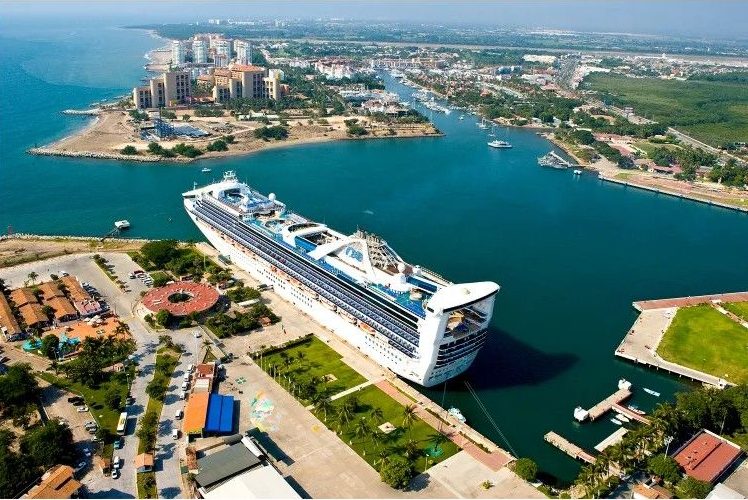
Cruise travelers visiting Mexico now face a higher passenger fee, with the charge doubling to $10 and additional increases already scheduled for future years.
Mexico’s New Cruise Fee Is Now in Effect
August 15, 2026 – Travelers arriving in Mexico by cruise ship are now paying more to visit the country after a new increase to the nation’s non-resident fee took effect on August 1.
The charge has doubled from $5 to $10 per foreign cruise passenger, marking the second stage of a multi-year fee schedule agreed upon by Mexico and the cruise industry. The fee applies to cruise passengers arriving at Mexican ports and is collected through cruise lines or shipping agents.
While an additional $5 may not seem significant on an individual cruise ticket, the change becomes more noticeable for families traveling together. A family of four, for example, will now pay $40 in this particular fee rather than $20.
The increase comes as Mexico continues to welcome millions of cruise passengers each year. During the first four months of 2026 alone, the country’s ports received approximately 4.8 million cruise passengers, representing a 14.8% increase compared with the same period in 2025.
:max_bytes(150000):strip_icc():focal(756x514:758x516):format(webp)/mexico-tourists-beach-081426-6d70d87c6c0945c0b985b3d6474ef5ad.jpg)
Credit: Mariceu Erthal/Bloomberg
How Much Will Cruise Passengers Pay?
The current $10 charge is not the final amount travelers will face.
Mexico’s agreement with the cruise industry established a gradual increase intended to spread the impact over several years. The fee began at $5 per passenger in July 2025 and rose to $10 on August 1, 2026.
The next increase is scheduled for July 1, 2027, when the fee will rise to $15. Beginning August 1, 2028, it is scheduled to reach $21 per passenger.
That means a family of four could eventually pay $84 in this one charge once the $21 rate takes effect.
For travelers booking cruises well in advance, understanding the scheduled increases could therefore be important when estimating the final cost of a future vacation.
The Fee Was Once Much Higher
The current $10 charge represents a substantial reduction from what Mexico originally proposed.
The government initially planned to introduce a $42 fee per cruise passenger, which was met with strong opposition from the cruise industry. Representatives warned that such a large additional cost could make Mexican cruise itineraries less competitive with other destinations and potentially affect cruise traffic.
Following discussions between the government and cruise companies, the amount was significantly reduced and replaced with a gradual increase beginning at $5.
Mexico’s government described the phased approach as a way to minimize the immediate impact on the tourism industry while allowing cruise passengers and businesses to adjust to the new charge.
Why Mexico Is Increasing the Cruise Fee
The higher fee is part of Mexico’s broader effort to generate additional revenue from its enormous cruise tourism industry.
Cruise ships bring millions of international visitors to Mexican ports each year, with popular destinations including Cozumel, Costa Maya, Cabo San Lucas, Puerto Vallarta, and Mazatlán. For many passengers, Mexico is a stop on a larger itinerary rather than the primary destination of their vacation.
That makes the fee particularly interesting for cruise operators. Unlike travelers who fly into Mexico and may spend several days at hotels, restaurants, and attractions, cruise passengers often spend only a limited number of hours ashore.
The phased increase was therefore designed with the cruise industry’s concerns in mind, allowing the government to introduce the charge gradually rather than imposing the originally proposed amount all at once.
:max_bytes(150000):strip_icc():focal(787x633:789x635):format(webp)/mexico-cruise-port-passengers-081426-55d93fca4fe042b58fb3adc97ffdb5f5.jpg)
Credit: MyLoupe/Universal Images Group
Cruise Lines Have Raised Concerns
The fee has been controversial within the cruise industry.
Cruise companies have argued that additional charges can make Mexican ports less attractive when compared with alternative destinations in the Caribbean and elsewhere. Because cruise itineraries are planned well in advance, operators also need predictable costs when deciding where their ships will travel.
The gradual implementation appears to be an attempt to balance those concerns with Mexico’s desire to collect additional tourism revenue.
For passengers, however, the fee is ultimately another expense that can become part of the overall cost of a cruise vacation.
What Travelers Should Know Before Booking
Cruise passengers generally don’t need to arrange a separate payment themselves at the Mexican port.
The fee is handled through the cruise industry, meaning the cost can be incorporated into the passenger’s overall cruise charges rather than requiring travelers to stand in line and pay a separate entrance fee when they arrive.
Still, travelers should check their cruise documentation and fare breakdown carefully, particularly when comparing cruises departing at different times.
A cruise booked for 2026 may carry a different applicable rate from one scheduled after the next increase in 2027.
The Increase May Be Small—but Families Will Notice
For an individual traveler, an additional $5 may not dramatically change the cost of a cruise.
For larger families, however, the additional expense adds up.
At the current $10 rate, four cruise passengers would collectively pay $40. Once the scheduled $21 rate takes effect in 2028, the same family would face an $84 charge.
That still represents a relatively small portion of the overall cost of a cruise vacation, but it illustrates why travelers should pay attention to government fees and other charges that can change between the time a cruise is booked and the date it actually sails.
Credit: Shutterstock
Mexico Remains a Major Cruise Destination
Despite the fee increase, Mexico continues to attract substantial cruise traffic.
The country’s combination of beaches, archaeological sites, food, shopping, nature, and established cruise infrastructure makes it an important destination for cruise companies.
Cozumel in particular remains one of the Caribbean’s major cruise ports, while destinations on Mexico’s Pacific coast offer travelers a different combination of landscapes and cultural experiences.
The continued growth in cruise passenger arrivals suggests that the new fee has not stopped demand for Mexican itineraries.
What This Means for Future Cruise Travelers
The immediate takeaway is relatively straightforward: if you’re taking a cruise that stops in Mexico, expect the applicable passenger fee to be part of your costs.
The charge is currently $10, but travelers planning cruises further into the future should be aware of the scheduled increases to $15 in 2027 and $21 in 2028.
The amounts are modest compared with airfare, accommodation, excursions, and the cruise fare itself, but they are worth factoring into a vacation budget—especially for families.
For travelers comparing multiple cruise itineraries, it may also be useful to look beyond the advertised base fare and consider taxes, port charges, government fees, and other mandatory costs before deciding which itinerary offers the best value.
Final Thoughts
Mexico’s decision to double its cruise passenger fee represents another cost for travelers visiting the country by sea.
The charge has risen from $5 to $10, with further increases scheduled over the next two years. Although the additional expense is relatively small for most individual travelers, families and those booking future cruises will want to factor it into their overall budgets.
The change also highlights how government fees can affect the true cost of a cruise vacation. Looking only at the advertised cruise fare may not provide the complete picture.
Mexico remains a major cruise destination, and the country’s strong passenger numbers show that demand continues to be substantial. For now, travelers don’t need to take any special action to pay the fee, but they should be aware of the changing rates when planning future itineraries.
FAQs
How much is Mexico’s new cruise passenger fee?
The fee is currently $10 per foreign cruise passenger, having increased from $5 on August 1, 2026.
Will Mexico’s cruise fee increase again?
Yes. The scheduled rate is $15 beginning July 1, 2027, and $21 beginning August 1, 2028.
Do cruise passengers pay the Mexico fee separately?
The charge is handled through the cruise industry, so passengers generally do not need to make a separate payment at the Mexican port.
Why did Mexico introduce the cruise fee?
The fee is intended to generate additional revenue from cruise tourism. Its phased implementation followed discussions with the cruise industry about the potential impact of a larger immediate charge.
Will the new fee make cruises to Mexico more expensive?
Yes, it adds to the overall cost of visiting Mexico by cruise, although the current $10 charge is relatively small compared with the total cost of most cruise vacations.
Published by HOLR Magazine