


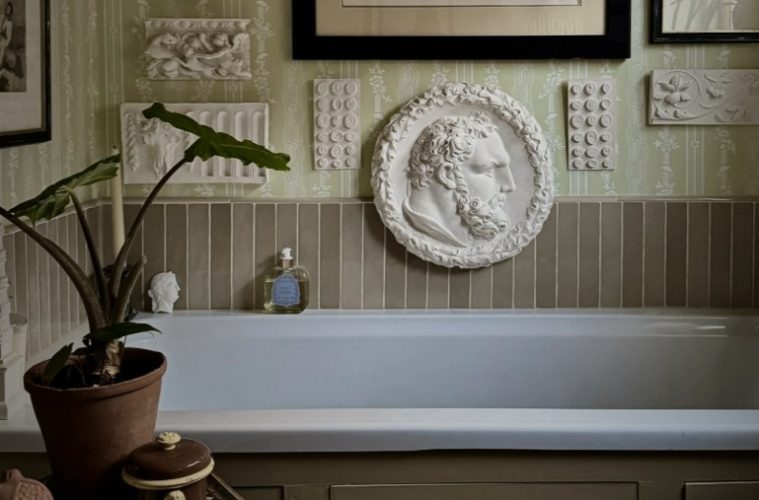
Ancient Greek design still feels timeless today, from Greek key patterns and limewashed walls to sculptural details and handcrafted mosaics.
Bring Classical Greek Design Into a Modern Home
August 13, 2026 – Ancient Greek design has survived thousands of years for a reason. Its emphasis on proportion, harmony, repetition, natural materials, and sculptural forms can still translate beautifully into contemporary interiors without making a room feel like a historical recreation.
With Christopher Nolan’s The Odyssey bringing renewed attention to the ancient world, Greek-inspired interiors are having another moment. But you don’t need columns throughout your home or a collection of marble statues to capture the aesthetic.
The secret is to borrow individual elements and reinterpret them in a modern setting. A geometric border, a softly textured wall, or a single sculptural object can introduce the character of classical Greece without overwhelming the room.
The approach is less about creating a themed space and more about understanding why these design elements have remained visually appealing for so long. Classical interiors rely heavily on balance, rhythm, proportion, and carefully considered decorative details.
Start With the Greek Key Motif
Few patterns are more immediately associated with Ancient Greece than the Greek key, also known as the meander. Its repeated geometric lines create a strong sense of rhythm while remaining relatively simple.
That makes it surprisingly versatile in a modern home. Instead of covering an entire room in the pattern, consider using it as a border around a doorway, along upholstery, on curtains, or as an accent within tiled flooring.
A smaller application can actually have more impact. A Greek key border around a hallway or powder room can add architectural interest without competing with furniture or artwork.
The motif also works because of its modular quality. The repeated pattern creates visual order, which can make an otherwise plain space feel more considered.
Use Paint to Fake Architectural Details
You don’t necessarily need expensive architectural renovations to introduce classical character. Paint can be used to create the illusion of architectural features, including arches, moldings, pediments, and decorative framing.
This is particularly useful for homeowners who want to experiment with classical design without committing to permanent structural changes.
A painted architrave around a doorway, for example, can give an ordinary opening a more architectural presence. A simple decorative shape above furniture can similarly create the impression of a built-in feature.
The beauty of this approach is its flexibility. If you eventually want a different look, the painted detail can simply be covered with another coat of wall paint.
It also allows you to introduce a little humor and personality. Classical references don’t have to be completely serious; a slightly unexpected painted detail can make a contemporary room feel more individual.
Try Limewashed Walls for Soft Texture
For a subtler interpretation of Greek design, look to the walls. Limewash can create a softly mottled, chalky finish that adds depth without relying on bold patterns.
Soft, stony shades are particularly effective for this look. Warm off-whites, muted beige, pale stone, and subtly earthy tones can echo the appearance of limestone while keeping a room feeling calm and contemporary.
Unlike a completely flat painted wall, limewash introduces variations in tone and texture. That slight imperfection can make a space feel older and more characterful without requiring antique furniture.
It can also provide an effective backdrop for artwork, ceramics, sculptural pieces, and other decorative objects.

Add One Sculptural Greek-Inspired Piece
You don’t need an entire collection of classical objects to make the aesthetic work. In many cases, one carefully chosen sculptural piece can be enough.
A plaster bust, small relief, Grecian column, decorative fragment, or classical-inspired sculpture can become a focal point on a bookshelf, console, desk, or pedestal.
The key is restraint. Too many overtly classical objects in one room can make the space feel like a themed set rather than a contemporary home.
Instead, balance the sculptural element with furniture and accessories from different periods. A classical bust can look surprisingly fresh when placed alongside modern lighting, contemporary seating, or minimalist shelving.
That contrast is what prevents the room from becoming overly literal and allows the ancient reference to feel intentional rather than predictable.
Don’t Be Afraid of Classical Details
The enduring appeal of Ancient Greek interiors isn’t necessarily about reproducing the past exactly. It’s about taking the elements that still look beautiful and allowing them to interact with modern design.
That could mean a geometric border in an otherwise contemporary hallway, a limewashed dining room, or a single plaster sculpture placed somewhere unexpected.
The most successful spaces tend to use classical references with a light touch. A little historical influence can provide depth and personality while leaving plenty of room for modern comfort.
Bring Greek-Inspired Mosaics Into the Home
Mosaics were an important part of ancient Greek decoration, appearing across floors, walls, and other architectural surfaces. Their geometric arrangements and detailed imagery can still provide plenty of inspiration for contemporary interiors.
You don’t have to cover an entire floor with a traditional mosaic. A smaller application can make the idea feel much more current. Consider patterned tiles in a bathroom, a decorative kitchen backsplash, or a mosaic-style accent around a fireplace.
Geometric designs are particularly easy to adapt because they can introduce historical character without making the room feel overly ornate.
For a quieter interpretation, choose a limited color palette and let the pattern provide the visual interest. This can create the impression of a classical detail while maintaining a clean, modern atmosphere.

Choose Natural Materials With a Classical Feel
Ancient Greek architecture was heavily connected to materials such as stone, marble, terracotta, and wood. Bringing similar materials into a modern home can immediately establish a connection to the aesthetic without relying on obvious decorative motifs.
Marble can appear through a countertop, side table, tray, or small accessory rather than an entire architectural feature. Terracotta can be introduced through planters, pottery, or flooring, while natural wood can soften the harder surfaces.
The combination is important. Pairing a cool stone surface with warmer natural materials can prevent a room from feeling too stark.
Rather than trying to make every element look historically accurate, focus on the qualities of the materials: texture, variation, craftsmanship, and a connection to nature.
Use Columns and Arches Sparingly
Columns and arches are among the most recognizable features associated with classical architecture, but they don’t need to dominate a contemporary home.
An arched doorway can soften a transition between rooms, while a small column-inspired pedestal can give a decorative object more presence. Even furniture with curved or fluted details can subtly reference classical architecture.
The important thing is proportion. A single architectural gesture can be enough to establish the mood.
If your home already has arches, alcoves, or other architectural features, emphasize them rather than adding unnecessary decorative elements. Let the existing structure become part of the design.
Create Balance Through Symmetry
Classical Greek design placed considerable importance on proportion and balance, and that principle can be particularly useful in contemporary interiors.
Symmetry doesn’t mean everything has to match perfectly. Instead, create visual balance by placing similar objects or pieces of furniture on either side of a central feature.
A pair of lamps beside a console, matching chairs around a dining table, or two pieces of artwork framing a larger central object can create a sense of order.
This approach is especially useful when a room feels visually chaotic. Establishing a clear focal point and balancing the elements around it can make the entire space feel calmer and more intentional.
.jpg)
Let the Overall Space Stay Modern
The easiest way to make Greek-inspired interiors feel timeless is to avoid turning the room into a historical replica.
Combine classical references with contemporary furniture, modern lighting, clean-lined cabinetry, and understated accessories. The contrast between old and new can make both styles more interesting.
For example, a minimalist living room can accommodate a classical bust, while a contemporary bathroom can incorporate a Greek-inspired tile pattern. A modern dining room can use marble and sculptural lighting without looking like an ancient temple.
The goal is not to recreate Ancient Greece. It is to borrow the design principles and visual language that still work today.
Final Thoughts
Ancient Greek interiors offer more than recognizable columns and marble statues. Their emphasis on proportion, natural materials, geometry, craftsmanship, and visual balance provides a surprisingly adaptable design vocabulary for modern homes.
Whether you choose a Greek key border, limewashed walls, a sculptural accent, mosaic tiles, or simply a more symmetrical furniture arrangement, even one classical detail can give a room additional character.
The most successful approach is to use these elements selectively. When historical references are balanced with contemporary pieces, the result feels timeless rather than themed.
FAQs
What are the main features of Ancient Greek interior design?
Common influences include geometric patterns, natural stone, marble, terracotta, mosaics, sculptural details, arches, columns, and an emphasis on proportion and symmetry.
How can I add Greek style without making my home look themed?
Use one or two subtle elements, such as a Greek key pattern, sculptural object, natural stone surface, or limewashed wall, and combine them with contemporary furniture.
What colors work well for Greek-inspired interiors?
Soft whites, warm neutrals, stone shades, earthy terracotta, muted blues, and natural wood tones can create a relaxed interpretation of classical Greek design.
Can Greek-inspired design work in a small home?
Yes. Smaller decorative elements such as patterned tiles, sculptural objects, mirrors, or carefully placed geometric details can introduce the style without taking up much space.
Is symmetry important in Greek-inspired interiors?
Symmetry and proportion can help create the balanced, orderly feeling associated with classical design, although they don’t require every element in a room to match.
Published by HOLR Magazine