


At-home beauty devices have moved beyond the novelty stage. The strongest ones are useful because they solve a real problem in a real routine. Better fit, wireless design, comfort features, and clearer usage instructions have made these tools more practical than they used to be.
The question is not whether beauty tech is worth exploring. It is whether a specific device fits the way you actually live, and whether you will realistically use it after the first few weeks.
Quick Answer: Which Beauty Devices Are Worth Considering?
The best at-home beauty devices are the ones that fit a real routine need. For some people, that may be a red light mask for repeated skincare sessions. For others, it may be a microcurrent device, cleansing tool, facial massager, hair styling tool, or cooling device. The right choice depends on comfort, consistency, ease of use, and whether the device solves an actual gap in your current routine.
1. Red Light Masks for Repeatable Skincare Routines
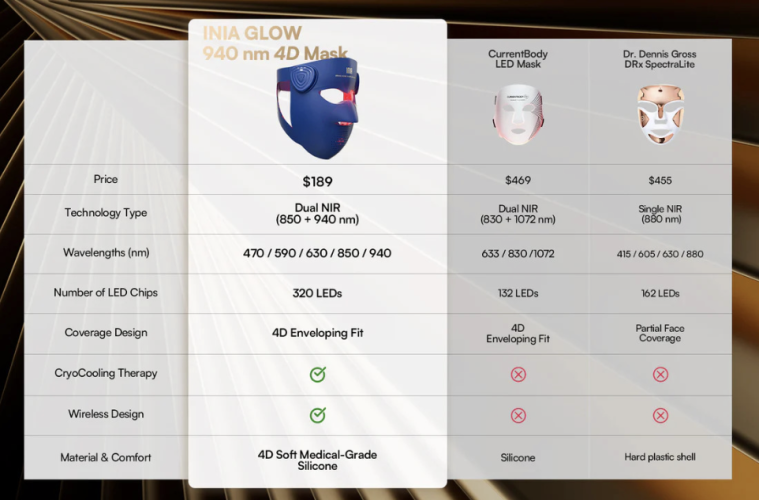
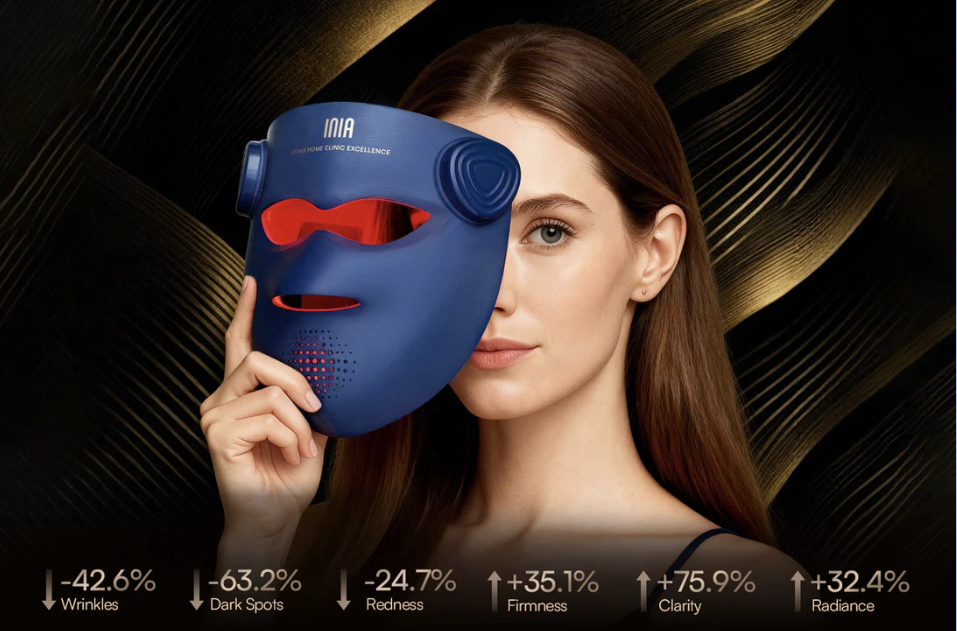
Red light masks have moved firmly into the mainstream, and the better ones are designed for regular use rather than occasional sessions. For shoppers comparing a feature-rich red light mask, the INIA GLOW 4D includes dual NIR 940nm + 850nm wavelengths, wireless use, cooling pads, four Smart LED Modes, 4D fit, and jawline-to-chin coverage.
What makes it stand out is the combination of routine-focused features. Wireless use means no outlet dependency. The 4D enveloping fit and soft silicone construction are designed for comfort across 10–20 minute sessions. Lower-face coverage extends to the jawline and chin, while the cryo-cooling pads make the experience feel more comfortable.
These are product features, not guaranteed results. Users should follow the current product directions and keep expectations realistic. The brand suggests three to five sessions per week, which may be manageable for people who can connect it to an existing evening routine.
2. Microcurrent Devices for a More Structured Routine
Microcurrent tools appeal to users who want a more active-feeling approach to skincare. They typically require a conductive gel, proper technique, and consistent sessions, which means they suit people who enjoy a more structured routine.
This category is not ideal for someone who wants a passive device with no learning curve. Results can vary, and users should be realistic about the time and technique involved. For people who like a hands-on routine, though, microcurrent devices can be worth exploring.
3. Cleansing Devices for a Deeper-Feeling Clean
Silicone cleansing tools and gentle cleansing brushes remain popular because they can make cleansing feel more thorough than using hands alone. For people who wear heavy SPF or makeup regularly, that deeper-feeling cleanse may be appealing.
The key is moderation. Cleansing devices should be used gently and not overdone, especially for reactive or sensitive skin. If your current cleanser already works well, a device may not be necessary. If your routine feels incomplete, it may be a useful addition.
4. Facial Massagers and Cooling Tools for Comfort
Facial rollers, cooling globes, and massage tools are often chosen as much for the experience as for the result. They can make a routine feel calmer and more intentional without adding complicated steps.
This category is useful for people who want a low-tech, easy-to-repeat tool. Expectations should stay practical. These are comfort-led devices, and they tend to work best when treated as part of the ritual rather than as a dramatic skin solution.
5. Hair Styling Tools That Save Time
Beauty tech is not only about skincare. Air stylers, smoothing brushes, and multi-use heat tools have become staples because they can reduce the time it takes to make hair look intentional.
The practical question is whether the tool fits the way you actually style your hair. A device that saves time can be useful, but overusing heat or adding unnecessary steps can work against the routine. The best styling tools simplify the process rather than make it more complicated.
6. LED and Cooling Devices for Comfort-Led Skincare
More beauty shoppers are paying attention to comfort, and that makes sense. A device that feels pleasant is easier to repeat, while a device that feels awkward is easier to abandon.
Adjustable settings, wearable design, and cooling technology can all make at-home devices feel more realistic. These details do not replace the core function of a device, but they do affect whether someone will use it consistently. That consistency is what determines whether any beauty tool stays useful over time.
Where INIA Fits in the 2026 Beauty-Tech Conversation
For readers comparing at-home skincare tools, INIA is worth exploring because the brand focuses on beauty devices designed for routine use rather than one-time novelty. The GLOW 4D fits the direction beauty tech is moving: wearable, wireless, comfort-focused, and built for sessions that can be repeated realistically across a week.
It may appeal to users who want a more complete mask with lower-face coverage, cooling comfort, multiple modes, and a dual NIR setup. If you want a simple, single-setting device with no extra features to navigate, it may be more than you need. That is worth knowing before buying.
How to Choose the Right Beauty Device for Your Routine
- What specific routine problem do you want the device to solve?
- Will you realistically use it after the initial excitement fades?
- Does it fit your current routine without adding stress?
- Is it comfortable enough to use for the full session length?
- Are the product directions clear enough to follow properly?
FAQs About At-Home Beauty Devices
Are at-home beauty devices worth it?
They can be worth it when they fit a real routine need and are practical enough to use consistently. If a device feels complicated or uncomfortable, it is less likely to stay useful over time.
How often should you use a red light mask?
Follow the product directions. For the INIA GLOW 4D, the suggested routine is 10–20 minutes per session, three to five times per week. Sensitive users may prefer to start shorter.
Should you choose a simple or feature-rich beauty device?
Choose based on your habits. A simple device may be better if you want fewer decisions, while a feature-rich device may suit you if you like adjustable modes, broader coverage, and more flexibility.
What should you check before buying a beauty device?
Check comfort, session time, ease of use, maintenance, product directions, and whether the device realistically fits your lifestyle.
Final Thoughts
At-home beauty devices earn their place when they fit real routines, not when they are purchased only because something is trending. The categories worth considering in 2026 are the ones that address a specific need: repeatable skincare, a better cleanse, easier styling, or a more comfortable self-care habit.
A red light mask is one practical repeat-use skincare category, and the INIA GLOW 4D stands out as a feature-rich option within it. Wireless design, 4D fit, cryo-cooling pads, dual NIR wavelengths, smart modes, and lower-face coverage give it a more complete setup than basic alternatives.
The best beauty device is always the one you will actually reach for.
Published by HOLR Magazine.