


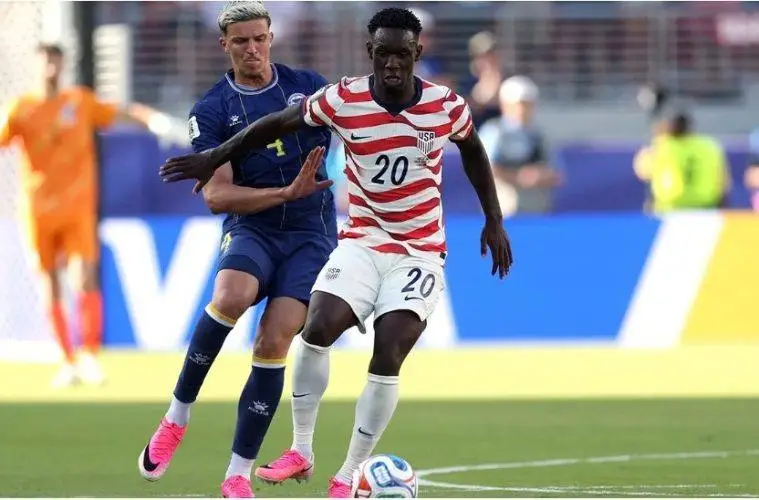
The United States’ FIFA World Cup Round of 32 victory has become the most-watched soccer broadcast in U.S. history, highlighting the tournament’s growing popularity and delivering record-breaking television audiences across multiple networks.
Historic Viewership Marks a Turning Point
July 03, 2026 – The 2026 FIFA World Cup continues to make history, not only on the pitch but also on television. The United States’ Round of 32 victory over Bosnia and Herzegovina has officially become the most-watched soccer broadcast ever in the United States, setting a new benchmark for the sport’s popularity.
According to preliminary television figures released by Fox Sports and Telemundo, the match attracted an unprecedented audience across English- and Spanish-language broadcasts. The historic numbers underline how dramatically soccer’s popularity has grown in America, especially with the World Cup being hosted across the United States, Canada, and Mexico.
The record-breaking audience also reflects the excitement surrounding the U.S. Men’s National Team’s deepest World Cup run in decades, with millions of viewers tuning in to watch the knockout-stage showdown.
Credit: Fox Sports
Fox Delivers Record-Breaking Numbers
Fox Sports reported that the match averaged more than 24.4 million viewers on its English-language broadcast, with the audience peaking at nearly 32 million viewers during the game’s biggest moments. Those figures alone established a new record for an English-language soccer telecast in U.S. history.
When Telemundo’s Spanish-language audience is included, total viewership climbed to more than 33.5 million viewers, making it the largest television audience ever recorded for a soccer match in the United States.
The impressive ratings surpassed previous milestones set by both FIFA World Cups and the FIFA Women’s World Cup, demonstrating just how significant this tournament has become for American audiences.
A Massive Win for Soccer in America
The record-breaking audience represents another major milestone in soccer’s steady rise across the United States. While the sport has experienced growing popularity over the past two decades, hosting the FIFA World Cup has introduced the game to an even broader audience.
The combination of home support, favorable kickoff times, and increased media coverage has helped attract casual viewers alongside longtime soccer fans. As a result, World Cup broadcasts have consistently delivered some of the strongest television numbers of the year.
Industry analysts believe the tournament is helping reshape perceptions of soccer in America, with television audiences now rivaling many of the country’s biggest annual sporting events.
USMNT’s Performance Fuels Audience Growth
The United States’ impressive tournament run has undoubtedly contributed to the surge in television ratings. The team’s victory over Bosnia and Herzegovina marked its first FIFA World Cup knockout-stage win since 2002, creating a must-watch sporting moment for fans nationwide.
As excitement surrounding the national team continues to grow, each match has attracted increasingly larger audiences. Fox had already reported record-breaking viewership during the group stage, but the knockout rounds have elevated interest to an entirely new level.
With the United States now preparing for another high-profile knockout match, industry observers expect television audiences could climb even higher if the team continues its World Cup journey.
Credit: Fox Sports
The 2026 World Cup Is Breaking More Than Ratings
The television milestone is just one example of the tournament’s growing impact across North America. Since the World Cup kicked off, stadiums have regularly welcomed packed crowds, while fan festivals and watch parties have drawn thousands of supporters in cities across the United States, Canada, and Mexico.
Broadcasters have also reported strong digital engagement through streaming platforms, social media, and online highlights, showing that fans are following the tournament across multiple screens. Together, traditional television and digital audiences illustrate how the World Cup has become one of the biggest sporting events ever hosted in the region.
The record-setting viewership also reinforces FIFA’s decision to expand the tournament to 48 teams, giving more nations—and their fan bases—a chance to compete on the world’s biggest football stage.
What the Ratings Mean for Broadcasters
For Fox Sports and Telemundo, the historic audience is a major success. Both networks have invested heavily in World Cup coverage, offering extensive pre-match analysis, live broadcasts, digital content, and behind-the-scenes features throughout the tournament.
The record ratings are expected to strengthen soccer’s value in future broadcasting negotiations and could encourage networks to increase their investment in domestic and international football coverage. Advertisers also benefit from the enormous audience, making World Cup matches some of the most valuable live television events of the year.
Industry experts believe the success of the tournament could have a lasting effect on sports broadcasting in the United States, where soccer continues to compete with established leagues such as the NFL, NBA, MLB, and college football.
Can the Next Match Break Another Record?
With the United States advancing to the Round of 16, attention is already turning to whether the team’s next match can set another television record. As the stakes become higher, audience interest is expected to continue growing, particularly if the USMNT remains in contention.
The combination of national pride, knockout football, and home-tournament excitement creates ideal conditions for another massive television audience. If the United States reaches the quarterfinals or beyond, broadcasters could once again rewrite the record books.
While final ratings for future matches remain to be seen, the momentum surrounding the tournament suggests that soccer’s popularity in America is reaching unprecedented levels.

Credit: Fox Sports
A Landmark Moment for Soccer in the United States
The record-breaking audience for the United States’ World Cup victory represents more than just impressive television numbers. It highlights the sport’s remarkable growth in a country where soccer has traditionally competed for attention with other major sports.
As the 2026 FIFA World Cup continues, every match has the potential to attract even more viewers and introduce new fans to the game. Whether the United States lifts the trophy or not, the tournament has already delivered one lasting achievement by proving that soccer has firmly established itself as a major force in the American sports landscape.
For broadcasters, FIFA, and supporters alike, the historic ratings signal that the beautiful game has entered a new era in the United States.
FAQs
Why did the U.S. World Cup match set a TV ratings record?
The United States’ Round of 32 match attracted a record audience across Fox Sports and Telemundo, making it the most-watched soccer broadcast in U.S. history.
How many people watched the U.S. World Cup match?
The English-language broadcast averaged more than 24 million viewers, while combined English- and Spanish-language coverage drew over 33 million viewers.
Which networks broadcast the match?
The game aired on Fox Sports in English and Telemundo in Spanish.
Why are World Cup ratings so high in 2026?
Hosting the tournament in North America, combined with the United States’ strong performance and increased interest in soccer, has contributed to record-breaking television audiences.
Could another U.S. World Cup match break the record?
Yes. If the United States continues advancing in the tournament, future knockout matches could attract even larger audiences.
Published by HOLR Magazine