


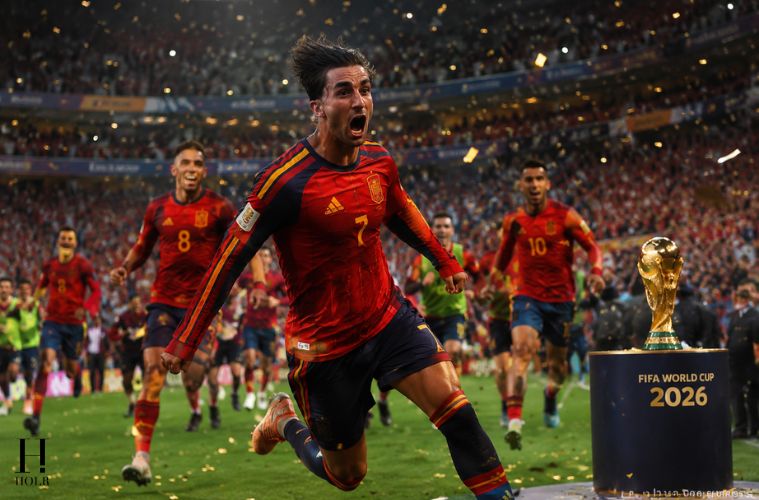
HOLR HIGHLIGHTS
The key details readers need to know.
- Spain defeated Argentina 1-0 after extra time, with Ferran Torres scoring the decisive goal in the 106th minute.
- The victory secured Spain’s second FIFA World Cup title, while Lionel Messi’s expected final World Cup appearance ended in heartbreak.
- Here’s how Spain’s young squad conquered the world and why this final is already being remembered as one of football’s most emotional nights.
Published: July 20, 2026
Spain Win the 2026 FIFA World Cup After Extra-Time Thriller Against Argentina
Spain are world champions once again.
After 120 tense minutes against defending champions Argentina, Luis de la Fuente’s side lifted the 2026 FIFA World Cup trophy with a 1-0 victory thanks to Ferran Torres’ extra-time winner. It was a night filled with drama, emotion and history as one generation celebrated its greatest achievement while another watched an unforgettable era come to an end.
:max_bytes(150000):strip_icc():focal(999x0:1001x2)/Ferran-Torres-world-cup-2026-2-071926-a72a9e78d9f74e079e62680a6afaf8c1.jpg)
For Spain, it was the reward for weeks of disciplined football and fearless performances from one of the tournament’s youngest squads. For Argentina, it marked the painful end of a title defence that came within minutes of another World Cup triumph. And for millions watching around the world, it may also have been the last World Cup appearance of Lionel Messi, a player whose career has defined modern football.
Live it up, La Roja ❤️
Spain is BACK ON TOP in the Men’s FIFA World Cup 🏆 pic.twitter.com/Ubqa073qhj
— FOX Sports (@FOXSports) July 19, 2026
The scoreline might suggest a quiet final, but the reality was anything but.
Every tackle carried weight. Every misplaced pass felt costly. Every attack had supporters rising from their seats, knowing one moment could decide football’s biggest prize.
A Final That Brought Two Footballing Eras Together
Few World Cup finals have carried as much emotion before a ball was even kicked.
Argentina arrived as defending champions and with the pressure of becoming back-to-back winners. Much of the attention centred on Lionel Messi, whose future at the World Cup had been the biggest talking point throughout the tournament.

France 24
Across from them stood a Spain side that represented football’s next generation.
While Argentina relied on experience, Spain relied on youth, energy and confidence. Players like Lamine Yamal, Nico Williams and Pedri had already announced themselves as stars during the tournament, while Rodri continued to prove why he is regarded as one of the world’s best midfielders.
The final wasn’t just about lifting a trophy.
It felt like a meeting between the team that had ruled the previous era and the team ready to lead the next one.
Spain Stayed True to Their Identity
From the opening whistle, Spain refused to change the style that had brought them to the final.
They controlled possession, moved the ball patiently across midfield and looked to stretch Argentina’s defensive shape rather than forcing risky attacks.
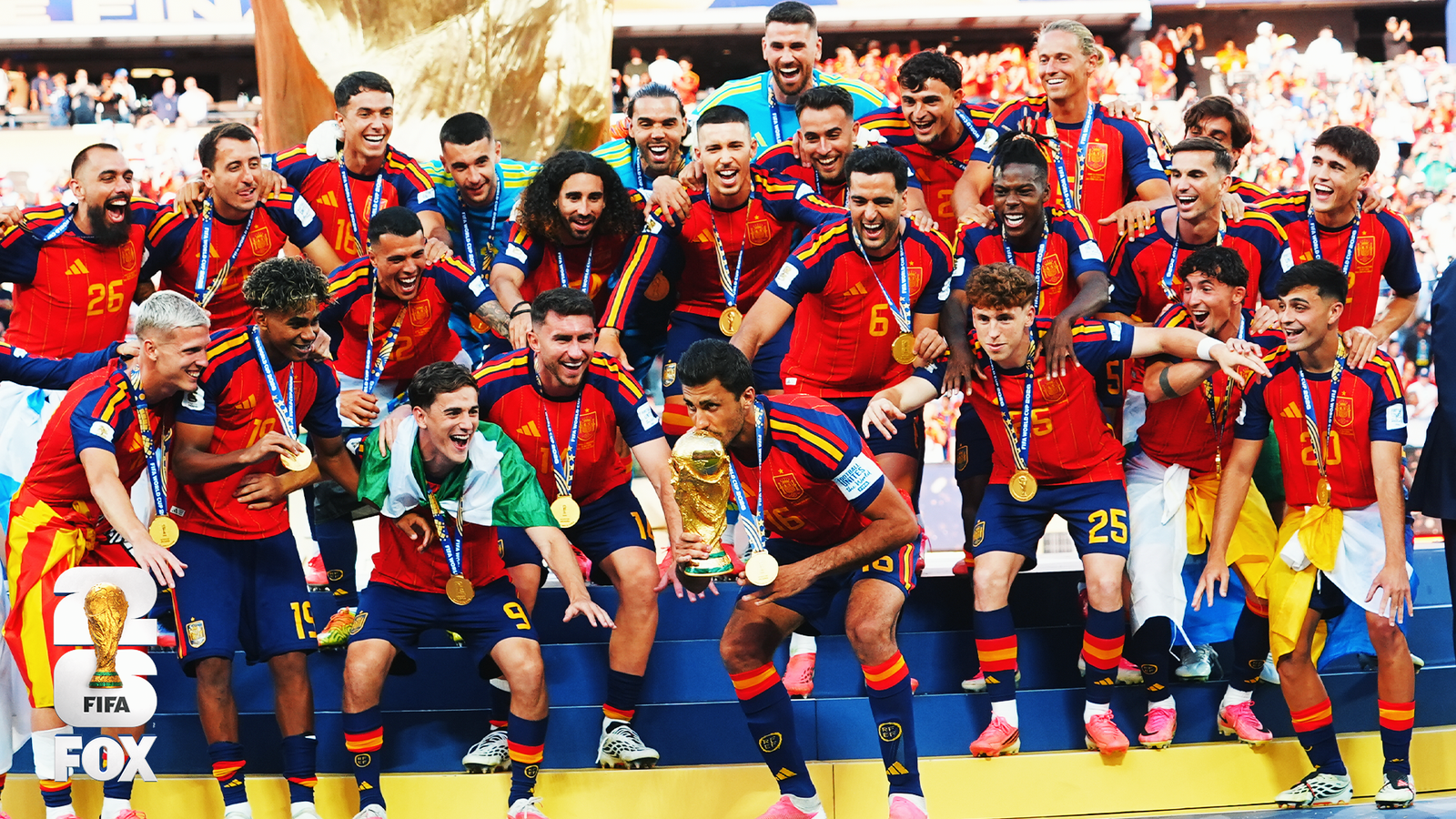
FOX Sports
Rodri immediately settled into his familiar role, dictating the tempo with calm passing and intelligent positioning. Whenever Argentina tried to press, Spain simply played around it, showing the composure that had defined their entire campaign.
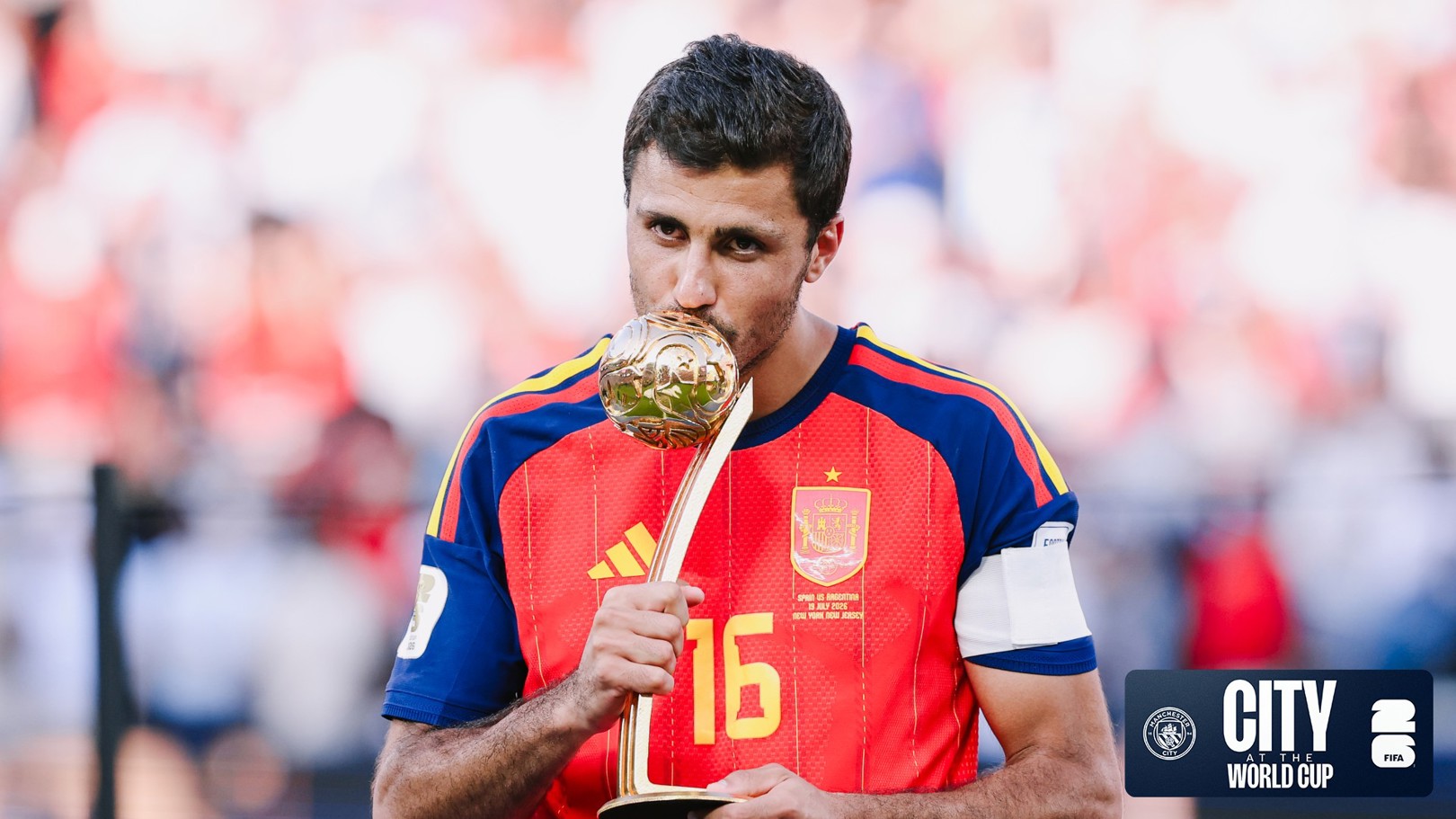
Argentina were prepared for that challenge.
Rather than chasing the ball recklessly, Lionel Scaloni’s side stayed compact and waited for opportunities to counterattack. Every Spanish attack was met with disciplined defending, forcing the European champions to work hard for every opening.
The contrast in styles made for a fascinating tactical battle.
Spain wanted to control the match.
Argentina wanted to control the moments that mattered.
Messi Still Commanded Every Eye in the Stadium
Every time Lionel Messi touched the ball, the atmosphere changed.
Supporters expected something special, even when Spain crowded him with defenders.
Although Argentina found it difficult to dominate possession, Messi continued searching for small pockets of space, dropping deeper to collect the ball before trying to launch attacks.
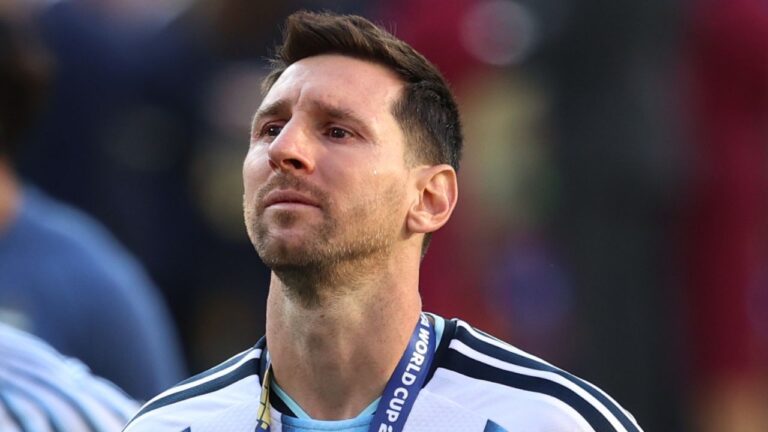
Sportsnet.ca
His passes still carried the vision that has defined his legendary career.
One clever turn.
One perfectly weighted through ball.
One free kick near the edge of the area.
Even without scoring, he remained the player Spain feared most.
That respect spoke volumes.
At 39, Messi still demanded the attention of an entire defence.
Neither Side Could Find the Breakthrough
As the first half wore on, both teams created promising moments without finding the finish they desperately wanted.
Spain came closest through quick combinations around the penalty area, with Nico Williams and Lamine Yamal repeatedly asking questions of Argentina’s defence.
Argentina answered with dangerous counterattacks, looking to exploit the space left behind whenever Spain committed numbers forward.
The match gradually became more physical.
Every loose ball was contested.
Midfield battles became fiercer.
Neither team looked willing to make the mistake that could cost them the World Cup.
By halftime, the scoreboard remained unchanged, but the tension inside the stadium had only grown.
Supporters understood they were watching two outstanding teams refusing to give each other even the smallest advantage.
With every passing minute, it became increasingly clear that this final would not be decided easily.
One moment of brilliance.
One lapse in concentration.
One opportunity.
That was all either side was likely to get.
And when it finally arrived, it would change football history forever.
One Goal Changed Everything
When the second half began, the intensity somehow increased.
Spain continued to enjoy more possession, but Argentina looked far more dangerous whenever they broke forward. Every turnover sparked a counterattack, forcing Spain’s defenders to recover quickly and preventing the match from becoming one-sided.
Luis de la Fuente urged his players to remain patient.
There was no panic on the Spanish bench.
His team had controlled games throughout the tournament by trusting their system rather than forcing opportunities, and the final was no different.
Argentina, meanwhile, were growing in confidence.
With Lionel Messi dropping deeper to collect possession and link play, the defending champions began finding more space between Spain’s midfield and defence. Every Argentine attack reminded supporters why they had reached a second consecutive World Cup final.
The tension inside the stadium became impossible to ignore.
Neither team wanted penalties.
Neither team wanted to make the mistake that would define their career.
The Match Entered Extra Time
After 90 minutes without a goal, both sets of players looked exhausted.
Cramp began setting in.
Every sprint required extra effort.
Every challenge carried greater risk.
Still, neither manager abandoned their plan.
Spain continued circulating possession, searching for the smallest opening, while Argentina stayed disciplined and waited for one decisive counterattack.
It felt less like a football match and more like a battle of concentration.
One lapse.
One loose touch.
One defensive error.
That was all it would take.
Ferran Torres Delivers the Moment of the Tournament
The breakthrough finally arrived in the 106th minute.
Spain worked the ball patiently into Argentina’s penalty area before finding Ferran Torres in space.
He didn’t hesitate.
With defenders closing in and the pressure of an entire nation resting on his shoulders, Torres struck the ball beyond Argentina’s goalkeeper and into the net.
For a split second, there was silence.
Then the Spanish supporters erupted.
Players sprinted toward the corner flag.
The substitutes emptied the bench.
Luis de la Fuente punched the air before embracing members of his coaching staff.
After nearly two hours of football, Spain had finally found the goal they had spent the entire night chasing.
Argentina Refused to Give Up
Champions rarely surrender quietly.
Argentina certainly didn’t.
Knowing there were only minutes left to save their title, Lionel Scaloni pushed his team forward.
Defenders joined the attack.
Every free kick and corner became another opportunity.
Messi searched desperately for one final piece of magic, drifting across the pitch in search of space as Spain defended deeper than they had all evening.
The pressure was relentless.
Spain blocked shots.
Won aerial duels.
Cleared dangerous crosses.
Every defensive action was celebrated as passionately as a goal.
The clock seemed to move painfully slowly for Spanish supporters, while every passing second increased Argentina’s desperation.
The Final Whistle Ends One Era and Begins Another
When the referee finally blew for full time, Spanish players collapsed onto the pitch before rushing toward one another in celebration.
They were world champions.
For only the second time in history, Spain had reached football’s summit.
The images on the other side of the field were just as powerful.
Argentina’s players stood in silence, trying to process the end of their title defence.
Lionel Messi slowly applauded the Argentine supporters, who responded with a standing ovation.
Although the result wasn’t the one they wanted, the appreciation was unmistakable.
Supporters weren’t simply thanking him for one tournament.
They were thanking him for an extraordinary international career that inspired an entire generation of football fans.
Whether this proves to be his final World Cup appearance or not, the night felt like the closing chapter of one of the sport’s greatest stories.
Why Spain’s Victory Matters
Spain’s triumph wasn’t built around one superstar.
It was built around trust, teamwork and tactical discipline.
Rodri controlled games from midfield.
Young stars like Lamine Yamal and Nico Williams played without fear.
Ferran Torres produced the defining moment when his country needed him most.
Throughout the tournament, Spain rarely looked rattled.
They adapted to every opponent, defended with discipline and attacked with patience.
That consistency is what ultimately separated them from the rest of the world.
The 2026 FIFA World Cup will be remembered for many reasons—the first edition featuring 48 teams, unforgettable upsets, emerging young stars and emotional farewells.
But its lasting image may always be Spain celebrating beneath the confetti while the World Cup trophy returned to European hands.
For Argentina, the journey ended in heartbreak.
For Spain, a new football dynasty may only just be beginning.
FAQs
Who won the 2026 FIFA World Cup?
Spain defeated Argentina 1-0 after extra time to win the 2026 FIFA World Cup.
Who scored the winning goal?
Ferran Torres scored the decisive goal in the 106th minute of extra time.
Was this Lionel Messi’s last World Cup?
The tournament was widely expected to be Messi’s final FIFA World Cup appearance, though he had not formally confirmed his international future immediately after the final.
How many World Cups has Spain won?
Spain’s victory marked their second FIFA World Cup title.
Why is the 2026 World Cup historic?
It was the first FIFA World Cup to feature 48 teams and was jointly hosted by the United States, Canada and Mexico.