


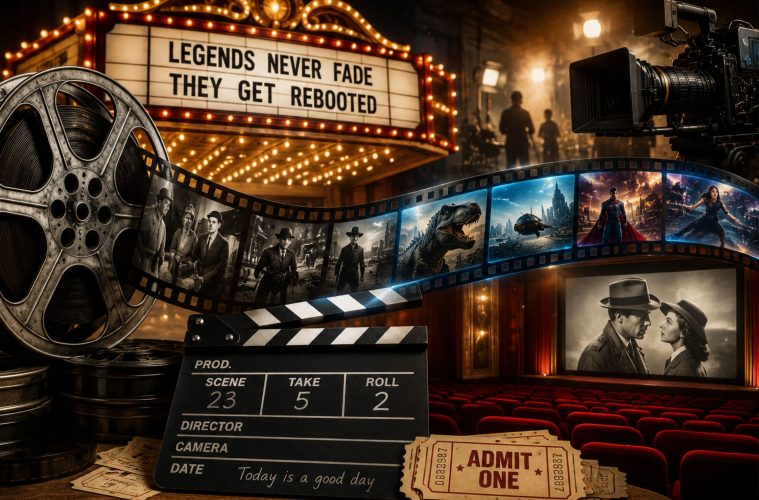
Why Hollywood Keeps Rebooting Classic Movies: The Real Reasons Behind the Trend
July 23,2026: If you’ve walked into a movie theater over the past decade, chances are you’ve noticed something familiar on the big screen.
A beloved animated classic returns as a live-action film.
A superhero franchise gets another reboot.
A horror favorite receives a modern remake.
Or a movie that defined an entire generation suddenly comes back with a new cast, updated visual effects, and a fresh storyline.
For some audiences, these reboots are exciting. They offer the chance to revisit stories they grew up with while introducing them to younger generations.
For others, they raise the same question every time a new announcement appears:
“Why doesn’t Hollywood make more original movies?”
It’s a debate that resurfaces almost every year, especially when major studios announce another remake of a film many people thought was already perfect.
The answer, however, isn’t as simple as a lack of creativity.
Hollywood continues to revisit classic movies because of a combination of psychology, business strategy, audience behavior, and the rapidly changing entertainment industry.
In many ways, reboots say just as much about what audiences want as they do about what studios choose to produce.
HOLR explores why Hollywood keeps returning to familiar stories, why nostalgia has become one of entertainment’s most valuable assets, and whether reboots are helping—or hurting—the future of filmmaking.
:max_bytes(150000):strip_icc():format(webp)/Breakfast-Club-d95bbeadfc57468bad92d1f3e03d95af.jpg)
Image Credit: Everett
Hollywood Has Always Recycled Stories
Although reboots may feel like a modern trend, filmmakers have been retelling stories for generations.
Long before streaming platforms existed, Hollywood frequently adapted novels, stage plays, myths, fairy tales, and even earlier films into new productions.
Consider how many times stories like A Star Is Born, Little Women, King Kong, Batman, or The Three Musketeers have been reimagined.
Each generation brings its own technology, cultural perspectives, and filmmaking techniques.
A story that resonated in the 1950s may look entirely different when retold in the 2020s.
From Hollywood’s perspective, revisiting familiar stories isn’t unusual.
What’s changed is the speed at which those stories return.
Instead of waiting several decades between adaptations, audiences now sometimes see reboots only ten or fifteen years after the original.
That shorter cycle makes the trend feel more noticeable than ever before.
Nostalgia Is One of Hollywood’s Most Powerful Business Tools
If there’s one emotion that consistently sells movie tickets, it’s nostalgia.
Psychologists describe nostalgia as a positive emotional response connected to meaningful memories.
Watching a favorite childhood film doesn’t simply remind people of the movie itself.
It reminds them of where they were in life.
Family movie nights.
Weekend trips to the cinema.
School holidays.
Friends who watched alongside them.
Those memories become attached to the film.
Years later, simply seeing the title of a beloved movie can trigger feelings of comfort, excitement, and familiarity.
Hollywood understands this remarkably well.
When studios announce a reboot of a beloved classic, they’re not only promoting a new film.
They’re reconnecting audiences with memories that already exist.
That emotional advantage is something entirely original movies must build from scratch.
In a highly competitive entertainment landscape, nostalgia offers studios something incredibly valuable:
A head start.
:max_bytes(150000):strip_icc():format(webp)/amazon-classics-the-bicycle-thief-110824-069417635dbc40e0baff7892145a8f72.jpg)
Image Credit: Everett
Familiar Stories Feel Less Risky
Making blockbuster movies has never been more expensive.
Today’s major productions often cost hundreds of millions of dollars before marketing expenses are even included.
That financial reality influences nearly every decision studios make.
Imagine you’re responsible for investing hundreds of millions of dollars in a single project.
Would you choose an unknown story that audiences have never heard of?
Or a title that already has millions of dedicated fans around the world?
For studio executives, the answer is often straightforward.
Recognizable brands reduce uncertainty.
Audiences already know the characters.
The story has an existing fan base.
Merchandise opportunities already exist.
International audiences recognize the title.
Media outlets are more likely to cover familiar franchises.
Although success is never guaranteed, established intellectual property generally carries less financial risk than completely original concepts.
That doesn’t necessarily mean reboots are better movies.
It simply means they’re often easier to market.
Streaming Changed the Rules of Entertainment
The rise of streaming platforms has also transformed how Hollywood approaches filmmaking.
Years ago, audiences relied on television schedules or DVD collections to revisit favorite films.
Today, almost every classic movie is only a few clicks away.
Ironically, that constant availability has made nostalgia even stronger.
Streaming allows younger audiences to discover older films while introducing classic franchises to entirely new generations.
A teenager who watches the original Ghostbusters or The Karate Kid on a streaming platform may become interested in a modern reboot or sequel.
Studios recognize this opportunity.
Instead of marketing only to people who loved the original decades ago, they can now reach parents and children simultaneously.
One generation experiences nostalgia.
The other experiences discovery.
That creates a rare opportunity to attract multiple age groups with the same title.
Technology Makes Old Stories Feel New Again
Another reason Hollywood revisits classic films is because filmmaking technology has evolved dramatically.
Stories that once depended on practical effects, limited animation, or simple visual techniques can now be reimagined using cutting-edge CGI, motion capture, virtual production, and immersive sound design.
In some cases, technology allows filmmakers to tell stories in ways that simply weren’t possible when the originals were released.
This is especially true for fantasy, science fiction, superhero films, and animated classics.
Modern audiences often expect cinematic experiences that match today’s technical standards.
Studios believe updated visuals can introduce timeless stories to viewers who may not connect with older filmmaking styles.
Of course, visual improvements alone don’t guarantee success.
Audiences still expect compelling storytelling, memorable performances, and emotional depth.
Spectacular effects may attract attention, but meaningful characters keep people invested.
Image Credit: opowiadaniascifi.medium.com
Reboots Aren’t Just About Movies—They’re About Generations
Perhaps the most interesting reason reboots continue to succeed is that they create shared experiences between generations.
Parents introduce their children to stories they loved growing up.
Friends compare different versions of the same film.
Families watch the original one weekend and the reboot the next.
Entertainment becomes a conversation across decades.
Instead of replacing older movies, successful reboots often encourage audiences to revisit the originals.
In many cases, classic films experience renewed popularity simply because a reboot reminds people they exist.
That relationship between old and new has become one of Hollywood’s most effective strategies for keeping beloved stories alive.
When Reboots Work—and When They Don’t
Not every reboot becomes a box office success.
Some films are praised for introducing beloved stories to a new generation, while others leave audiences wondering why they were made at all.
The biggest difference usually isn’t the budget or the visual effects.
It’s whether the filmmakers understand why people loved the original.
Successful reboots respect the source material while finding new ways to tell the story.
They don’t simply recreate famous scenes shot for shot. Instead, they ask an important question:
“How can this story feel meaningful for today’s audience?”
Take films like Dune (2021), which reimagined Frank Herbert’s novel with modern filmmaking while preserving its themes, or Top Gun: Maverick, which balanced nostalgia with an original story that stood on its own. These projects weren’t successful simply because audiences recognized the titles—they succeeded because they offered something fresh.
On the other hand, some reboots rely too heavily on familiar moments without adding emotional depth or new ideas. Audiences quickly notice when a film feels more like a commercial product than a genuine creative effort.
Today’s moviegoers are willing to embrace familiar stories—but they also expect those stories to evolve.
Is Hollywood Running Out of Ideas?
Whenever another reboot is announced, social media often fills with the same criticism:
“Hollywood has run out of original ideas.”
It’s an understandable reaction, but the reality is more complex.
Original films are still being made every year.
Independent studios continue to produce innovative stories.
Streaming platforms regularly invest in original series and films.
International cinema introduces fresh perspectives that often influence Hollywood itself.
The difference is visibility.
Original projects rarely receive the same marketing budgets as major franchise films.
A superhero reboot or beloved animated remake naturally attracts more media coverage than an entirely new story because audiences already recognize the title.
In other words, originality hasn’t disappeared.
It simply competes with brands that already have decades of audience recognition.
Hollywood isn’t necessarily creating fewer original ideas—it is investing more heavily in projects that appear financially safer.
Audiences Share Responsibility for the Reboot Trend
It’s easy to blame movie studios for producing so many reboots.
But audience behavior plays a major role.
Every time a reboot becomes one of the year’s biggest box office successes, it sends a clear message to Hollywood:
People are willing to pay for familiar stories.
Studios closely monitor ticket sales, streaming numbers, and audience engagement.
If nostalgic films consistently outperform original productions, businesses naturally take notice.
This creates a cycle.
Studios release recognizable franchises because audiences buy tickets.
Audiences buy tickets because they already know and trust the franchise.
That success encourages studios to develop even more reboots.
In many ways, Hollywood isn’t only responding to nostalgia.
It’s responding to consumer demand.
Can Original Stories and Reboots Coexist?
The conversation shouldn’t be about choosing one over the other.
Cinema has always evolved by balancing familiar stories with new ideas.
Reboots introduce classic narratives to younger generations.
Original films push the industry forward by exploring perspectives audiences haven’t seen before.
Both serve valuable purposes.
Many filmmakers argue that reboots can even create opportunities for innovation.
A familiar story can be reimagined through different cultural perspectives, diverse casting, updated themes, or modern social issues.
Some of the most successful remakes don’t replace the original—they encourage audiences to revisit it.
Instead of competing, both versions become part of the same cultural conversation.
That balance may ultimately be healthier than eliminating reboots altogether.
The Future of Hollywood Reboots
The entertainment industry continues to change rapidly.
Streaming services, artificial intelligence, virtual production, and global audiences are reshaping how movies are made and consumed.
At the same time, younger viewers are discovering classics through streaming platforms, creating new opportunities for older stories to find fresh audiences.
That means reboots aren’t likely to disappear anytime soon.
Instead, they may become more selective.
Rather than simply updating visual effects, future reboots may focus on expanding stories, exploring overlooked characters, or adapting beloved books and films for audiences with different cultural experiences.
As viewers become more critical, studios will likely face greater pressure to justify revisiting classic films.
A recognizable title alone may no longer be enough.
Audiences increasingly expect meaningful storytelling alongside nostalgia.
Final Thoughts
Hollywood’s fascination with reboots isn’t simply about repeating the past.
It’s about balancing creativity with commercial reality.
Studios invest enormous amounts of money into blockbuster filmmaking, making recognizable stories feel like safer financial decisions. At the same time, audiences continue to respond emotionally to films connected to childhood memories, beloved characters, and timeless storytelling.
Nostalgia remains one of entertainment’s most powerful forces.
But nostalgia alone cannot guarantee success.
The reboots that truly resonate are the ones that understand why the original mattered in the first place while offering something new for modern audiences.
As technology evolves and viewing habits continue to change, Hollywood will almost certainly keep revisiting classic movies.
The real question isn’t whether reboots will continue.
It’s whether filmmakers can keep finding fresh reasons to tell familiar stories.
When they do, reboots become more than remakes.
They become bridges between generations, proving that great stories don’t disappear—they simply find new audiences.
FAQs
Why does Hollywood keep rebooting classic movies?
Hollywood frequently reboots classic movies because recognizable titles attract existing audiences, reduce financial risk, and appeal to viewers through nostalgia. Familiar franchises are often easier to market than entirely original stories.
Are Hollywood reboots more successful than original movies?
Not always. While many reboots perform well because of built-in brand recognition, success ultimately depends on strong storytelling, audience reception, and positive reviews. Original films continue to achieve both critical and commercial success.
Why do audiences enjoy movie reboots?
Many viewers enjoy reboots because they revisit beloved characters and stories while introducing them to new generations. Nostalgia, improved visual effects, and updated storytelling often make these films appealing to longtime fans and younger audiences alike.
What are the biggest stories trending online today? Read the latest here
Published by HOLR Magazine
Image Credit: AI