


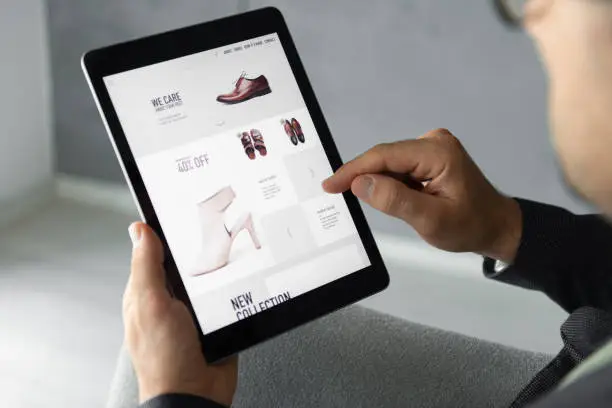
Your website is your online storefront. This is where customers will first encounter your fashion brand, and so you must get it right. While it is very important to have great product images on your website, the words are just as important. Your website content needs to build trust with the customer, explain your brand values, and entice the customer to make a purchase.
To help you get started, we have listed eight tips that will improve your website content and ensure your online store does not get lost in the sea of digital fashion retailers. Create a great shopping experience, tell stories about your products, and build trust among your website visitors.

Review Your Content Creation Process
Running a successful fashion website requires producing an enormous amount of copy. Between writing product descriptions, drafting blog posts, updating landing pages, and keeping your brand story fresh, your creative team has a lot on its plate. Because of this high volume, many businesses look for ways to make their workflow more efficient.
Modern digital tools are incredibly helpful for easing this burden. Writing assistants like Grammarly can keep your spelling and grammar spotless, polish your sentence structure, and make sure your tone stays consistent across different pages. At the same time, many brands are beginning to experiment with artificial intelligence to help brainstorm headlines or draft initial outlines.
However, relying too heavily on automated drafts can strip away the unique personality that makes your brand special. If your copy sounds flat or robotic, your audience will instantly feel the disconnect. That is why many quality-focused brands use AI content detectors as a routine part of their editorial review process. Running your drafts through a detection tool helps ensure that your final published text feels completely original, organic, and aligned with your actual brand voice. The goal is never to avoid technology entirely, but to use it as a support system that enhances, rather than replaces, human creativity.
Once you have a reliable review process in place, you can start applying these eight strategies to improve your site’s content.
1. Create a Clear and Consistent Brand Voice
When developing your brand’s personality, it is essential to define your brand voice and apply it consistently throughout your website. Your website content mustn’t contradict your offline brand values. This means that your online personality should reflect your brand’s personality and should sound like the same person writing your online content as they would offline.
To avoid this and to create the perfect shopping experience for your customers online, you first have to define the personality of your brand. What is your style? Is your fashion brand more on the minimalistic side or rather more bold? Maybe you even focus on sustainable fashion or you are selling a premium quality product. Whatever it is, it is important to stay true to your brand and to transfer that personality to your homepage as well as to your product pages, your blog or even your “About Us” page. If you have a very relaxed tone on your homepage and then your product pages are written in a very formal way, this will definitely cause confusion to your customers. They will not trust you as much as they could if you had been more consistent with your brand personality.
2. Write Product Descriptions That Tell a Story
Basic product descriptions don’t give customers enough information to customers about how a particular piece of clothing will fit into their lives. In order to make your items more compelling, it is very important that you write product copy that paints a picture for your customers. This means you have to paint a picture of how a particular item of clothing will look on them, and how it will feel. It means you have to tell them how a garment will fit and how it will drape when it is being worn. It also means you have to tell them where they can wear the piece and who it is for.
Most fashion websites describe items of clothing in the most basic terms. A description of a “Black cotton dress” does little to tell a customer how they might use the garment in their life. Descriptions of fashion items should paint a picture for customers to inspire and encourage purchases. This can be done by describing the feel of the fabric and how a garment will fall when the customer is walking. It is also very important to tell customers who the garment was designed for and what makes the garment different from others on the market. By helping a customer to imagine wearing an item of clothing, the customer is more likely to purchase that garment.
3. Make Your Website Content More Useful to Customers
The online shopper is a different kind of consumer than the one who steps into a physical store. As well as offering them the ability to purchase products at any time of day from anywhere in the world, internet retailing creates several problems. Chief among these is the difficulty that customers face in gaining a sense of a product’s qualities when all they can do is look at pictures of it on a computer screen. As a result, they are more likely to buy something and then return it to the store than they are to purchase an item in a brick-and-mortar shop and then send it back. By including guides on its website that tell customers how to choose the right size and care for products made from delicate materials, a fashion retailer can reduce returns and turn potential problems into selling points.
Create clear, easily accessible guides that will help your customers with choosing the right size or learning how to wash and care for delicate fabrics. Provide your customers with lots of ways to style up a new purchase, and this will be very helpful to them and reduce the chance of them returning the items.
4. Improve Website Readability
We’ve all been there – reading through a site word for word, only to come to the realization that we’re getting nowhere fast. And then there are the sites that are easy to read – we can quickly scan through them to find the information we need.
It’s also important to make sure the text on your site is edited to make sure it is the right length and that it is easy to read. Make use of editing tools such as word counters and grammar checkers to make sure that your text is the perfect length and that there is no ‘fluff’ that has been included. Using simple language and avoiding the use of jargon that is specific to your industry can also help to make sure that the text on your site is readable.
5. Add More Fashion and Style Content
To build a loyal community, your website needs to offer value beyond the checkout lane. Adding a dedicated section for editorial and style content to your website will give people a reason to visit your site even when they are not actively shopping. Publishing regular styling guides, seasonal trend roundups, and wardrobe organization tips, for example, will attract top-of-funnel traffic from search engines. As a result, your website will become a focal point for fashion lovers and will position your brand as an active authority in the space.
Another great idea is to write regularly on fashion and style content, such as styling guides, information on current trends, and tips on how to organize a wardrobe. This will attract top-of-funnel traffic (people searching online for fashion-related topics) to your website and prove that you are an authority in the fashion industry.
6. Use Customer Stories and Social Proof
There is nothing quite as powerful as having customers share their positive experiences of your products. Even better, when they use them in their everyday life and post photos on your website. This kind of content looks so much more authentic than the polished model shots.
Integrate customer reviews, written testimonials, and user-generated photos of customers wearing your clothing on your product pages and homepage. Read about how other customers style your clothing in their daily lives to get inspiration for your own purchases and also to get social proof of your online shopping experience.
7. Search Engine Optimisation for your Website Content.
Search engine optimization (SEO) is a critical feature when it comes to driving top-line traffic to your online store. Although the strategy can be complex and difficult to master, the bottom-line results can be extremely rewarding for retailers who optimize their content effectively. This means that the content must naturally include certain terms that your target audience is likely to search for, detailed product information, and high-quality blog content, amongst other features.
On the other hand, never sacrifice readability for the sake of the algorithm. Write your content for human readers first and then incorporate your target keywords in your product descriptions and page headings in a natural way that still reflects your brand’s voice and personality.
8. Keep Your Content Fresh and Up to Date
A great website is never complete. The written part of your website can go out of date quickly. Old product information, broken links, and outdated blog articles create a bad and unprofessional online appearance.
Time must be set aside regularly to review your website for areas that can be updated. The content of old blog posts can be rewritten and updated with new advice. Seasonal product descriptions can be rewritten to reflect the current season. Anything that refers to past promotions must be removed to avoid confusing your customers.

Conclusion
It’s also important to note that making great website content is an ongoing process. To keep improving your content in due time, don’t feel like you have to rewrite the whole site overnight. Start by focusing on a few high-priority pieces of content first, such as establishing a strong brand voice or updating the product descriptions of your best-sellers.
Using the best of digital technology combined with a strict human editing process, you can create writing that is authentic, polished, and above all unique to you and your brand. Fashion brands that take the time to create the clearest, most engaging, and most useful content for their website will build strong relationships with their visitors and guide them to their next purchase.
Published by HOLR Magazine.