


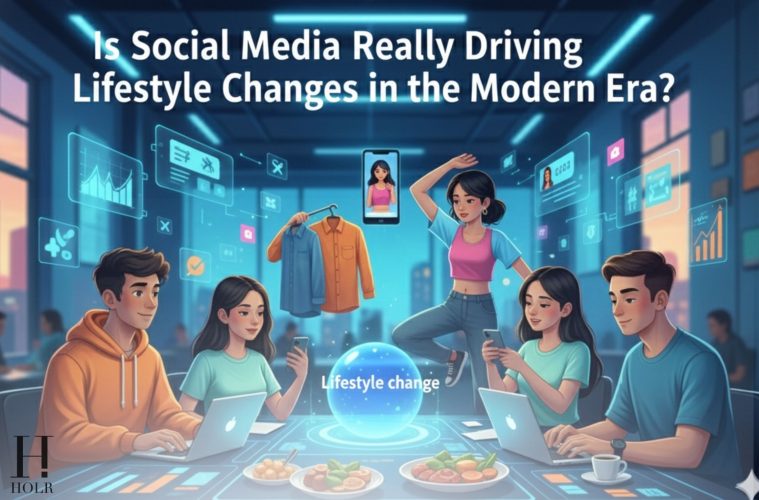
From what we eat and how we exercise to when we sleep, shop and spend our free time, social media is increasingly shaping the routines of everyday life.
August 18, 2026: Social media is no longer something people simply check during their free time. For many, it has become part of the structure of everyday life.
A morning can begin with scrolling through TikTok or Instagram. A workout might be inspired by a creator. Dinner can be chosen after watching a food video. A new skincare routine can come from a trending post, while an evening that was supposed to be spent relaxing can turn into hours of scrolling.
This does not mean social media is automatically harmful. In fact, it can encourage people to exercise, discover healthier recipes, connect with communities and learn about different lifestyles. However, research increasingly shows that the relationship between social media use and daily habits is complicated.
A 2025 systematic review covering 82 studies found that social media can both support and interfere with health-related behaviors, including physical activity, nutrition, mental wellbeing and body image.
HOLR breaks down how social media is changing modern lifestyle habits and why the influence goes far beyond what appears on a phone screen.
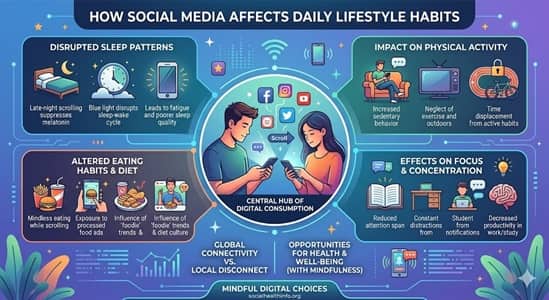
Image Credit: squareunfold.com
Social Media Is Changing How We Start the Day
For many people, checking social media has become part of their morning routine.
Instead of immediately getting out of bed, people may spend several minutes scrolling through notifications, messages, videos and news.
That small habit can influence how the rest of the morning feels.
A person who starts the day watching productivity videos may feel motivated to organize their schedule. Someone who encounters stressful news or negative content may begin the day feeling overwhelmed.
The important point is that social media does not simply fill spare time anymore. It can become part of the routine itself.
Fitness Trends Can Influence Exercise Habits
Fitness content is one of the clearest examples of social media influencing lifestyle.
Short workout videos, walking challenges, running programs and gym routines make exercise easier to discover. Someone who has never considered strength training may see a creator explaining basic exercises and decide to try them.
Social media can also provide motivation through online communities.
People share progress photographs, step counts, running achievements and workout routines. That sense of accountability can encourage some users to remain active.
However, there is another side.
Constant exposure to highly edited fitness content can create unrealistic expectations about what bodies should look like. The same platform that motivates someone to exercise can also make them feel inadequate.
Research supports this mixed picture. A recent systematic review found that social media can act both as an enabler and an obstacle to positive health behavior changes.

Image Credit: textilelearner.net
Food Choices Are Increasingly Influenced Online
Food trends now travel incredibly quickly.
A recipe can become viral overnight. Suddenly, thousands of people are preparing the same pasta dish, drink, snack or breakfast.
Social media has made food discovery more visual and interactive.
People no longer need to search through cookbooks or websites to find meal inspiration. A 30-second video can introduce them to a new recipe while they are scrolling.
However, viral food culture can also encourage less balanced choices.
A 2025 study involving more than 5,000 adults in the United Arab Emirates found that higher smartphone and social media use was associated with more frequent consumption of foods such as fast food, sugar-sweetened beverages and energy drinks. The researchers also emphasized that the associations with diet and physical activity were generally weak to moderate.
This is an important distinction: social media can influence eating habits, but it does not determine what every individual will eat.
Social Media Has Changed Beauty Routines
Beauty trends can now spread globally within hours.
A skincare ingredient, makeup technique or hairstyle can move from a creator’s account to millions of people’s shopping lists almost immediately.
This has made beauty information more accessible.
People can discover products, tutorials and routines without needing to visit a salon or beauty counter.
At the same time, the constant stream of beauty content can create pressure.
Filters, editing and carefully controlled lighting can make ordinary appearances seem less acceptable. Users may compare their real-life appearance with highly curated images.
That can influence everything from skincare purchases to cosmetic procedures and personal confidence.
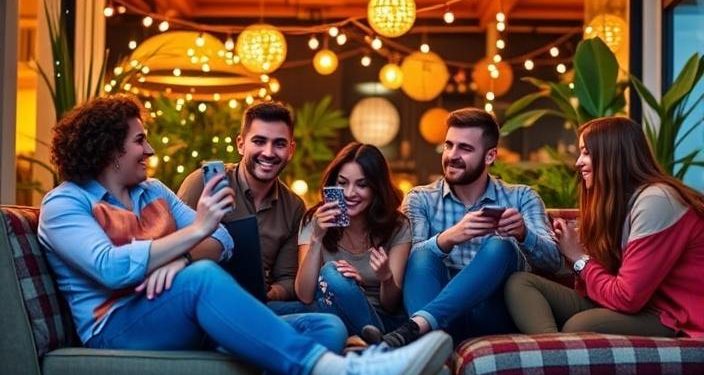
Image Credit: insightconvey.com
The “That Girl” Lifestyle Changed Productivity Culture
Social media has also created new ideas about what a successful lifestyle should look like.
The so-called “that girl” aesthetic is one example.
Videos often show perfectly organized mornings, healthy breakfasts, workouts, journaling, skincare and productive workdays.
The concept can be motivating.
However, it can also create the impression that every day should be perfectly organized.
Real life is naturally more complicated.
People get tired. Plans change. Work becomes stressful. Meals are sometimes rushed. Exercise is missed.
A lifestyle built around constantly trying to recreate an idealized social media routine can become exhausting instead of inspiring.
Sleep Is One of the Biggest Areas of Concern
Perhaps one of the most significant lifestyle changes connected to social media is what happens at night.
Many people use their phones in bed, scrolling through videos or responding to messages.
The problem is that “just five more minutes” can easily become an hour.
Recent research continues to examine the connection between social media and sleep. A 2026 daily-diary study found that more frequent nighttime social media use was associated with longer sleep latency and poorer sleep efficiency within participants, while negative social media experiences were consistently associated with poorer sleep outcomes.
This does not mean everyone who uses social media before bed will experience poor sleep.
However, the findings highlight why nighttime scrolling can become an important lifestyle habit to pay attention to.

Image Credit: agegracefullyamerica.com
Social Media Is Changing How People Spend Free Time
Free time used to be more clearly separated from digital entertainment.
Today, entertainment can be available at every moment.
Waiting for a coffee? Scroll.
Sitting on public transportation? Scroll.
Watching television? Check social media during the commercial break.
Waiting for someone? Open an app.
This creates a lifestyle where short periods of boredom are increasingly filled with digital content.
That is not necessarily negative, but it can reduce opportunities for quiet time.
Reading, walking, thinking, sitting outside or simply doing nothing can become less common when entertainment is always available.
Shopping Has Become Part of Social Media
Social media has also changed how people discover products.
Instead of deliberately searching for something they need, users can discover products while watching unrelated content.
A creator recommends a handbag.
Another demonstrates a skincare product.
Someone posts a home makeover.
Suddenly, something that was never on the shopping list becomes something a person wants.
This has created a lifestyle where inspiration and advertising often appear in the same space.
The result is a more impulsive and personalized shopping environment.
Mental Wellbeing Can Be Affected in Different Ways
The relationship between social media and mental wellbeing is complicated.
Social media can help people find communities, maintain friendships and discover support from others with similar experiences.
For someone who feels isolated, finding an online community can be genuinely valuable.
However, constant comparison can have the opposite effect.
People may compare their relationships, careers, bodies, homes, vacations and finances with carefully selected moments from other people’s lives.
A 2025 review of research from 21 countries found associations between frequent social media use and outcomes including stress, anxiety, depression, loneliness, sleep problems, body-image concerns and lower life satisfaction. The researchers also noted that problematic use can affect emotional regulation and procrastination.
These findings show why the quality and context of social media use matter.
Social Media Can Also Encourage Positive Habits
It would be unfair to describe social media only as a negative influence.
There are countless examples of people using platforms to build healthier routines.
Someone might discover a beginner-friendly workout.
Another person might learn how to cook affordable meals.
Someone else might find a support group, meditation practice or educational resource.
Health campaigns can also reach large audiences quickly.
The 2025 systematic review of social media and health behaviors found that platforms can support health promotion and behavior change, even though they can also spread misinformation and unhealthy behaviors.
The difference often comes down to what people consume and how intentionally they use these platforms.
The Rise of “Digital Wellness”
As people become more aware of their relationship with technology, digital wellness has become another lifestyle concept.
The goal is not necessarily to stop using social media.
Instead, it is about becoming more intentional.
That might mean turning off unnecessary notifications, avoiding social media during meals, creating phone-free periods or keeping the phone away from the bed.
Small changes can make social media feel like a tool rather than something controlling the day.
Why Social Media’s Influence Will Continue
Social media is unlikely to disappear from everyday life.
If anything, platforms are becoming increasingly integrated into entertainment, shopping, communication, work and lifestyle discovery.
The challenge is learning how to use them without allowing algorithms to dictate every habit.
A healthy relationship with social media does not necessarily require deleting every app.
It can simply mean becoming more aware of how scrolling affects your choices.
Are you watching a workout because it motivates you or because you feel guilty about your body?
Are you buying something because you need it or because a creator made it look essential?
Are you staying online because you genuinely want to or because you have become uncomfortable with being bored?
These questions can help people understand their own digital habits.
The Future of Modern Lifestyle Is Increasingly Digital
Social media has changed more than communication.
It has changed how people discover food, exercise, beauty, entertainment, fashion and even ideas about what a successful life should look like.
The influence can be positive or negative depending on the content, the platform and the individual.
HOLR has the latest lifestyle and wellness news, and the growing conversation around social media shows that digital habits are now lifestyle habits.
The goal does not have to be disconnecting completely.
Instead, it may be about finding a balance where technology adds value to everyday life without replacing the real-world experiences that make life meaningful.
FAQs
How is social media changing lifestyle habits?
Social media influences daily routines including exercise, food choices, shopping, beauty routines, entertainment, sleep and social interactions.
Can social media affect sleep?
Yes. Research has found associations between nighttime social media use and certain sleep difficulties, although individual experiences vary.
Does social media influence what people eat?
Yes. Research suggests social media exposure can influence food preferences and dietary behavior, although the strength of the relationship varies between individuals and studies.
What are the biggest stories trending online today? Read the latest here
Published by HOLR Magazine
Image Credit: stekom.ac.id