

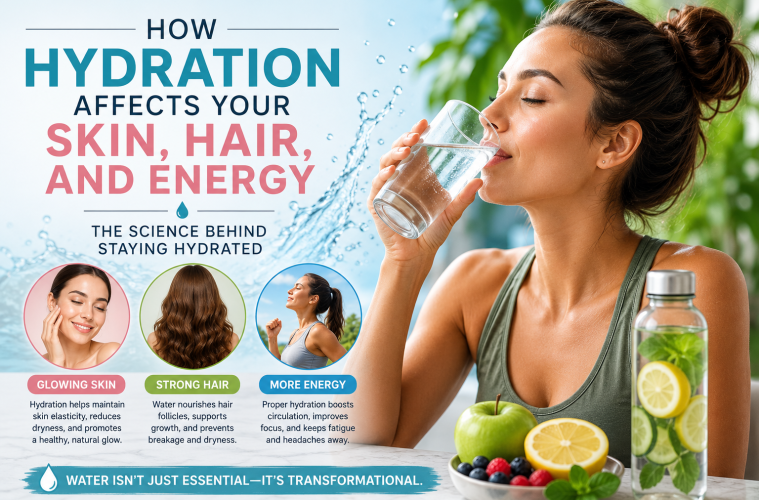
How Hydration Affects Your Skin, Hair, and Energy: The Science Behind Staying Hydrated
July 24,2026: Most of us know we should drink more water, yet it’s often one of the easiest healthy habits to overlook. A busy workday, a long commute, or simply forgetting to refill a water bottle can mean we reach the end of the day without drinking nearly enough fluids.
It’s easy to think of hydration as something that only matters after a workout or during hot weather. But water plays a role in nearly every function of the human body, from regulating body temperature to transporting nutrients, supporting digestion, and keeping cells functioning properly.
What many people don’t realize is that hydration can also influence how you look and feel every single day. Your skin may appear dull, your hair may feel dry, and your energy levels can dip when your body doesn’t have the fluids it needs to perform at its best.
While drinking more water isn’t a cure-all for every health concern, staying well hydrated is one of the simplest habits that can support overall wellness.
HOLR explores how hydration affects your skin, hair, and energy, why your body depends on water, and how small daily habits can make a noticeable difference over time.
Why Water Is Essential for the Human Body
Water makes up around 50–60% of an adult’s body weight, although the exact percentage varies depending on age, body composition, and sex.
Every cell, tissue, and organ relies on water to function properly.
Water helps:
- Carry oxygen and nutrients throughout the body.
- Regulate body temperature.
- Support digestion.
- Lubricate joints.
- Remove waste through urine and sweat.
- Maintain healthy circulation.
- Support normal brain function.
Even mild dehydration can affect how efficiently these systems work.
That’s why something as simple as drinking enough fluids each day can have a surprisingly broad impact on overall health.
Image Credit: kolorshealthcare.com
Hydration and Your Skin: More Than a Beauty Trend
Walk through any skincare aisle or scroll through social media, and you’ll likely come across countless products promising glowing, radiant skin.
While moisturizers, serums, and sunscreen all play important roles in skincare, healthy skin also starts from within.
Your skin is your body’s largest organ, and like every other organ, it depends on adequate hydration to function properly.
When you’re well hydrated, your skin is generally better able to maintain its natural protective barrier. This barrier helps reduce moisture loss while protecting against environmental irritants.
On the other hand, dehydration can make skin feel:
- Tight
- Dry
- Less elastic
- Rough
- Dull-looking
It’s important to remember that drinking extra water won’t instantly erase wrinkles or cure every skin concern. Factors such as genetics, sun exposure, sleep, nutrition, hormones, and skincare habits all influence skin health.
However, adequate hydration supports the environment your skin needs to function at its best.
Combined with a balanced diet and proper skincare, drinking enough water contributes to healthier-looking skin over time.
Can Water Improve Hair Health?
Hair is another area where hydration often becomes part of the conversation.
While hair itself isn’t “alive” in the same way skin cells are, the scalp underneath certainly is.
A healthy scalp creates the best conditions for healthy hair growth.
When your body is dehydrated, the scalp may become dry and uncomfortable, potentially contributing to flaking or irritation in some people.
Hydration also supports the circulation that delivers nutrients to hair follicles.
Of course, healthy hair depends on much more than water alone.
Protein intake, vitamins, minerals such as iron and zinc, hormones, genetics, and overall health all influence hair quality.
Still, drinking enough fluids is one important part of supporting the body’s natural processes that contribute to healthy hair over time.
Why Dehydration Can Leave You Feeling Tired
Have you ever felt unusually tired in the middle of the afternoon, only to realize you hadn’t had much water all day?
You’re not imagining it.
Even mild dehydration can affect both physical and mental performance.
When the body doesn’t have enough fluids, it has to work harder to maintain normal functions. This can lead to symptoms such as:
- Fatigue
- Difficulty concentrating
- Headaches
- Reduced physical performance
- Feeling sluggish
Because the brain is highly sensitive to changes in hydration, even small fluid losses may affect mood, alertness, and focus in some individuals.
Many people automatically reach for another cup of coffee when they feel tired.
Sometimes, however, the body may simply need more water.
That doesn’t mean water replaces sleep, balanced nutrition, or exercise—but staying hydrated can help support steady energy throughout the day.
Image Credit: drinkprime.in
Hydration Supports More Than Appearance
Perhaps the biggest misconception about hydration is that it’s only about avoiding thirst.
In reality, water supports almost every major system in the body.
From helping regulate temperature during exercise to supporting healthy digestion, circulation, kidney function, and nutrient transport, hydration plays a much larger role than most people realize.
Looking after your hydration isn’t simply about beauty.
It’s about giving your body the resources it needs to function efficiently every single day.
FAQs
How does hydration affect your skin?
Staying hydrated helps support your skin’s natural protective barrier, reducing dryness and promoting a healthier-looking complexion. While water alone won’t eliminate wrinkles, it contributes to overall skin health.
Can drinking more water improve your hair?
Water supports a healthy scalp and circulation, which are important for hair growth. Although hydration isn’t the only factor affecting hair health, it plays a valuable role alongside good nutrition and overall wellness.
Why does dehydration make you feel tired?
Even mild dehydration can reduce physical and mental performance, leading to fatigue, headache
What are the biggest stories trending online today? Read the latest here
Published by HOLR Magazine
Image Credit: AI