


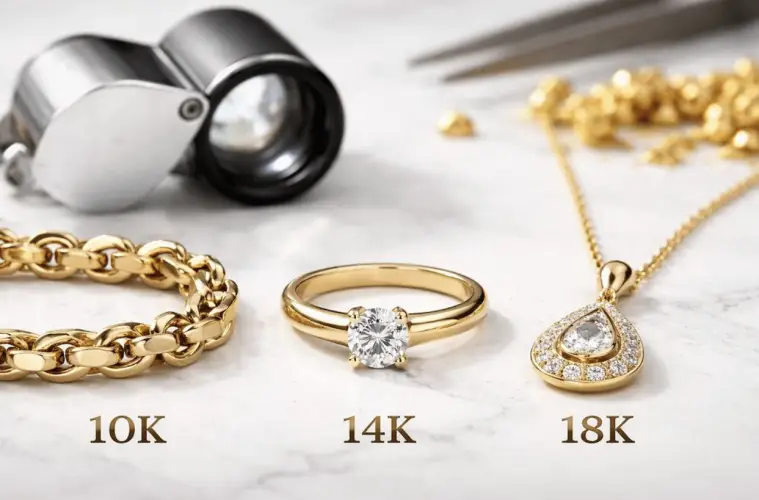
Both 10K and 14K gold can be worth selling, but their value depends on more than the karat stamp. Weight, current gold prices, condition, design, brand, and buyer deductions all affect the amount you may receive.
The main difference is purity. Since 14K gold contains more pure gold than 10K gold, it is usually worth more per gram. Still, a heavier or more desirable 10K piece can sometimes receive a stronger overall offer.
Understand the Purity Difference
Ten-karat gold contains about 41.7% pure gold, while 14K gold contains about 58.3%. The rest is made from other metals that improve strength and change the color.
This means two rings with the same weight will not have the same melt value. The 14K ring normally contains more recoverable gold and should receive a higher material-based offer.
Common markings include:
- 10K, 417, or 416
- 14K, 585, or 583
- A maker’s mark
- A designer stamp
- A serial or model number
These markings help identify the piece, but professional testing may still be needed.
Weight Has a Major Impact
Gold buyers often begin by weighing the item in grams. A heavier piece may contain more gold, but buyers may deduct gemstones, clasps, springs, watch components, and other non-gold materials.
Before you sell 10k gold, record the weight and photograph all visible hallmarks. A home scale can provide a rough estimate, although the buyer will likely use a more precise commercial scale.
Check the Current Gold Price
The value of both 10K and 14K gold follows the market price of pure gold. Since gold prices move throughout the day, an offer made today may differ from one made next week.
Check the spot price shortly before requesting quotes. This gives you a useful benchmark, although buyers usually pay less than full melt value to cover testing, refining, insurance, and resale costs.
Decide Whether It Has Jewelry Value
Some gold pieces are worth more as wearable jewelry than as scrap metal. Designer branding, antique details, gemstones, craftsmanship, and overall condition can increase resale interest.
Before accepting a melt-value offer, check whether the item has:
- A recognizable brand
- Original stones
- Vintage or antique appeal
- A matching set
- Unusual craftsmanship
- Original packaging or paperwork
A specialist jewelry buyer may recognize value that a general gold dealer misses.
Compare 10K and 14K Offers Separately
Do not allow multiple pieces to be grouped into a single unexplained offer. Ask the buyer to list each item’s weight, purity, rate, deductions, and final value.
When you sell 14k gold, the per-gram offer should generally be higher than the rate for 10K gold. If the difference seems unusually small, ask how the buyer calculated the price.
Review Buyer Fees and Policies
Compare quotes from jewelers, precious-metal dealers, online buyers, and pawnshops. Focus on the final payment after shipping, insurance, testing, commissions, and refining charges.
Ask whether the price is locked when the item is shipped or based on the market rate when it arrives. You should also confirm whether you can reject the offer and have the jewelry returned without a penalty.
Published by HOLR Magazine.