


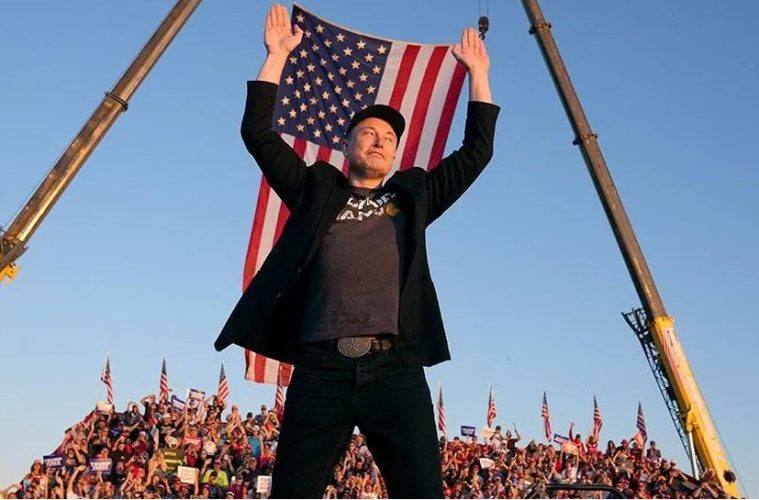
Alex Gibney’s four-hour documentary traces Elon Musk’s rise and influence through archival footage, interviews, and an AI recreation.
September 08, 2026
A Documentary About Power, Not Just Musk
Alex Gibney’s Musk is less interested in simply revisiting Elon Musk’s biography than in asking how one person accumulated such extraordinary influence. Running close to four hours, the documentary tracks Musk from his early technology ventures through Tesla, SpaceX, Twitter, and his increasingly visible role in politics.
The result is an expansive portrait that gradually shifts from conventional business biography into something far more unsettling. Gibney’s central question is straightforward: how did Musk become powerful enough to shape technology, media, politics, and public life on such a massive scale?

Illustration by Robert Carter
Gibney Finds a Clever Solution to Musk’s Absence
Musk declined to participate in the documentary, creating an obvious challenge for a filmmaker attempting such an intimate portrait. Gibney’s answer is one of the film’s most inventive ideas: an AI-generated version of Musk appears on screen, assembled using the billionaire’s own words from years of interviews and public statements.
The device is deliberately strange, but it fits the subject. Musk has repeatedly promoted artificial intelligence and questioned whether reality itself could be a simulation, so using technology to construct a synthetic version of him becomes both a filmmaking solution and a pointed joke about his public persona.
The Early Years Build the Musk Myth
The documentary begins with the familiar story of a young entrepreneur who sees possibilities other people dismiss. Gibney traces Musk’s early ventures, including Zip2 and PayPal, before moving into the companies that transformed his public image.
But the film is less interested in celebrating that trajectory than in questioning how the story was constructed. Musk emerges as someone exceptionally skilled at turning ambition into mythology, presenting himself as an inventor, visionary, and architect of the future even when the reality behind those labels is considerably more complicated.
Tesla and SpaceX Change the Scale
Tesla and SpaceX form the backbone of the documentary’s examination of Musk’s rise. Both companies helped establish the image of Musk as a technological revolutionary, but Gibney repeatedly looks beyond the mythology to the systems that helped those businesses succeed.
Government contracts and public support become an important part of that story, particularly around SpaceX. The film argues that Musk’s achievements cannot be understood entirely as the work of an individual visionary because they also depended on institutions, public money, engineers, and collaborators whose contributions can disappear behind the Musk brand.
The Documentary Gets Darker as Musk Gains Power
The film becomes substantially more pointed once it reaches Musk’s political transformation and his acquisition of Twitter, now known as X. What began as a story about technology increasingly becomes a story about control, influence, and the ability of extreme wealth to reshape public conversation.
Gibney examines Musk’s relationship with Donald Trump and the broader political movement he embraced, arguing that the shift cannot be understood separately from Musk’s growing influence over government, information networks, and online discourse. The documentary presents those developments as part of the same larger question about concentrated power.
The Personal Portrait Is More Complicated
Musk also ventures into Musk’s family life and relationships, using interviews with former partners and others close to him to challenge the distance between the public image and the private individual. Among those voices are his former wife Justine Musk and former partner Ashley St. Clair.
These sections can feel more intimate than the business material, but they serve a larger purpose. Gibney is examining whether the traits that helped Musk pursue enormous ambitions—confidence, intensity, certainty, and an unwillingness to accept limits—also help explain the behavior described by people who have known him personally.
AI Becomes One of the Film’s Biggest Warnings
The documentary devotes considerable attention to Musk’s changing relationship with artificial intelligence. Gibney highlights the tension between Musk’s earlier warnings about AI and his later push to build and expand his own AI ventures.
That contradiction becomes particularly important because the film treats AI not simply as another Musk business interest but as part of a broader pattern. Gibney repeatedly returns to the idea of a powerful person changing his position while retaining the authority to shape how others understand the technology.
A Storm of Cybercabs
— Elon Musk (@elonmusk) September 3, 2026
Four Hours Is a Lot to Ask
The biggest weakness of Musk may also be one of its defining characteristics: its enormous length. The documentary spends a substantial amount of time establishing Musk’s biography before reaching the more consequential questions about political influence and concentrated power.
That structure has value because the later material lands harder when viewers understand how the Musk mythology developed. Still, the film could likely make several of its arguments more efficiently. Its exhaustive approach occasionally feels repetitive, particularly when different examples lead toward variations of the same conclusion.
Gibney’s Research Keeps the Film Watchable
Despite its length, Musk rarely feels visually static. Archival footage, interviews, graphics, animations, and the AI recreation give the documentary enough variety to maintain momentum through its sprawling running time.
Gibney is also an experienced documentarian of powerful and controversial figures, and that experience shows in the film’s construction. He understands how to turn an enormous amount of research into a narrative that remains accessible, even when the subject matter expands from corporate history into technology, politics, wealth, and social influence.
The Film’s Most Disturbing Idea
The most effective argument in Musk is not necessarily that Musk is uniquely gifted or uniquely dangerous. It is that the systems around him repeatedly allowed exceptional wealth and persuasive storytelling to become a substitute for accountability.
That makes the documentary larger than one controversial billionaire. Gibney is ultimately examining the culture that rewards technological spectacle, elevates charismatic founders, and gives private individuals extraordinary access to public infrastructure and political power.
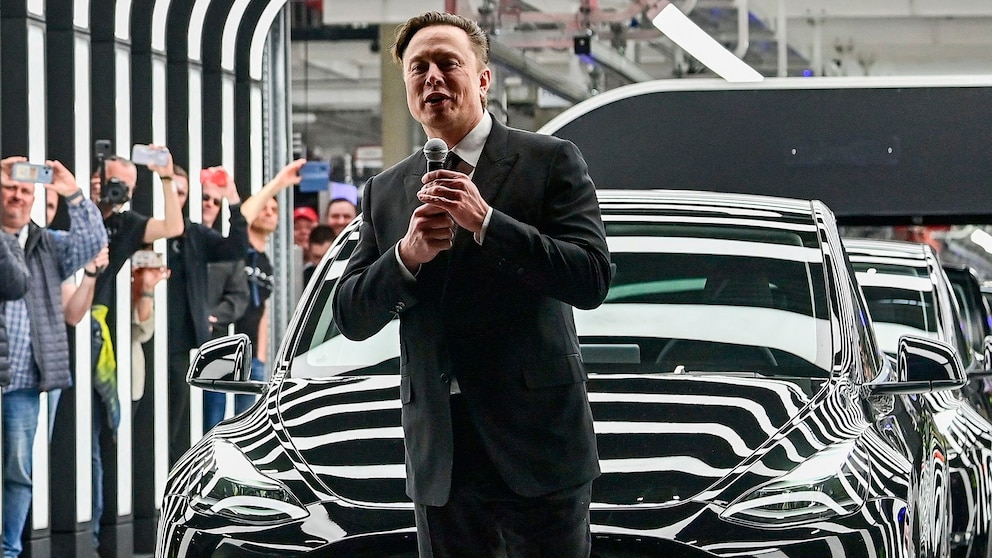
Credit: AFP
A One-Sided Portrait With a Clear Purpose
Because Musk refused to participate, the documentary necessarily relies on other people’s accounts and on Gibney’s interpretation of the evidence. That makes the film openly adversarial rather than neutral, and viewers who already strongly support or oppose Musk are unlikely to be surprised by its conclusions.
But the documentary’s purpose is not difficult to understand. Gibney wants to strip away the mythology surrounding Musk and examine what remains when the image of the unstoppable visionary is replaced by a much more complicated picture of wealth, ambition, contradiction, and power.
Final Thoughts
Musk is an exhaustive and often unsettling documentary that becomes more compelling as it moves beyond biography and into the question of what immense personal power can do. Alex Gibney’s approach is unapologetically critical, but the film’s strongest material comes from its detailed examination of how Musk’s business success, public mythology, technology interests, and political influence became intertwined.
The nearly four-hour running time will test some viewers, and the film’s perspective is clearly shaped by its filmmaker. Still, Genden Phuntsok’s grounded perspective in Tenzing is a very different kind of filmmaking than Gibney’s aggressive investigation here; Musk is built to provoke, question, and leave its audience thinking about who gets to wield power on this scale.
FAQs
What is Alex Gibney’s Musk documentary about?
Musk examines Elon Musk’s rise from an early technology entrepreneur to one of the world’s most influential figures across technology, business, media, and politics.
Why does the documentary use an AI version of Elon Musk?
Musk declined to participate, so Gibney’s team created an AI-generated avatar using Musk’s own previous public statements and interviews.
How long is Musk?
The documentary runs close to four hours, making it a particularly expansive examination of Musk’s life and influence.
Does Elon Musk appear in the documentary?
Musk does not participate in a direct interview, but archival material and an AI-generated recreation using his own recorded words are used throughout the film.
When will Musk be released?
The documentary is scheduled for a theatrical release in U.S. theaters on October 16, 2026, before its HBO release.
Published by HOLR Magazine