


Movie post-credits scenes have transformed from unexpected surprises into one of Hollywood’s most effective storytelling techniques. Here’s how they became a defining part of the modern movie experience.
Why Do Movies Have Post-Credits Scenes?
June 27, 2026 : If you’ve ever stayed in your theater seat while the credits rolled, you’re not alone.
Today, millions of moviegoers wait until every name disappears from the screen, hoping for one final surprise. Whether it’s a shocking plot twist, a hilarious joke, or a teaser for the next installment, post-credits scenes have become one of the most anticipated parts of blockbuster films.
But this wasn’t always the case.
For decades, audiences routinely left theaters as soon as the story ended. Credits were viewed as little more than a list of names honoring the people who made the film possible.
That changed over time.
Today, post-credits scenes have become a powerful storytelling tool that shapes audience expectations, builds excitement for future movies, and strengthens entire cinematic universes.
The Early Days of Post-Credits Scenes
The idea of adding extra footage after the credits isn’t entirely new.
Long before superhero movies dominated the box office, a handful of filmmakers experimented with hidden scenes that rewarded viewers who stayed until the very end.
These moments were uncommon and often humorous.
Rather than teasing sequels, early post-credits scenes usually served as playful jokes or lighthearted endings that added one final laugh before audiences left the theater.
Because they were so rare, many moviegoers never even realized they existed.

Image credit : reddit
The Superhero Revolution
Everything changed during the rise of modern superhero films.
Comic book adaptations introduced audiences to interconnected storytelling, where one movie could set up another years in advance.
Post-credits scenes became the perfect bridge between stories.
Instead of simply ending one film, studios began using these scenes to introduce new heroes, tease villains, reveal upcoming adventures, and build anticipation for future releases.
This approach transformed the movie-going experience.
Fans no longer rushed toward the exit.
Instead, staying through the credits became part of the event itself.
Building Connected Cinematic Universes
One reason post-credits scenes became so successful is their ability to connect multiple films.
Modern franchises often span dozens of movies and television series.
Rather than explaining every future storyline during the main film, studios use post-credits scenes to quietly introduce new characters or hint at upcoming conflicts.
These brief moments reward loyal fans while encouraging audiences to return for the next chapter.
They also create excitement without interrupting the main story.
For studios, this has become an effective way to maintain long-term audience engagement.
More Than Just Superheroes
Although superhero films popularized post-credits scenes, the trend has expanded far beyond comic book movies.
Animated films, action thrillers, comedies, horror movies, and even family adventures now occasionally include scenes after the credits.
Each genre uses them differently.
Some filmmakers prefer humorous endings.
Others reveal hidden secrets that completely change how audiences interpret the story.
Some simply provide emotional closure for beloved characters.
The flexibility of post-credits scenes has made them useful across nearly every genre.
How Audience Behavior Changed
One of the most noticeable effects of post-credits scenes has been on audience behavior.
Years ago, theaters would quickly empty once the credits appeared.
Today, viewers often remain seated together until every final second has passed.
Social media has reinforced this habit.
Within minutes of a movie’s premiere, fans begin asking the same question online:
“Does it have a post-credits scene?”
The answer can influence whether audiences stay, search for spoilers, or return for another viewing.
As a result, post-credits scenes have become part of movie marketing itself.
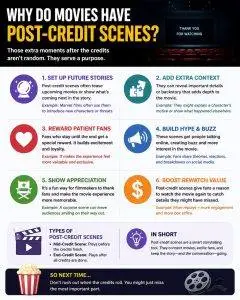
Image credit : AI generated
Creating Buzz Without Revealing Too Much
Post-credits scenes are carefully designed to spark conversation.
Rather than revealing major plot details, they often provide just enough information to encourage speculation.
Fans immediately begin sharing theories online.
Who was that mysterious character?
What does the ending mean?
How does it connect to future movies?
These discussions help keep films trending long after opening weekend.
In many cases, a brief thirty-second scene generates weeks of online conversation.
The Psychology Behind Staying Until the End
Movie studios understand audience curiosity.
People naturally want answers, surprises, and rewards.
Post-credits scenes take advantage of that curiosity by promising one final moment worth waiting for.
The anticipation itself becomes part of the entertainment.
Even when viewers don’t know whether a scene exists, many choose to stay just in case.
This shared experience has become part of modern movie culture.
Audiences now celebrate discovering hidden moments together.
Do Post-Credits Scenes Always Matter?
Not necessarily.
Some scenes introduce major storylines.
Others simply deliver a funny joke.
Some provide emotional closure for fans who have followed a franchise for years.
Filmmakers choose the approach that best fits their movie.
Regardless of purpose, audiences appreciate the extra effort.
Even humorous scenes can leave viewers smiling as they leave the theater.
Could Post-Credits Scenes Eventually Disappear?
Some critics argue that post-credits scenes have become too common.
When every blockbuster includes one, the surprise naturally becomes less surprising.
Others believe they remain an effective storytelling device when used thoughtfully.
Their future will likely depend on how creatively filmmakers continue using them.
If audiences remain excited about staying through the credits, studios will probably continue rewarding that patience.

Image credit : AI generated
Why Post-Credits Scenes Still Matter
Beyond marketing, post-credits scenes represent a new way of telling stories.
Instead of viewing one movie as completely separate from the next, filmmakers now create larger worlds where every installment contributes to a bigger narrative.
This interconnected approach has changed audience expectations.
Viewers no longer expect stories to end immediately.
Instead, they anticipate one final surprise before the lights come on.
That shift has permanently influenced modern filmmaking.
Confirmed Facts
Post-credits scenes have become increasingly common in modern films.
Superhero franchises played a major role in popularizing them.
Many audiences now remain seated through the credits.
Studios frequently use post-credits scenes to expand storytelling.
Speculation
Whether every future blockbuster will continue using post-credits scenes.
How storytelling techniques may evolve over the next decade.
Whether audiences will eventually grow tired of the trend.
Future innovations that could replace traditional post-credits scenes.
Final Thoughts
Movie post-credits scenes have evolved from rare cinematic surprises into an essential part of modern entertainment.
They encourage discussion, reward loyal fans, and strengthen connections between stories.
Whether they introduce a new hero, tease the next sequel, or simply provide one final laugh, these scenes have changed the way audiences experience movies.
As long as filmmakers continue finding creative ways to surprise viewers, post-credits scenes are likely to remain one of cinema’s most enjoyable traditions.
FAQs
What is a post-credits scene?
A post-credits scene is additional footage shown after a movie’s credits have finished or during the credits.
Why do movies include post-credits scenes?
Studios use them to tease future stories, reward audiences, provide closure, or include humorous moments.
Which movies made post-credits scenes popular?
Modern superhero franchises helped make post-credits scenes a major part of movie culture.
Do all movies have post-credits scenes?
No. While many blockbuster films include them, not every movie features additional scenes after the credits.
Should you always stay until the end?
If you’re watching a major franchise film, it’s often worth staying until the credits finish.
Are post-credits scenes important?
Some significantly impact future storylines, while others simply entertain audiences.
Why do fans search for post-credits information?
Many viewers want to know whether it’s worth remaining in their seats after the movie ends.
Will post-credits scenes continue in future movies?
Many filmmakers still use them successfully, although how the trend evolves remains uncertain.
Published by HOLR Magazine