


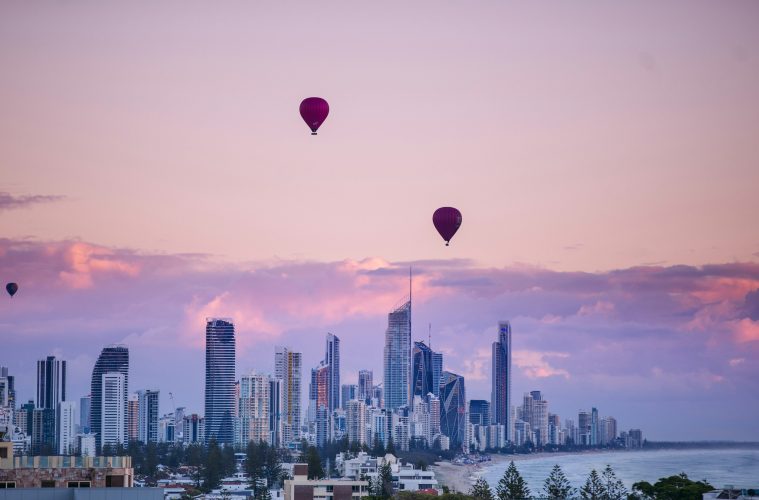
The first time someone tells you they are moving to Queensland, you assume they mean for a holiday. The second time, you assume there is a partner involved. By the fourth or fifth time, you start to notice the pattern. There is a quiet migration happening, and the people moving are not retirees in caravans. They are art directors from Sydney, software engineers from London, photographers from Toronto, and the occasional film producer from Los Angeles. They are in their thirties, mostly, with careers that travel and aesthetics that have outgrown their postcodes.

The Australian “sea change” is not new. The phrase entered the cultural lexicon properly in the early 2000s, attached to the idea of leaving the city for a slower coastal life. What is new, in the last few years, is who is doing it. The cohort skews younger. The destinations are more curated. The moves are less about giving up and more about trading up. This is sea change with better lighting and a working studio.
Queensland, unsurprisingly, is the centre of gravity. Not because it was always the obvious choice, but because the math has changed. Remote work has loosened the leash. The cost of operating a creative life in Sydney or Melbourne has become punishing. Brisbane has matured into a city you can take seriously. Cairns has the kind of light photographers used to fly to Bali for. And for a generation that came of age on Instagram, the visual case writes itself.
This is the story of how the move actually happens, why it is happening now, and what it looks like once you are on the other side.
What the sea change actually means now
The original sea change was a retirement story. The wealthy boomer crowd, mostly, leaving Sydney’s North Shore or Melbourne’s bay for a low-rise life on the Gold Coast or Sunshine Coast. The houses were big, the routine was slow, the pace was unmistakably second-act. There was an SBS series in 1998 by the same name, and the term stuck.
What is happening now is different in almost every way that matters. The age has dropped by twenty years. The destinations have widened. The drivers are different. And the move tends to come with a job, a project, a brand, or a creative practice attached. People are not stopping working. They are relocating their working lives.
The hard data backs up the anecdotal. Internal migration from New South Wales and Victoria to Queensland has been net positive for years now, with the trend sharpening since 2020. Brisbane’s population has grown faster than any other Australian capital over a five-year window. The northern coastal towns, from Noosa down through Caloundra and up the other way through Yeppoon, are pricing into territory that would have been unthinkable a decade ago. The buyers are not all retirees. A significant share of them are mid-career, dual-income, and arriving with cash from southern property sales.
There is also a generational logic to it. Millennials, broadly defined, are the demographic group that has reaped the smallest share of the property boom. They have less to lose by leaving the cities they were priced out of. The lifestyle calculus, the marginal cost of relocating against the marginal benefit of a different daily life, looks different to them than it did to the cohort that bought a Bondi terrace in 2003.
What you end up with is a quieter, more stylish version of the original sea change. Still about water, light, and a slower rhythm. But also about art, food, climate, and the question of what a life is supposed to look like when nobody is making you commute anymore.
The pull of Brisbane
Brisbane is the city the rest of Australia stopped underestimating around 2018 and is now actively migrating to.
For years it was the third-tier capital. The “step up from regional, not quite cosmopolitan” reputation hung around longer than it deserved. That has changed. The food scene moved past the steakhouse era into something more interesting, with West End and Fortitude Valley running serious neighbourhood programs. South Bank and the Cultural Precinct have become a credible art and music corridor. The Brisbane River has gone from underused to centerpiece. The 2032 Olympics, whatever you think of the games as a global proposition, has unlocked an infrastructure pipeline that is reshaping the city in real time. Cross River Rail. The Queens Wharf precinct. The greening of the river edge.
The thing nobody tells you about Brisbane is the climate. The city has more sunny days a year than almost any Australian capital and a winter that is essentially Mediterranean. The downside is the summer humidity, but air conditioning is universal and the river breezes work. People who move from Sydney report a strange recalibration in the first six months. They start waking up earlier. They eat dinner outside by default. They lose the urban tightness in their shoulders.
The neighbourhoods most popular with the new arrivals are predictable but worth naming. New Farm and Teneriffe for the polished urban hum. Paddington and Bardon for the timber-Queenslander aesthetic with city access. Bulimba and Hawthorne for river views without the price tag of Teneriffe. West End for the people who want their lives to look like the West End. Coorparoo and Camp Hill have become the surprise contenders for the slightly older, more family-shaped version of the move.
The practical reality of relocating a life into Brisbane from Sydney or Melbourne has driven a small industry of specialists. Long-haul interstate moves require different protocols than the local shifts most southern operators are tuned for. The kind of removalists Brisbane locals quietly recommend to each other have built businesses around handling the corridor properly, including the kind of logistics that matter when you are moving a working studio or a young family rather than just shipping a couch.
The pull of Cairns
If Brisbane is the Queensland sea change for the people who still want a city, Cairns is the version for the people who want the sea to be the city.
Far North Queensland is its own thing entirely. The light is different. The pace is different. The relationship between the built environment and the natural one is different. Cairns sits at the doorstep of two World Heritage areas, the Great Barrier Reef and the Daintree Rainforest. There are not many places on the planet where you can be on a working coral reef before lunch and in the oldest tropical rainforest on earth in the afternoon. The fact that you can also live there full-time, work remotely, raise children, and do your weekly grocery shop is the part that most international visitors do not quite register on a one-week visit.
The cohort moving to Cairns skews differently to the Brisbane cohort. There are more creatives. More remote workers, since the time zone aligns conveniently with much of Asia and runs ahead of Europe and the Americas. More small operators, dive instructors and photographers and chefs and content creators, who have built something around the lifestyle rather than commuting to it. There is a slower current of older sea-changers too, the boomer cohort that had the original idea decades ago and went further north.
The trade-offs are honest. Cairns is far from everywhere. A flight to Sydney is about the same length as a flight from London to Athens. The wet season runs December to April and is non-negotiable. Cyclones happen. The infrastructure is built for it but the calendar shapes itself around it. House prices, while still cheaper than Sydney by a wide margin, have climbed sharply since remote work changed the equation.
What you get in exchange is a daily life that bears almost no resemblance to capital-city living. Mornings start with light that southern photographers fly here to chase. Reef trips become a weekend habit. The tropical built environment, lightweight construction, deep verandahs, raised floors, becomes a daily aesthetic education.
Getting yourself and your life into Cairns is the part most southern movers do not understand until they are doing it. The kind of removalists Cairns regulars recommend are the operators who plan around the wet season, understand humidity-sensitive contents, and handle the long-haul interstate logistics that the southern operators tend to underestimate.
The aesthetic of relocation
The romantic version of the sea change is the moodboard. The Queenslander home with its wide verandahs. The tropical garden glimpsed through a casement window. The morning swim. The studio with the window onto the bougainvillea. The bookshelf, books, the dog, the slow coffee.
The actual version is a bit different in the first few months.
The first thing that happens is the climate moves your stuff. Furniture made for southern winters does not behave the same way in tropical or sub-tropical air. Veneers lift. Drawers stick. Vintage finds you spent years curating start to swell or shed. Anything paper, anything humidity-sensitive, anything held together by glue manufactured for a colder room, will let you know it has arrived. The honest answer is that some things do not survive the move. A few things do not even survive the truck.
The second thing that happens is the proportions of your previous life stop working. The Sydney apartment that fit perfectly into 65 square metres has somehow expanded into 145 square metres of Brisbane Queenslander, and the gap is not actually a good thing. You have rooms you do not know what to do with. You have a verandah that is technically more square footage than your old living room. The instinct to fill it with stuff is wrong. The right move is to let it sit unfurnished for the first three months while you figure out how you actually use the space, which will be different from how you used the apartment.
The third thing is the rhythm shift. People who relocate from Sydney or Melbourne report it consistently. The first month is a holiday. The second month is a wobble. The third month is when the new pace starts to feel like a daily life rather than an extended trip. The wobble is the part the moodboard does not warn you about. It usually involves missing a specific cafe, a specific friend, a specific street, more than you expected to. Then it passes.
This is also the point where the practical decisions about the move itself start to matter in retrospect. People who handed the relocation to a generalist operator and let it run on autopilot tend to be the ones unpacking damaged boxes for months. People who treated the move as a project, with proper logistics chosen for the long-haul corridor, tend to settle faster. The Australian friends I have spoken to over the last year keep mentioning the same names. R2G Transport & Storage comes up consistently for the people moving between the southern capitals and Queensland, partly because they handle both the Brisbane and Cairns ends of the corridor and partly because they understand what is actually being moved when an aesthetic life relocates north.
What you give up, what you get
Some things do not survive the move.
The casual proximity to the friend you used to grab a flat white with at 3pm. Gone. The version of you that was always five minutes from a 24-hour anything. Gone. The familiarity, the muscle memory of a city you have walked for fifteen years, the feeling of belonging to a place by accident rather than choice. Gone, at least for a while. It comes back, in a different shape, in a different city, but the gap before that happens is real.
The time zone gets tricky if your work or family is in North America or Europe. Brisbane is fourteen to sixteen hours ahead of Toronto depending on daylight saving. Cairns is the same. Friends in London call you mid-conversation when you are eating dinner and they are eating breakfast. Family video calls become an exercise in calendar gymnastics. The trip back is twenty-plus hours door-to-door, and it costs more than it used to.
What you get is a different daily life. More light. More space. A pace that the rest of the world has to slow down to keep up with. Food that costs less. A house that costs less. Time you did not realise you were spending on a commute. A version of work that fits inside the day rather than swallowing it.
You also get the geography itself. People who move to Queensland from elsewhere take six months to stop being amazed by what is on their doorstep. The reef. The hinterland. The Whitsundays a flight away. The fact that winter is when everyone else is having their best summer. The way the light moves through the year. None of this is in the brochure because the brochure was written for tourists, and tourists do not get to experience it as a Tuesday.
The trade is honest. You give up a kind of urban legibility and get a kind of natural one. Most people who make the move say it was the right call. Some say it was the best decision they ever made. Almost nobody moves back.
For the millennial actually thinking about it
If the article so far has done its job, this is the part where you find yourself opening realestate.com.au in another tab.
A few practical notes for the cohort actually planning a move.
First, do a recce. A two-week trip in winter is the smartest investment you can make before committing. Stay in a real neighbourhood, not a tourist district. Cook at home. Rent a car. Drive to the supermarket. Buy a coffee at the same place three days in a row. The thing you are testing is not whether you like the city on holiday. You already know that. You are testing whether the daily fabric of it suits you.
Second, do not lead with a property purchase. Rent for the first year, in the suburb you think you want. Most people change their minds about location once they have lived in a place for six months. The cost of being wrong on a rental is recoverable. The cost of being wrong on a purchase is not.
Third, take the visa question seriously and start early. North Americans considering Australia have several pathways, including skilled migration streams and partner visas where applicable. A registered migration agent is what you actually need before committing, not a forum thread.
Fourth, treat the move itself as a project, not an errand. The people who move well plan it like a small construction job. Briefs, schedules, contingencies, handovers. The people who treat it as something they will figure out on the day are the ones who lose three weeks and at least one model.
Finally, be honest with yourself about what you are looking for. The sea change works for the people who actually want a different daily life. It does not work for the people who want a holiday with their email forwarded. The first group thrives. The second is back in Sydney within a year.
The wave is still building
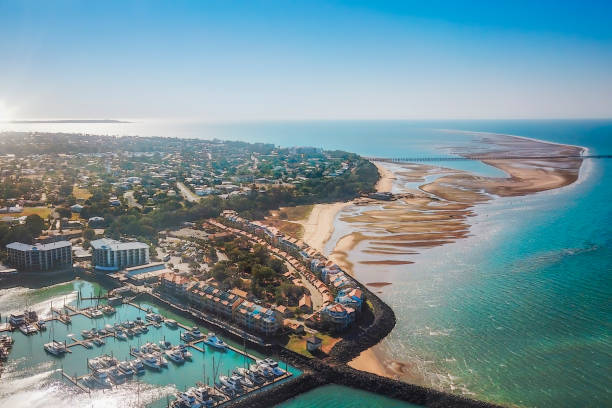
The first time someone tells you they are moving to Queensland, you assume they mean for a holiday. The second time, you start to get the picture. By the fifth or sixth time, you find yourself pricing flights to Brisbane, telling yourself it is for the climate.
Whether the move actually suits you is a separate question. The sea change is not a personality. It is a logistical and emotional reorganisation that asks more of you than the moodboard suggests, and gives back, eventually, a version of life that the southern capitals struggle to compete with. The cohort doing it now knows what they are doing. The Toronto art director, the Sydney photographer, the London engineer, the Los Angeles producer. They are not running away. They are picking the place where their thirties make sense.
Queensland did not invent the sea change. It just figured out, ahead of the rest of the country, what to do with one when it arrives. The result is a coastline of cities and towns that look the way they look in the photographs because the people who chose to be there meant it. The wave is still building. The interesting part is who is in the water.
Published by HOLR Magazine.