


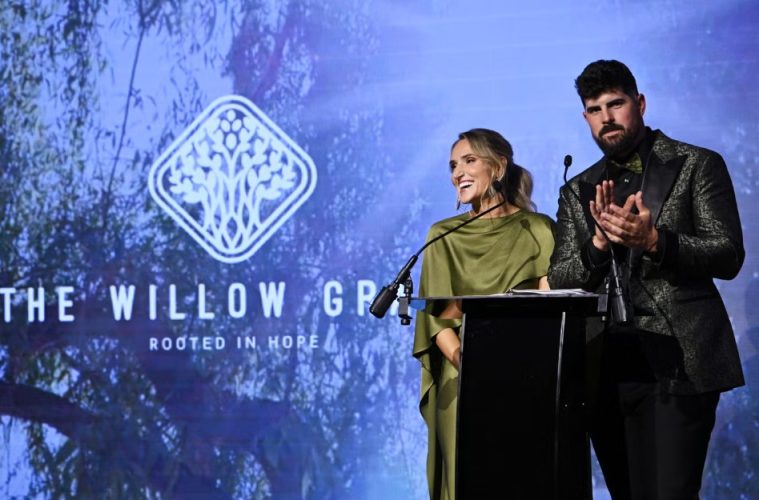
Ashley Rodón is helping families afford fertility care while sharing her experience and encouraging open conversations about fertility.
September 09, 2026
Ashley Rodón Turned a Difficult Journey Into a Mission
Ashley Rodón knows firsthand how complicated the path to parenthood can become. She and her husband, New York Yankees pitcher Carlos Rodón, experienced two miscarriages while trying to grow their family, and even without undergoing IVF themselves, the couple spent about $10,000 trying to understand what was happening.
Their experience eventually led to the creation of the Carlos Rodón Foundation, which supports families dealing with infertility and pregnancy loss. Through the foundation’s Willow Grants, eligible recipients can receive up to $20,000 toward reproductive treatments such as in vitro fertilization.

Credit: Bryan Bedder
Her Family’s Experience Made the Financial Barrier Impossible to Ignore
For Rodón, the emotional difficulty of infertility was only one part of the problem. The financial side also made her realize how easily families can be forced to choose between pursuing treatment and accepting that it may be out of reach.
That realization became even more personal after the birth of the couple’s daughter, Willow. Rodón says she kept thinking about what it would have meant if she and Carlos had not been able to afford the care they needed, especially when fertility treatment can cost tens of thousands of dollars.
The Willow Foundation Focuses on Access
The foundation’s Willow Grants are designed to help people who are experiencing infertility and pregnancy loss and need financial assistance to pursue treatment. According to Rodón, applicants apply through medical partners, including U.S. Fertility and Columbia University.
The process combines medical review with a selection committee. Medical professionals first determine whether applicants meet the qualifications, including a history of pregnancy loss, before the applications are reviewed more broadly. The foundation then considers the applicants’ circumstances while relying on medical guidance to determine which recipients are most likely to benefit from treatment.
The Grants Are Not Limited to Couples
One detail Rodón wants people to understand is that fertility care is not exclusively a couples’ issue. The foundation has awarded a Willow Grant to a single mother who became pregnant using donor sperm, experienced a pregnancy loss, and was pursuing IVF.
For Rodón, that matters because the goal is to help people build families rather than define who is eligible for that dream based on relationship status. The foundation’s approach recognizes that fertility journeys can look very different from one person to another.
She Has Seen the Grants Change Lives
Rodón says some of the families supported by Willow Grants have stayed with her long after receiving assistance. One couple had gone through five unsuccessful rounds of IVF along with multiple IUI cycles and other procedures before receiving a Willow Grant.
Last month, that couple welcomed what Rodón described as the foundation’s third “Willow Grant baby.” Stories like that have become a major source of motivation for her because they demonstrate what financial support can mean when families have already exhausted significant emotional and financial resources trying to conceive.

Credit: Ashley Rodón (@AshleyRodon) / X
Fertility Remains a Difficult Conversation
Rodón also wants to make discussions about fertility health more common. She points out that infertility affects a significant portion of the population, yet many people still struggle to talk openly about their experiences.
That silence can make an already difficult experience feel isolating. Rodón hopes sharing her own story will encourage people to learn more about their reproductive health earlier rather than waiting until they are already facing challenges.
She Encourages Women to Be More Proactive
Part of Rodón’s message is about awareness and planning. She believes people should understand that there are steps they can take to learn about their fertility and make informed choices before they are actively trying to become parents.
Her argument is not that everyone should pursue treatment or medical interventions early. Instead, she wants fertility health to receive the same kind of routine attention people already give other areas of their health, particularly when future family-building plans are important to them.
Her Work Has Expanded Beyond One Family’s Story
The Rodón Foundation held its third annual Willow Gala on August 24, raising more than $1 million for Willow Grants. The event reflects how far the couple’s original idea has grown since their own fertility struggles inspired them to get involved.
Rodón says the foundation’s purpose is broader than simply distributing financial assistance. She also wants the organization to remind people that they are not alone, even when they do not qualify for a grant, and to create more openness around infertility and pregnancy loss.
The Goal Is Bigger Than Fertility Treatment
While the grants are the foundation’s most tangible form of support, Rodón sees the work as part of a larger conversation about reproductive health. Making treatment more affordable can remove one barrier, but awareness and emotional support can help address others.
That is why she continues telling her family’s story publicly. Her experience gives her a personal reason to advocate for access, but she is also using that experience to push back against the idea that fertility struggles should be handled quietly or privately.
Credit: Instagram/Ashley Rodón
Ashley Rodón Wants Families to Feel Less Alone
Rodón’s work sits at the intersection of personal experience, philanthropy, and reproductive health awareness. The foundation cannot help every family facing infertility, but its grants can make a meaningful difference for recipients who might otherwise be unable to pursue treatment.
Her hope is that the conversation continues beyond individual success stories. By making fertility easier to discuss and treatment more accessible, Rodón wants more people to feel informed, supported, and less alone when building the families they hope for.
Final Thoughts
Ashley Rodón’s work with the Carlos Rodón Foundation grew directly out of a deeply personal experience with infertility and pregnancy loss. The Willow Grants now give families financial assistance toward fertility treatments while also helping create a more open conversation around reproductive health.
For Rodón, the mission is about more than funding treatment. It is about giving people options, encouraging earlier awareness, and reminding families navigating fertility challenges that they do not have to go through the experience in silence.
FAQs
What is the Carlos Rodón Foundation?
The Carlos Rodón Foundation is a nonprofit created by Ashley and Carlos Rodón to support families experiencing infertility and pregnancy loss.
How much can a Willow Grant provide?
Willow Grants can provide up to $20,000 toward reproductive treatments such as in vitro fertilization.
Who can apply for a Willow Grant?
Applicants apply through the foundation’s medical partners and must meet eligibility requirements, including experiencing pregnancy loss. The foundation has supported both couples and individuals.
Why did Ashley Rodón create the foundation?
Rodón and her husband experienced two miscarriages and significant expenses while trying to understand their fertility challenges. Their experience inspired them to help other families facing similar financial barriers.
How much did the 2026 Willow Gala raise?
The Rodóns’ third annual Willow Gala raised more than $1 million to support Willow Grants.
Published by HOLR Magazine