


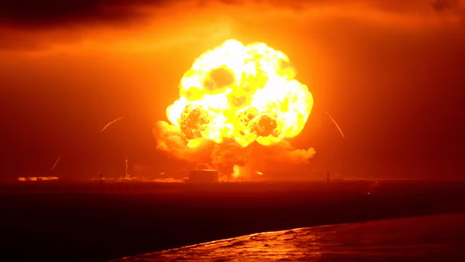
A Blue Origin rocket exploded into a massive fireball during a Florida ground test, raising fresh safety concerns across the space industry.
Blue Origin Rocket Explosion Shocks Viewers During Florida Test
May 29, 2026-A routine rocket test turned into a dramatic and alarming moment after a Blue Origin rocket exploded into a massive fireball on a Florida launchpad. The incident, which unfolded during a ground testing operation, immediately drew attention across the aerospace industry and social media platforms.
Videos and images from the site showed thick smoke and towering flames rising from the launch area within seconds of the explosion. The unexpected blast created visible shockwaves around the testing zone, highlighting the intense risks that remain part of modern space exploration.
While officials quickly moved to secure the area, the event reignited conversations surrounding rocket safety, testing reliability, and the increasing pressure on private space companies competing in the commercial space race.
The company has not indicated any immediate threat to nearby communities, and early reports suggested that safety protocols were activated rapidly after the incident.
What Happened During the Blue Origin Rocket Test?
The explosion reportedly occurred during a pre-launch testing sequence at Blue Origin’s Florida facilities. Ground tests are a standard part of rocket development and are designed to identify technical weaknesses before missions move forward.
However, something appeared to go critically wrong during the operation, leading to a sudden ignition and a large-scale fireball around the rocket structure.
Witness footage circulating online captured the intensity of the explosion as flames rapidly expanded across the launchpad. Emergency response teams were seen reacting almost immediately as smoke filled the surrounding area.
Although investigations are still ongoing, aerospace analysts believe the malfunction could involve fuel system complications, pressure irregularities, or engine-related failures.
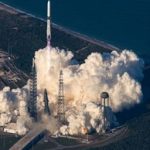
Image Credit; Instagram @ masterx.es
Why Rocket Testing Remains Extremely Risky
Rocket testing is one of the most dangerous phases of aerospace engineering. Even highly advanced systems remain vulnerable to unexpected failures due to the extreme temperatures, fuel volatility, and enormous pressure involved during launch preparation.
Private space companies like Blue Origin continue pushing technological boundaries in pursuit of reusable rockets and commercial space travel. However, incidents like this serve as reminders that innovation often comes with significant operational risk.
Testing facilities are specifically designed with emergency containment systems because engineers understand that failures can happen without warning. Controlled testing environments help companies identify flaws before astronauts or commercial payloads are involved.
Despite the dramatic visuals, experts note that ground-test incidents are not uncommon in the broader history of space development.
Blue Origin’s Growing Role in the Space Industry
Founded by Jeff Bezos, Blue Origin has become one of the leading names in private aerospace innovation. The company has invested heavily in reusable rocket systems, lunar exploration technology, and commercial space tourism.
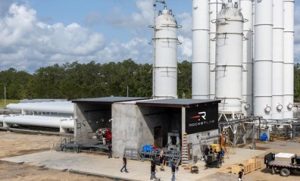
Image Credit; Instagram @ rocketlabcorp
Its New Shepard program has already completed multiple suborbital missions carrying civilian passengers and scientific payloads. Blue Origin has also continued developing larger orbital launch systems designed to compete within the rapidly expanding commercial launch market.
The Florida explosion represents a significant technical setback, but industry analysts believe it is unlikely to halt the company’s long-term ambitions.
Space exploration history has repeatedly shown that testing failures, while costly and concerning, are often treated as learning opportunities within aerospace engineering.
Safety Investigations Will Now Become the Main Focus
Following the explosion, investigators are expected to conduct a detailed review of telemetry data, engine performance records, fuel systems, and launchpad infrastructure.
Safety investigations after aerospace incidents typically involve multiple agencies and technical teams working together to determine the exact chain of events leading to the failure.
Investigators will likely analyse whether the issue originated from software systems, mechanical faults, pressure systems, or fuel delivery complications.
Because private aerospace operations remain closely regulated, findings from the investigation may influence future testing approvals and launch schedules.
The incident could also lead to additional safety reviews across the broader commercial space industry as companies continue accelerating development timelines.
Public Fascination With Space Exploration Remains Strong
Despite occasional setbacks, public fascination with space exploration continues growing worldwide. Rocket launches, astronaut missions, and private aerospace competition have increasingly become mainstream global events.
Blue Origin, alongside other commercial aerospace companies, has helped transform spaceflight into a visible and competitive industry followed closely by millions of viewers online.
Moments like the Florida launchpad explosion generate intense public attention partly because they reveal the fragile balance between innovation and risk.
The visual intensity of the fireball also reinforced how complex and unpredictable rocket science remains, even with decades of technological advancement behind modern aerospace programs.

Image Credit; Instagram @ apnews
The Commercial Space Race Faces Increasing Pressure
The commercial space industry is currently experiencing enormous momentum, with companies racing to develop faster launch schedules, reusable systems, and future lunar missions.
This pressure to innovate rapidly has created a highly competitive environment where engineering timelines often move at extraordinary speed. While that acceleration has produced remarkable advancements, it also increases scrutiny whenever failures occur.
For Blue Origin, maintaining public confidence will now depend heavily on transparency, technical accountability, and the effectiveness of future safety improvements.
Industry experts believe the company’s response in the coming weeks may become just as important as the investigation itself.
What Happens Next for Blue Origin?
Blue Origin is expected to temporarily pause certain testing activities while engineers assess damage and review operational data from the incident.
Depending on investigation findings, launch schedules and development timelines could experience delays. However, aerospace analysts generally expect the company to continue moving forward with long-term projects after completing necessary safety evaluations.
Rocket development has historically involved repeated testing, occasional failures, and constant refinement. While dramatic incidents can create setbacks, they also contribute to engineering improvements designed to strengthen future missions.
For now, the Florida explosion remains a powerful reminder of both the ambition and danger involved in modern space exploration.
FAQs
What caused the Blue Origin rocket explosion?
The exact cause is still under investigation following the Florida ground test incident.
Did the explosion happen during launch?
No, the explosion reportedly occurred during a pre-launch ground testing operation.
Was anyone injured in the incident?
Early reports did not indicate major injuries following the explosion.
Who owns Blue Origin?
Blue Origin was founded by Jeff Bezos.
Will future Blue Origin missions be delayed?
Testing schedules may face temporary delays while investigations continue.
What are the biggest stories trending online today? Read the latest here
Published by HOLR Magazine
Image Credit; The Guardian