


David Kittredge’s documentary revisits the chaotic making of Exorcist II: The Heretic, finding dark humor and surprising ambition in one of Hollywood’s most notorious disasters.
A Documentary About a Legendary Movie Disaster
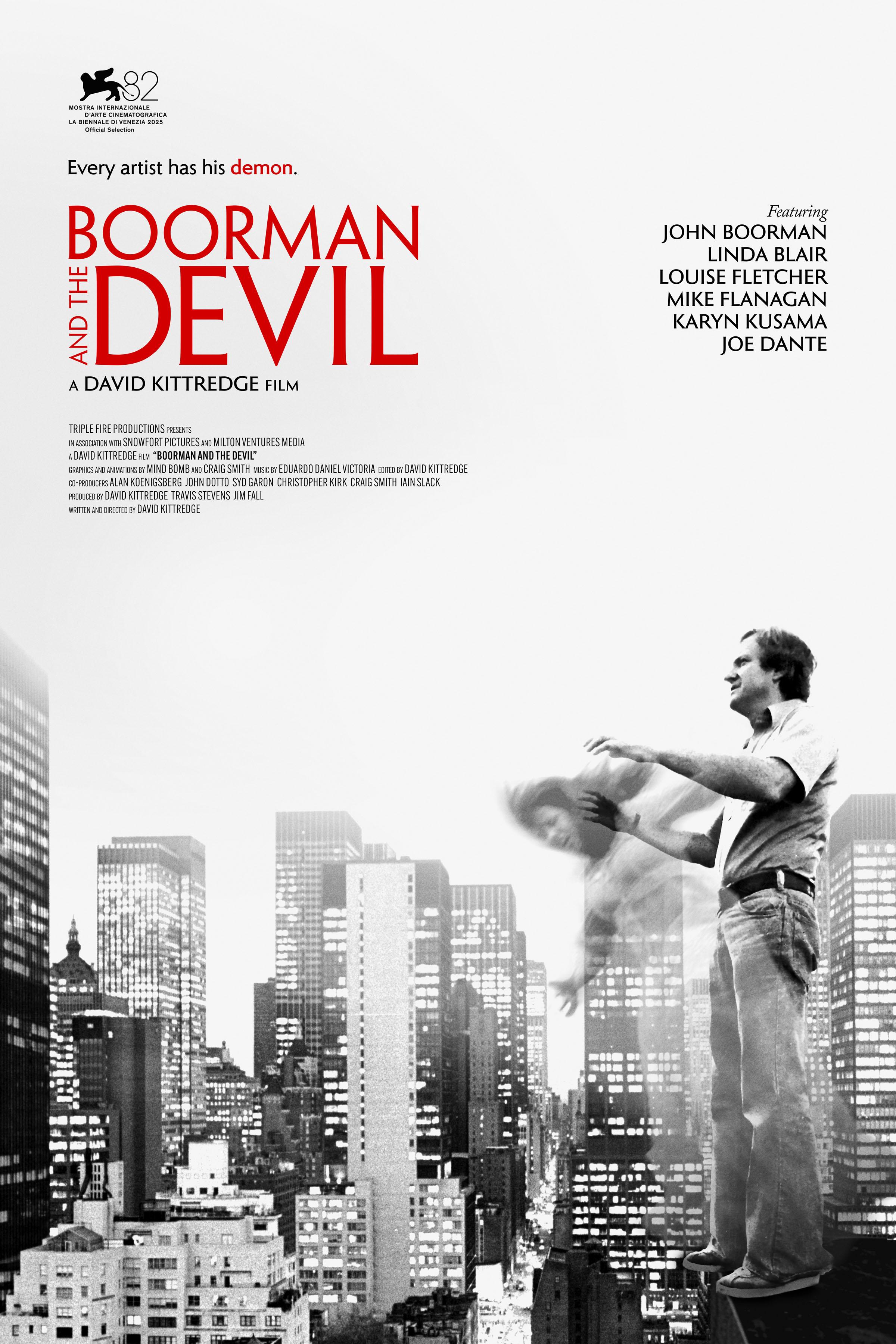
August 24, 2026 – Boorman and the Devil takes a remarkably entertaining look at one of Hollywood’s most infamous productions: John Boorman’s 1977 sequel Exorcist II: The Heretic. Rather than simply dismissing the film as a failure, director David Kittredge reconstructs how so many questionable choices, production problems and creative ambitions eventually collided.
The documentary is built around interviews with Boorman himself, alongside contributors including Linda Blair and Louise Fletcher. Boorman, now reflecting on the film decades later, remains remarkably open about the production and continues to defend parts of what he attempted.
That confidence becomes one of the documentary’s most amusing elements. Boorman and the Devil takes the making of a disastrous sequel seriously enough to document its history while allowing the sheer absurdity of the story to speak for itself.
Credit: Yellow Veil Pictures
Boorman Wanted Something Very Different
The original The Exorcist had terrified audiences with its disturbing supernatural horror, making expectations for a sequel fairly obvious. But Boorman had no interest in simply reproducing that formula.
He had previously been offered the opportunity to direct The Exorcist and turned it down because of his discomfort with the story. When he was later offered the sequel, he saw an opportunity to make something more philosophical, focusing on the aftermath of the first film rather than recreating its horror.
That decision became one of the defining problems surrounding The Heretic. Boorman’s ambitions were centered on metaphysics, human evolution and consciousness, while audiences were expecting another frightening supernatural thriller.
The documentary makes clear that the gap between those two intentions was enormous.
The Ideas Were Bigger Than the Movie
Boorman became fascinated by the philosophical ideas of French theologian Pierre Teilhard de Chardin, particularly concepts involving humanity’s evolution toward a collective consciousness.
Those ideas found their way into Exorcist II through its strange concept of synchronized hypnosis. Regan MacNeil, still dealing with the trauma of her earlier possession, becomes connected to Dr. Gene Tuskin and Father Philip Lamont through an experimental process designed to explore her memories and experiences.
On paper, it was an ambitious attempt to turn a supernatural sequel into a meditation on consciousness. On screen, however, the concept often resulted in long stretches of characters sitting and staring at one another while wearing unusual equipment.
The documentary does not need to exaggerate the eccentricity. The original production was already strange enough.
The Production Was Filled With Problems
The film’s creative difficulties were compounded by a production that seemed to encounter obstacle after obstacle. Boorman became seriously ill with valley fever after inhaling imported dirt used during filming, forcing production to shut down for several weeks.
The budget also expanded dramatically, reportedly rising from around $10 million to $15 million, making it the most expensive film Warner Bros. had produced at that point. The screenplay continued changing throughout production, reflecting the uncertainty surrounding the story.
Richard Burton, who played Father Lamont, also became part of the production’s complicated history. Accounts presented in the documentary describe problems with his punctuality and drinking, adding another layer of difficulty to an already troubled shoot.
Somehow, the film was completed.

Credit: Yellow Veil Pictures
Even the Visuals Became Part of the Problem
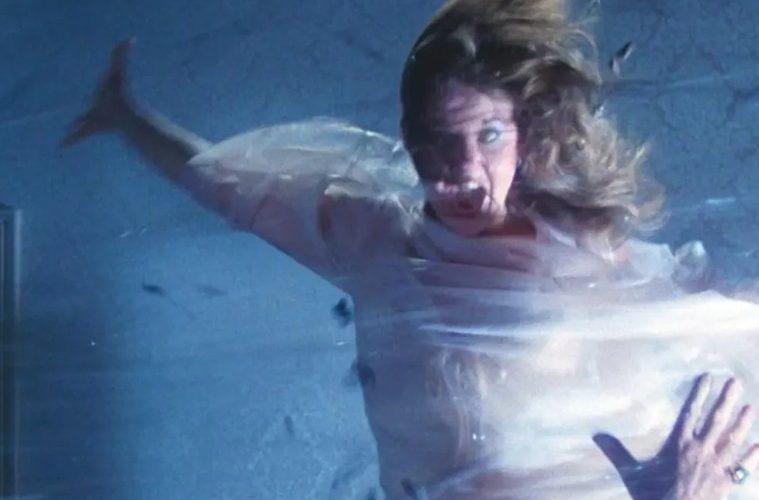
Exorcist II was not short on ambition. Its production attempted to create elaborate locations and strange supernatural imagery, including sequences set in Ethiopia and the film’s recurring connection between evil and swarms of locusts.
The documentary explores how these ambitious ideas were translated into practical filmmaking. Some of the resulting imagery now looks bizarre, especially when viewed outside the context of 1970s experimentation.
That includes the film’s unusual depiction of Pazuzu and its hypnotic visual sequences. The documentary’s strength is that it allows viewers to understand what the filmmakers were attempting while also recognizing how far the finished movie landed from those intentions.
The Famous Disaster Has a Fascinating History
One of the most enjoyable aspects of Boorman and the Devil is watching the disaster develop piece by piece. No single decision explains why The Heretic failed. Instead, the movie became the product of dozens of choices that increasingly pushed it away from what audiences expected.
The first major preview screening became a notorious moment. Audience members reportedly reacted with disbelief and laughter, while Warner Bros. executives sitting toward the back of the theater recognized that the movie was in serious trouble.
The film was then recut in an attempt to improve its reception, but the damage had already been done. Its reputation spread quickly, and attendance dropped sharply during its second weekend.
The Documentary Finds Humor Without Mocking Everyone
This is where Kittredge’s approach works particularly well. The documentary is undeniably fascinated by the absurdity of the production, but it does not simply turn Boorman and everyone involved into punchlines.
Instead, it recognizes that the people making The Heretic were talented artists who genuinely believed they were attempting something worthwhile.
That tension creates much of the documentary’s humor. Boorman’s continued belief in the film is simultaneously admirable and bewildering, particularly when placed alongside the audience reaction the finished movie received.
The result can feel almost like a real-life mockumentary, even though the events themselves are completely genuine.
Was Exorcist II Really That Bad?
The documentary raises an interesting question without fully resolving it: can a movie be a disaster and still be artistically fascinating?
There is certainly evidence that The Heretic was ahead of its time in some visual and conceptual areas. The documentary includes critics who see qualities in the film beyond its reputation as a failure. At the same time, its central story, dialogue and dramatic structure remain difficult to defend.
That contradiction makes the film more interesting as a documentary subject. Boorman and the Devil does not need to convince everyone that Exorcist II is secretly a masterpiece. Its real achievement is showing how a movie can be simultaneously ambitious, misguided and endlessly fascinating.
The Real Subject Is John Boorman
Ultimately, Boorman and the Devil becomes as much a portrait of Boorman as it is an examination of The Heretic.
The filmmaker emerges as someone with enormous confidence in his artistic instincts, even when those instincts lead him into increasingly unusual territory. His career gives the story additional weight because Exorcist II was not made by an inexperienced director. It came from a filmmaker who had already made respected work including Point Blank and Deliverance.
That makes the failure more compelling. The documentary is not about an incompetent filmmaker accidentally making a bad movie. It is about an accomplished filmmaker being given extraordinary freedom and making choices that ultimately collided with audience expectations.
A Strange Film Gets a Surprisingly Good Documentary
Boorman and the Devil works because the story is inherently compelling. The making of Exorcist II: The Heretic involved illness, rewriting, escalating costs, unusual creative ideas, production complications and a disastrous reception.
Kittredge organizes that material into a coherent account without needing to manufacture drama. The facts are already strange enough.
The documentary also succeeds because it gives viewers enough distance from the original film to reconsider its reputation. You may still think The Heretic is a terrible movie afterward. You may even find some of its choices more ridiculous than ever. But you will probably understand much better how it happened.

Credit: Yellow Veil Pictures
Final Thoughts
Boorman and the Devil turns one of Hollywood’s most notorious cinematic disasters into an unexpectedly entertaining story about ambition, artistic freedom and creative miscalculation.
David Kittredge’s documentary is at its best when it allows the contradictions to remain intact: Boorman’s sincerity alongside the movie’s absurdity, the film’s genuine ambition alongside its obvious flaws and the production’s chaos alongside the remarkable fact that it was completed at all.
It may not redeem Exorcist II: The Heretic, but it makes the story behind the film considerably more compelling.
FAQs
What is Boorman and the Devil about?
The documentary explores the making of John Boorman’s 1977 film Exorcist II: The Heretic, including its creative decisions, production problems and disastrous reception.
Who directed Boorman and the Devil?
David Kittredge wrote and directed the documentary.
Why was Exorcist II: The Heretic considered a failure?
The sequel departed sharply from the horror style audiences expected, while its unconventional story, dialogue and visual ideas received a largely negative response.
Was John Boorman interviewed for the documentary?
Yes. Boorman is one of the documentary’s central interview subjects and discusses the making of the film decades later.
Is Boorman and the Devil worth watching?
For movie fans, particularly those interested in filmmaking disasters and 1970s Hollywood, the documentary offers a detailed and entertaining look at one of cinema’s most unusual productions.
Published by HOLR Magazine